Glass guide: curved glass for staircase manufacturers

simon • 14 July 2025

Explore key considerations and regulations when sourcing and installing curved glass for staircases.


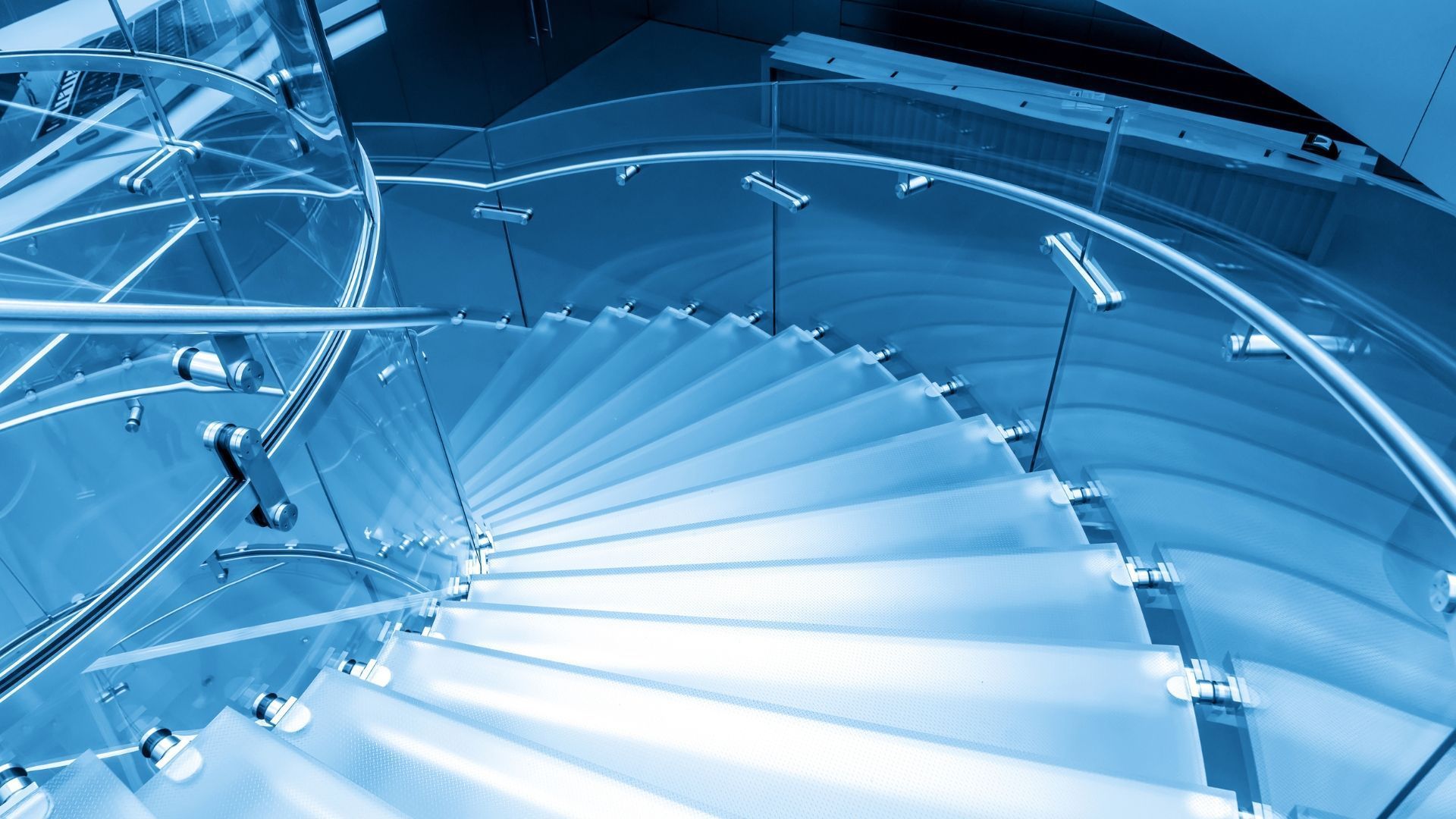
Blue-toned spiral staircase with glass steps and metal handrails, viewed from above.

When manufacturing a glass staircase, not just any glass will do. You don't need us to tell you why. If your finished installation will be used by people, you need to be sure it's robust, safe and built to last.


For this reason, toughened laminated glass is the order of the day. This is the type of safety glass used for car windscreens and shopfronts. It's a combination of two safety glass staples used to ensure durability and load-bearing capacity.


It consists of two panes of toughened glass laminated with a plastic interlayer. This provides the best of both worlds. The toughened outer panes break safely, while the laminate ensures the staircase maintains structural stability in case of breakage.


Toughened and laminated glass can be curved. This is something many designers and manufacturers require for high-end glass staircases.


What is toughened and laminated glass?

Toughened glass is a type of safety glass that's up to five times stronger than annealed glass. It's built to break safely into pebble-like pieces rather than jagged shards.


This unique breakage pattern is a product of the manufacturing process. The glass is heated at a high temperature and then rapidly cooled ("quenched") with cold air.


Laminated glass
is a different kind of safety glass. It consists of two or more panes of glass joined with plastic interlayers. When enough force is applied, the panes crack but don't shatter. This makes it ideal for structural glazing.

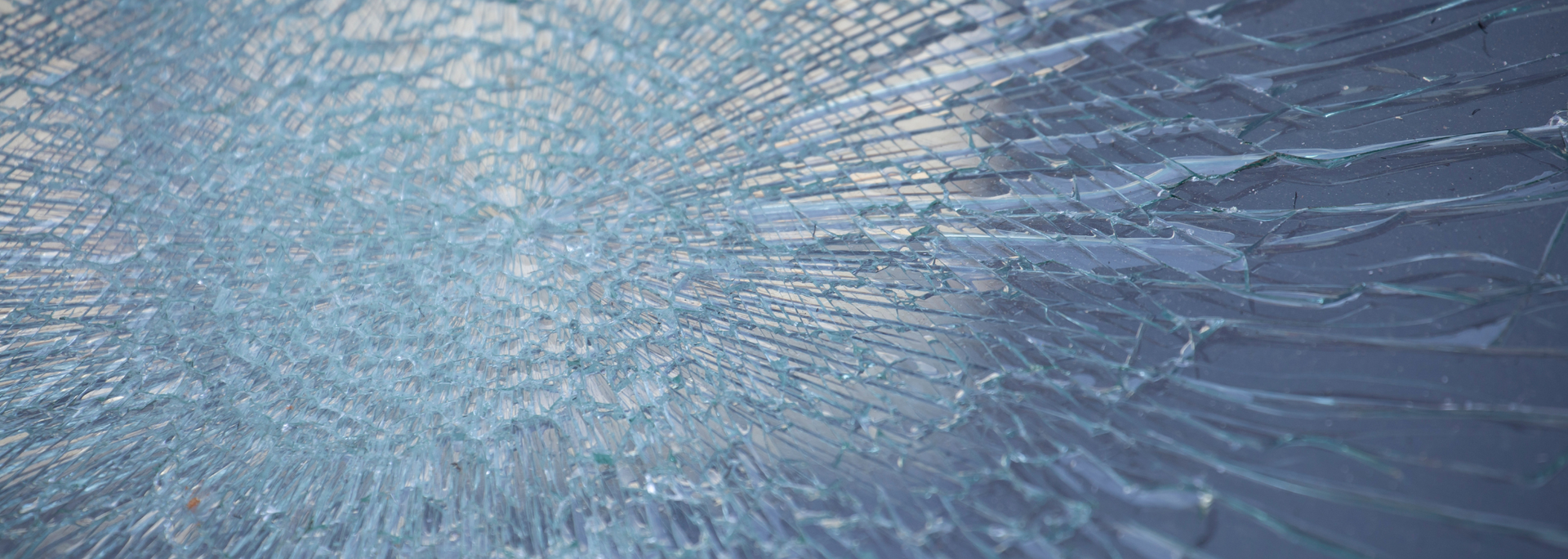
Shattered glass with a pattern of cracks radiating outward.

Together, toughened and laminated glass provide safety and durability in spades – and can also be curved to meet your design requirements.


How is toughened laminated glass curved?

There are several stages to the process. First, the glass is heated until it softens. It's then put in a mould. There, it's rapidly cooled. This toughens the glass and means it breaks safely.


The manufacturer now has a piece of toughened curved glass. This is then bonded with another piece with a plastic interlayer in between.


Can curved glass be processed?

 Yes, curved glass for staircases can be processed. It can be sandblasted or coloured with an interlayer, for instance.


It can also be drilled to provide insertion points for hardware and fixtures. This has to be done before rather than after the toughening process.


What safety regulations apply to curved glass?

Curved glass for staircases is typically toughened and laminated. These types of safety glass need to be manufactured in line with BS EN standards: BS EN 14449 for laminated glass and BS EN 12150 for toughened glass. Good-quality toughened laminated glass will also carry the Kitemark seal of approval.


Before embarking on a project, you should check with your local building authority to ensure you're meeting their codes and regulations.


ToughGlaze is one of the UK's most trusted
commercial glass specialists . Are you a staircase manufacturer or installer looking for a new glass supplier? We pride ourselves on exceptional product quality, full compliance and short lead times. Don't hesitate to contact us to discuss your needs.

Can architectural glass truly be circular? Explore its carbon impact, recycling challenges
by Simon Edward • 23 October 2026
Can architectural glass truly be circular? Explore its carbon impact, recycling challenges and the path towards more sustainable building materials.
What glass products are used in galleries, museums and similar settings? Explore product options
by Simon Edward • 21 October 2026
What glass products are used in galleries, museums and similar settings? Explore product options and specification considerations.
Glazing technology is coming along in leaps and bounds. Find out how suction lifters and glazing
by Simon Edward • 21 October 2026
Glazing technology is coming along in leaps and bounds. Find out how suction lifters and glazing robots are making a difference.