Glass guide: glass for shower enclosures

8 August 2025

Shower door manufacturers need to ensure they use safe, sturdy materials. Find out how we can help.


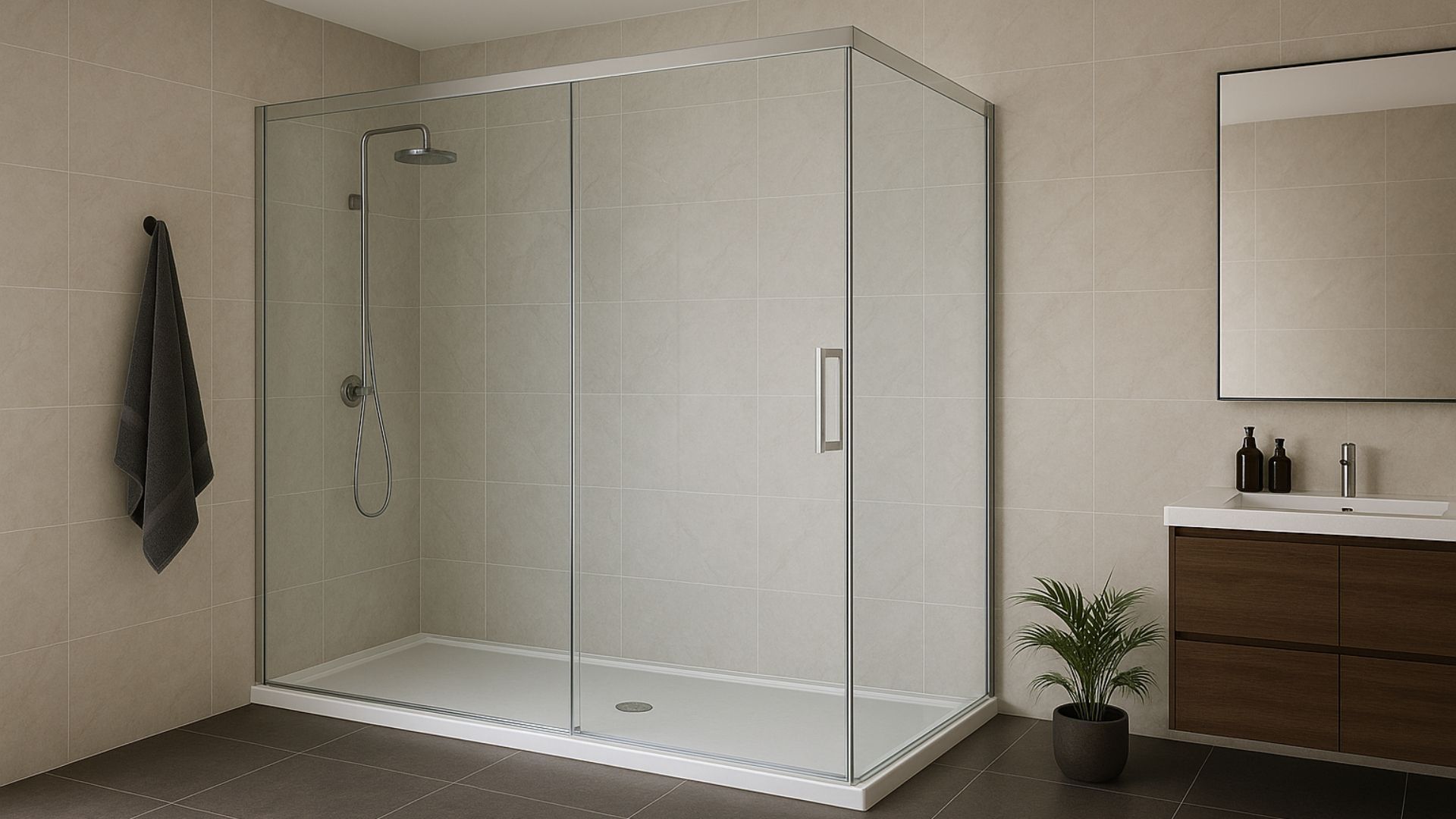
Corner shower stall with glass doors, silver fixtures, and gray tile walls in a modern bathroom.

In the UK and elsewhere, shower doors are usually made out of acrylic or glass. In our opinion, glass is the better option. It's stronger and looks new for longer.
But not any old glass will do. Manufacturers use
toughened glass (also known as "tempered glass") to ensure the shower door is robust and breaks safely. This type of safety glass can be frosted or sandblasted for extra privacy.


Why use toughened glass?

Toughened glass is around four times stronger than standard annealed glass. This makes it a safe choice for an intimate environment like the bathroom.
It's also a type of safety glass. This means that, as well as being strong, it breaks more safely than other types of glass. It takes a lot of impact to shatter a toughened glass shower door – and if it does break, it shatters into relatively harmless smithereens rather than large, sharp shards.
This is all thanks to the manufacturing process, where the glass is heated and then rapidly cooled. This excites the molecules in such a way that the glass breaks in this unique – and safer – fashion.


How thick are shower doors?

Glass doors can be anywhere between 6 mm and 12 mm. They're often on the market in 8 mm, 10 mm and 12 mm thicknesses. You'll sometimes find off-the-shelf glass that's 5 mm thick.
The thicker the glass, the sturdier it is and the more noise it blocks out. Thinner glass is the more affordable option for manufacturers and customers. It tends to be used in smaller bathrooms.

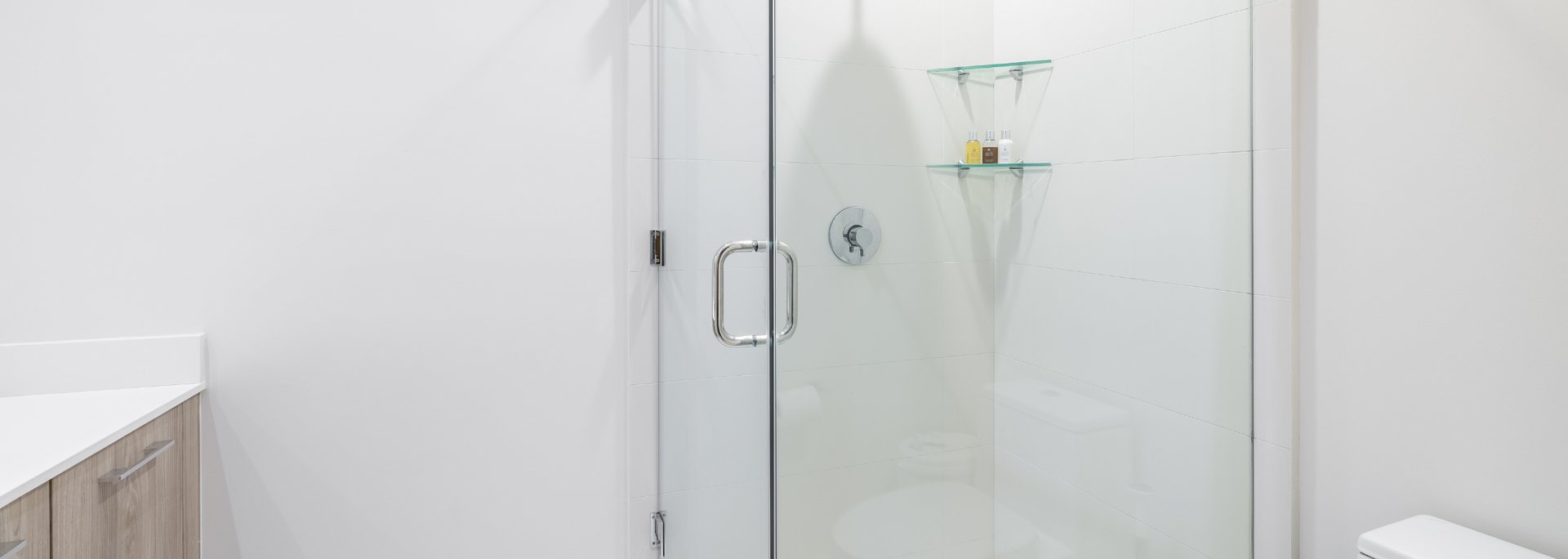
A glass shower with chrome handles and a shelf with bottles, set against a white wall and a light-colored vanity.

What safety regulations apply to shower doors?

Whatever the thickness of the shower door, the panels need to be tested and certified with BS EN 12150. It should have a CE marking to show compliance with EU safety standards.
These regulations cover impact resistance and performance and demonstrate your commitment to safety to your customers.


Can toughened glass spontaneously break?

 Very occasionally, toughened glass spontaneously breaks. This is mostly due to nickel sulfide inclusions. These are a rare but inevitable byproduct of the manufacturing process.
For peace of mind, you can ask your supplier to
heat soak test your sheets of toughened glass. This will greatly reduce but not eliminate the chance of spontaneous breakage from nickel sulfide inclusions.


How we can help

 Here at ToughGlaze, we provide high-quality toughened glass panels for a range of industries and purposes, including shower enclosures.
Like all our products, our toughened glass sheets can be cut to size and custom-made to meet your requirements. We can sandblast them for privacy and cut them to any thickness between 4 mm and 19 mm.
They also carry the Kitemark seal of approval and meet BS EN 12150 and BS EN 12600, the relevant British and international standards.
Looking for a new glass supplier? Our commitment to quality and service is unrivalled in the UK. Please don't hesitate to
get in touch to request a quick, competitive quote.

In rare cases, glass can spontaneously break. Join us as we explore why it happens
by Simon Edward 26 June 2026
In rare cases, glass can spontaneously break. Join us as we explore why it happens and what you can do to reduce the risk.
Mesh laminated glass and fabric laminated glass add different things to building projects.
by Simon Edward 19 June 2026
Mesh laminated glass and fabric laminated glass add different things to building projects. Explore the differences in our glass guide.
There are many things to consider when specifying non-slip glass floors. Learn how they work
by Simon Edward 15 June 2026
There are many things to consider when specifying non-slip glass floors. Learn how they work and what your options are.