
Why edge damage is one of the biggest causes of glass failure
Glass failure can lead to safety hazards and structural instability. Find out why edge damage is a common cause – and how it can be avoided.
It wasn't a thousand men who brought down Goliath – just a single stone.
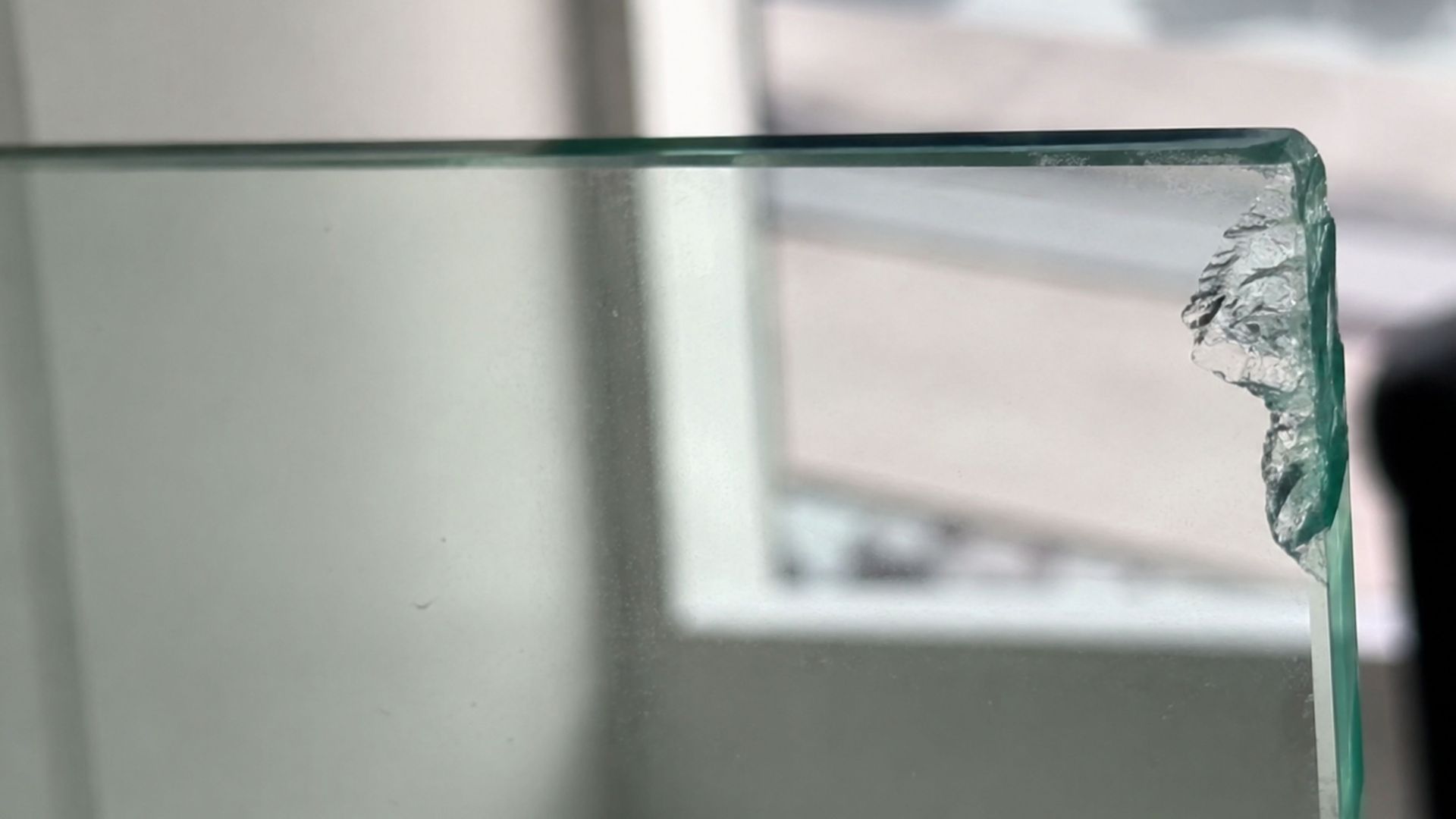
Sometimes in life, it's the small things that lead to calamity. In the case of glass failure, it's often because of damage to the edges – damage caused by nicks, chips and tiny cracks.
Why? The simple answer is that the edges are the weakest points of a sheet of glass. Any damage to the edges concentrates physical and thermal stress.
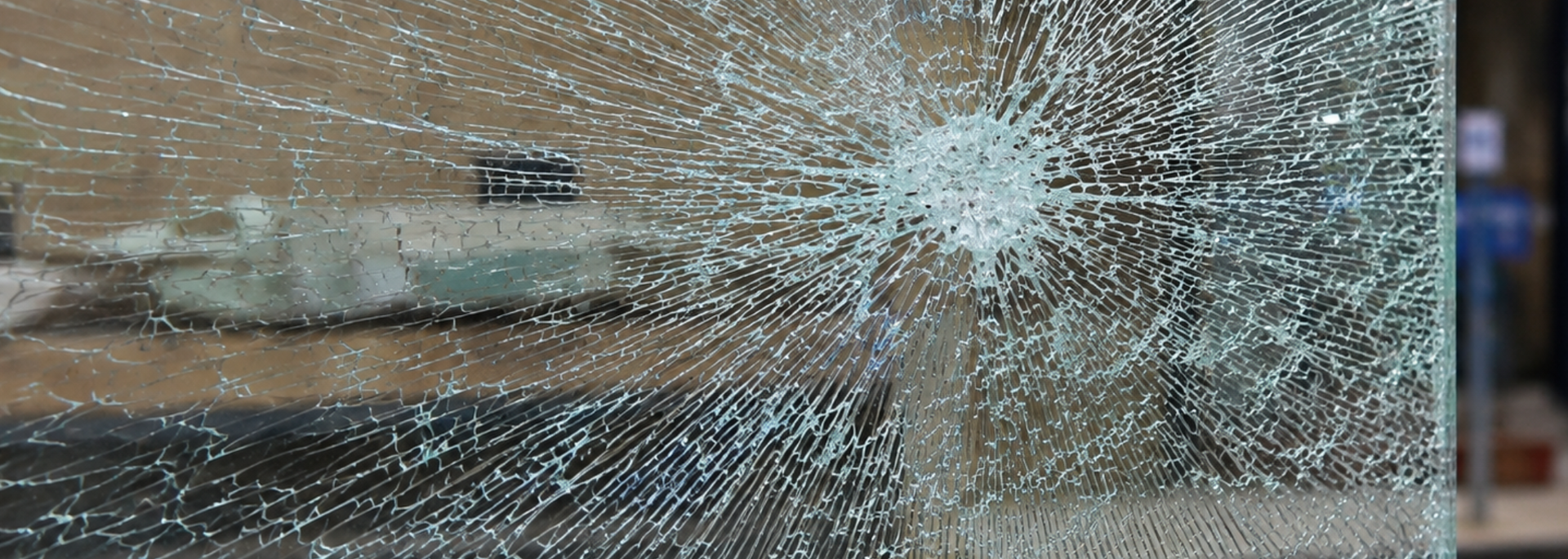
As time goes by, the pane flexes or changes in temperature, and the stress caused by the edge damage is multiplied. Eventually, the tensile strength can be overpowered, and those minuscule marks lead to spontaneous shattering or become rapidly spreading cracks.
This is bad news for obvious reasons. Chiefly, of course, it's because glass failure can end up damaging the building (and your reputation), as well as the glass itself.
Thankfully, help is at hand to stop those little blemishes turning into big problems.
In this article, we look at key ways to avoid edge damage in glass. Before we get to that, however, let's take a closer look at the physical processes that turn chips and nicks into cracks and shards.
How does edge damage cause glass failure?
Glass experiences stresses of different kinds. The stress could come from wind loads, physical impact or heat expansion. When any of these occur, the force spreads evenly across the pane.
If, however, there's a nick, chip or micro-crack on the edge of the glass, the stress has to take a detour around the damage. This magnifies the pressure and turns the defect into a liability.
In the case of thermal stress, problems can arise when a window is partially in shade. These temperature differences create stress between the edges and the centre.
Even microscopic edge damage can cause the edges to yield to the tension. This results in large and inwardly propagating cracks.
Edge damage can also lead to glass failure when the glass is bent or put under mechanical strain. In this case, wear and tear make the edge damage worse until the glass spontaneously breaks.
Why is edge damage one of the biggest causes of glass failure?
There are several common causes for glass failure, from nickel sulphide inclusions to blunt force. So, why is edge damage such a common cause?
The answer is down to the weakness of the edges in relation to the rest of the glass.
Glass has a very high compressive strength but is relatively weak in terms of tension. Even the tiniest of flaws at the edges can concentrate stress.
These flaws are often a result of bumps and knocks during delivery, handling or installation. These are avoidable and a compelling argument for choosing your supplier and installer with care.
They're also the product of glass cutting. Unlike edge damage caused during delivery and installation, edge damage in manufacturing can be minimised but not eradicated.
They can be reduced both during the cutting process and through post-manufacturing finishing processes such as grinding, polishing and seaming.
Unfortunately, these aren't the only causes of edge damage.
What causes edge damage?
Improper handling
The first main cause of edge damage in glass is mishandling. The edges of glass can be knocked, nicked, chipped or cracked during transportation, packaging or installation.
Contact with frames or hard materials
Glass edges can also be chipped when placed inside a frame without the right rubber cushioning. The same goes for unwanted contact with concrete, steel or other hard materials.
Inadequate edge clearance
Frames matter in another way. If a pane of glass has been poorly installed and there's not enough edge clearance, the edges can become damaged.
Attempting to modify toughened glass
In the case of toughened glass, the manufacturing process means the glass can't be cut or drilled after it's been fired.
If you try to cut or drill a pane of toughened glass, it will shatter into lots of tiny pieces. But even strategic drilling, grinding or cutting that doesn't shatter the pane entirely can disrupt its internal stress and weaken the edges.
Suboptimal manufacturing
The manufacturing process plays its part, too. If you work with a shoddy manufacturer, the edges might be weakened by imprecise cuts. To make matters worse, they may not have been adequately polished, ground or finished after cutting.
Dust and debris
Finally, any debris caught in the glazing system can cause severe edge damage or even lead to spontaneous fractures. The kinds of debris that can cause this issue include construction dust, weld splatter and glass shards.
These are the causes of edge damage in glass. So, how can you avoid it?
How can you avoid edge damage in glass?
Avoiding edge damage in glass – and thereby avoiding glass failure down the line – is down to more than just one party.
First, the glass must be manufactured to a high standard. Secondly, it has to be transported with care. At the end of the chain, it has to be installed with care and the right equipment.
As a customer, the best thing you can do is choose a manufacturer and installer that are experienced, accredited and willing to communicate about the issue of edge damage.
As with every other aspect of glass supply, you need to feel confident that your supplier will answer your questions clearly. If they dodge the question or hide in a jargon-jungle, you should take your business elsewhere.
How we can help
Here at ToughGlaze, we provide high-quality toughened and laminated glass that's cut, drilled and finished with precision to minimise the possibility of edge damage.
Our range is extensive and varied – everything from structural glazing to decorative glass products. So, if you're looking for a commercial glass supplier that puts quality first, don't hesitate to get in touch to discuss your project or request a quote.