How glass processors cut thick glass
How is thick glass cut by glass processors? Explore toughened, laminated and float glass cutting methods.
There are many types of glass on the market – from standard float glass to varieties of safety glass such as toughened glass and laminated glass.
These different types of glass differ in their uses and attributes. But they also differ in their typical thickness ranges.
Here at ToughGlaze, we specialise in safety glass, and the thickness of our glass products varies from product to product. Toughened glass, for instance, which is used for shower enclosures, doors, partitions and more, typically ranges from four to 19 millimetres.
By contrast, laminated glass starts thicker at 9.5 millimetres and can be as thick as 60 millimetres. This type of glass is often used for high-security and architectural applications.
We also stock heat-strengthened glass. This is available with thicknesses between six and 10 millimetres.
Cutting these thicker types of glass presents processors with a range of technical and technological problems. In this article, we explore the different methods used to cut thick glass.
What are the most common types of thick glass?
Toughened glass, laminated glass and thicker types of float glass are the most common types of thick glass on the market.
This thickness contributes to the high strength and safety of the products and is called on for structural, architectural and high-security installations. Essentially, if something needs to withstand heavy impacts and provide high levels of security, thick glass is the way to go.
How do glass processors cut toughened glass?
Toughened glass presents processors with a problem. Once manufactured, it can't be cut or drilled. If you try, the internal stresses created by the manufacturing process will cause the glass to shatter.
So, processors have to cut, shape and polish glass before the toughening process begins.
That internal or "locked-in" stress is a consequence of the manufacturing process. A standard sheet of glass is heated at high temperatures (around 650 degrees Celsius) and then rapidly cooled with blasts of air. This creates a state of high surface compression.
This compressed state is part of what makes toughened glass so strong. It means, however, that the glass has to be pre-cut before firing.
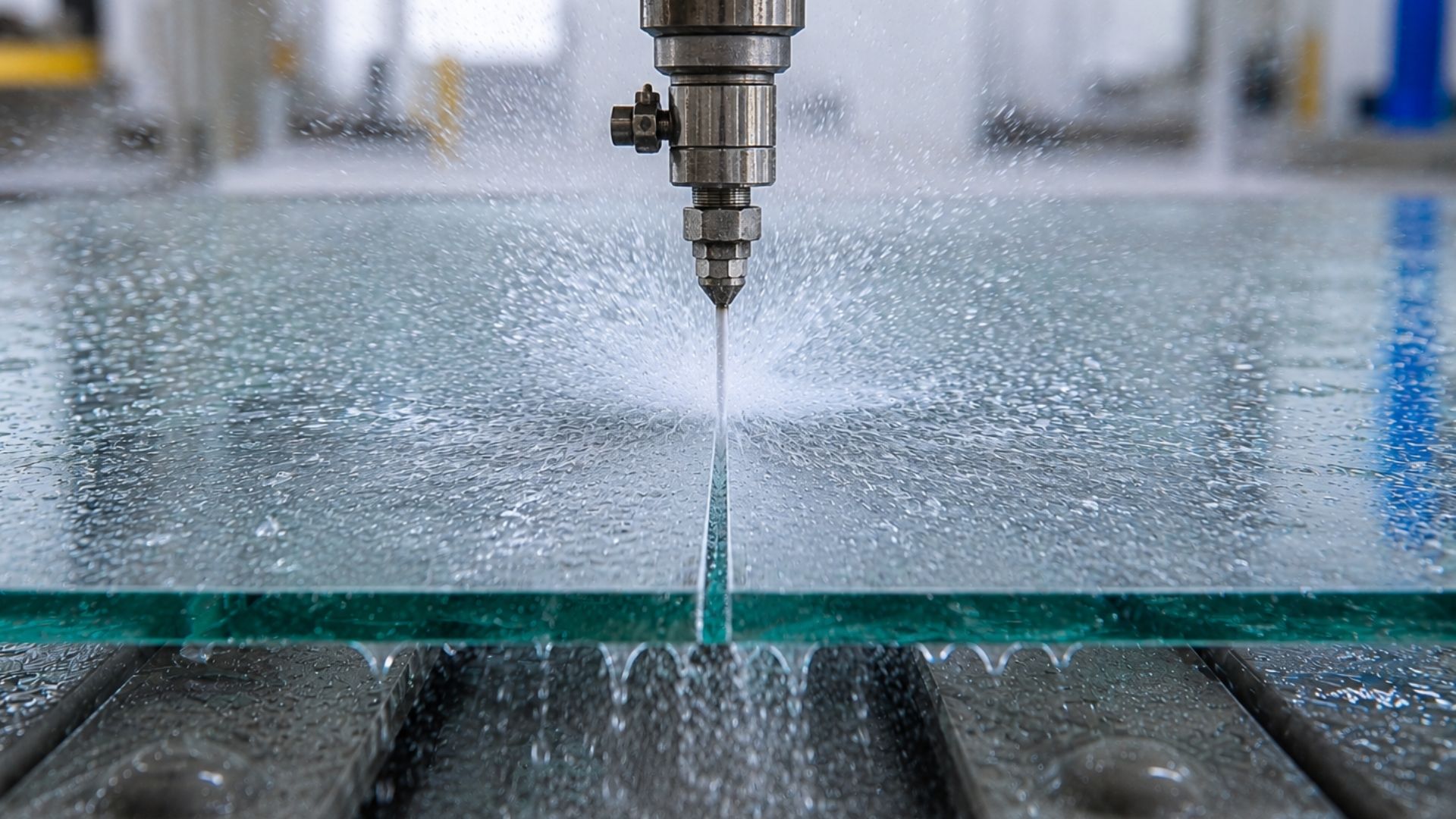
That includes cuts, holes and edge polishing (sometimes called "arrising"). This has to be done before the glass goes into the furnace. The glass can be cut with cutting wheels – computer-controlled or otherwise – or water jet cutting.
In theory, toughened glass can be re-annealed, cut and re-toughened. This, however, is a complicated and expensive procedure that's rarely used by toughened glass processors.
How do glass processors cut laminated glass?
Unlike toughened glass, laminated glass can be cut after it's manufactured. In the case of laminated glass, this manufacturing process consists of bonding glass panes with plastic interlayers.
To cut laminated glass, processors score both sides of the glass with a carbide wheel. The score has to be in the exact same place on both sides.
Next, both layers are snapped. The plastic interlayer (PVB) is removed using heat, denatured alcohol and a razor blade. Where further precision is required, processors use automated computer numerical control (CNC) or high-pressure water-jet machines instead of this manual procedure.

In other scenarios, processors use a diamond-tipped cutting wheel on an angle grinder. This cuts through all layers in multiple passes. The results can be marginally less precise than a dedicated cutting table, such as a CNC machine.
How do glass processors cut thick float glass?
Float glass is the foundational material for toughened glass and laminated glass. Thicker panes of float glass are cut using high-precision, automated CNC cutting tables.
These score the surface precisely with a diamond or carbide wheel. Consistent pressure is applied to ensure the lines are deep and accurate.
The glass is then snapped mechanically, either with a breakout bar or mechanical rollers. Pressure is placed along the score line until it snaps.
This method tends to be used for float glass up to 25 millimetres thick. Thicker glass (15 to 25 millimetres) tends to be cut with higher-pressure breaking tools such as high-pressure water jets.
Once cut, the float glass is tidied up with an edging machine. This removes chips and polishes edges to create a smooth finish. This job increases in importance the thicker the glass panel is.
Can thick glass be cut manually?
Thick glass can be cut manually using an oil-filled carbide-tipped or diamond-tipped cutter and heavy-duty running pliers. Some people cut thick glass at home for DIY projects.
The strength and precision required to cleanly cut the glass, however, is often more trouble than it's worth – and potentially dangerous, too. It's also hard to achieve on larger sheets of glass. These are the primary reasons why people come to glass processors to get their thick glass cut.
It's important to note that toughened glass can't be cut, whether manually or with a machine. The compressed state created during the manufacturing process means the glass will shatter into lots of tiny pieces if cut.
When is thick glass used?
Thick glass is used wherever strength, safety and structural integrity need to be enhanced. This covers a wide range of applications, including:
- Frameless shower screens
- Glass floors
- Feature windows
- Balustrades
- Tabletops
- Partitions
On tall buildings, too, thick glass is essential for resisting wind loads and providing requisite levels of security.
As well as providing safety and security, thick glass is used for its sound reduction qualities.
Laminated acoustic glass – represented in our catalogue by
TG AG – consists of two panes of glass and an acoustic interlayer. This interlayer significantly reduces the amount of noise that passes through the panes.
When does glass become thick glass?
Standard glass tends to be between two and six millimetres thick. Heavy-duty and structural applications require thicker glass panes. The phrase "thick glass" tends to refer to glass that's over eight millimetres thick and is usually more impact-resistant.
Founded in 1993, ToughGlaze is a UK glass processor specialising in safety glass and decorative glass products. For more industry insights, visit our free resource centre.