The psychology of transparency in workplace design
Explore how workplace design and glass partitions can balance transparency, privacy, collaboration and productivity in modern offices.
How an office is designed matters more than ever before.
Hybrid and flexible working policies have changed our relationship with the workplace. Just five years ago, many office workers were more likely to have set desks and fixed working patterns. Now, going to the office Monday to Friday can feel alien if we have the option to do otherwise.
The COVID-19 pandemic accelerated this transition. And while many companies are now encouraging their workforce to re-engage with the office, it can be a hard sell to people who have genuinely enjoyed working without the distractions of a busy workplace and have invested time in creating comfortable home offices.
The changing relationship with office space
The concept of space is a key point here.
Prior to the pandemic, many of us had our own desks in the workplace, but these have increasingly been replaced by hot-desking.
Hot-desking lets an organisation operate within a smaller space when attendance is split across the week. It offers flexibility, but it can also leave employees without a workspace that feels truly theirs.
For all its benefits, the era of the transient office day carries some drawbacks. Remote and distributed working have enabled teams to be based in different locations and time zones, which can sometimes make communication more difficult.
Colleagues may go weeks without seeing each other in person, potentially weakening working relationships.
Tea breaks and gossip; bringing in cakes; remembering someone's birthday – these social rituals still happen, but the rhythm isn't as easy to maintain. It's even harder to replicate digitally.
These challenges might feel minor, but they can add up to something more significant. Poor communication can contribute to mistakes, weaker working relationships and lower job satisfaction. All these can ultimately affect organisational performance.
In a study conducted by Drewberry, 80% of employees reported that workplace stressors affected their productivity or performance to some extent. When asked what would help reduce their stress, "better communication" was the most common response after better pay and appreciation (29%).
"Better communication" can mean:
- Reducing silos across teams
- Removing barriers between staff and senior leadership
- Increasing staff understanding of business strategy, priorities and decision-making
- Fostering a culture of inclusivity, honesty and transparency
Now we've reached the concept of transparency in the workplace – and here, the design of the office space has a significant part to play.
Workplace transparency: the metaphor turned literal
Ray Dalio, founder of the hedge fund Bridgewater Associates, is closely associated with the concept of "radical transparency".
At Bridgewater, the idea forms part of a wider philosophy built around openness, honest feedback and making information available so that people can identify problems and improve decisions.
The same ideal of openness can be reflected in physical workplace design.
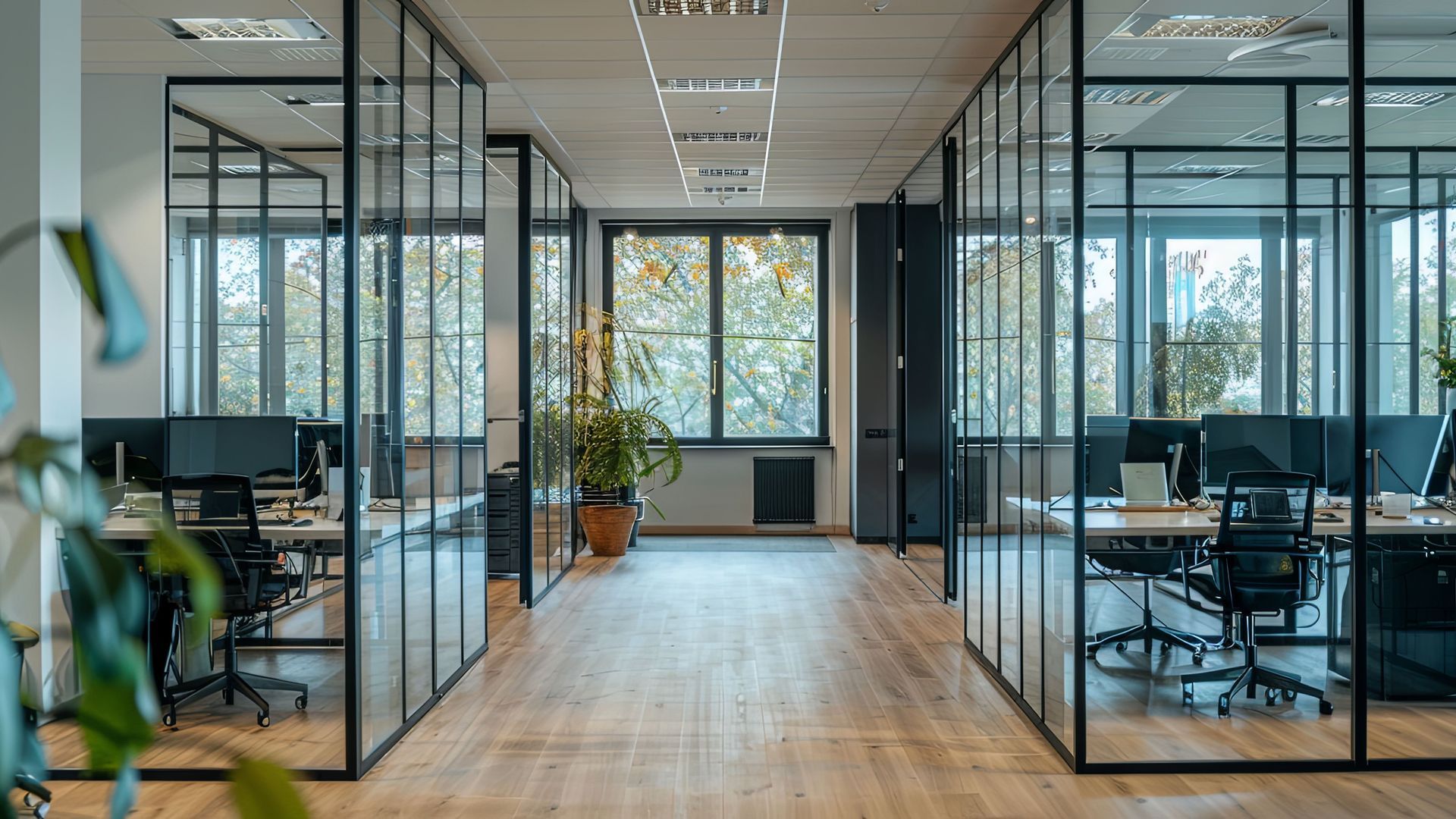
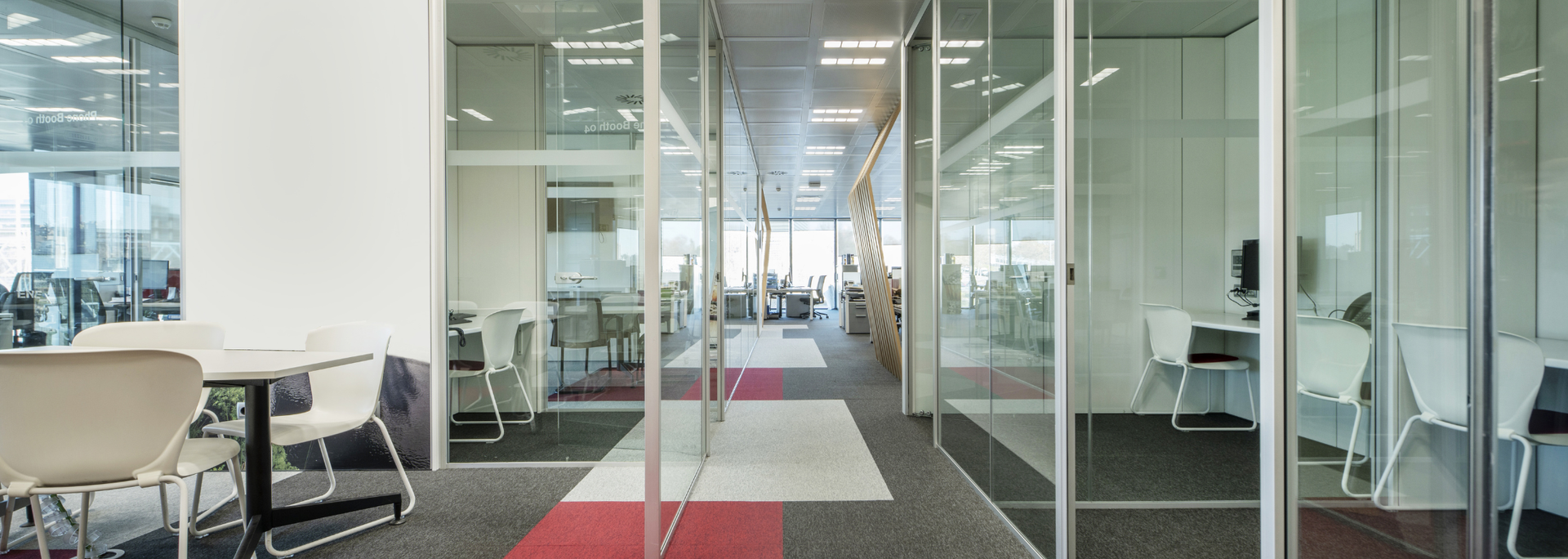
Today, we see open-plan offices where senior leaders share floors with their teams, along with glass-walled meeting rooms and informal breakout spaces.
Rather than relying entirely on exclusive meetings and closed doors, many businesses also hold "town hall" sessions in large shared areas. Employees can choose between formal meeting rooms and informal breakout spaces depending on what the conversation requires.
Sharing information is one aspect of transparency, but so too is trust.
Employees also need to feel a sense of control over how they complete the work expected of them. This is one reason transparency needs to be balanced with privacy rather than treated as an end in itself.
H3: Turning transparency into physical space
Glass can play an important part in creating workplaces that balance transparency, trust and privacy.
At its most functional, this might mean glass panelling in place of solid walls where there is no need to block light or completely obscure the space beyond.
This can reduce visual barriers between managers and staff, or between departments that share a floor but might otherwise have little visual connection.
The key question for designers is how to balance openness and privacy for employees returning to office-based work.
A well-designed space must deliver several seemingly contradictory things at once. Staff must be able to work collaboratively and enjoy the social side of the office. However, they also need to maintain some sense of personal space when they need it.
Fully open-plan offices are therefore not necessarily the answer.
According to a 2024 survey, one in three people (33%) had an issue with a lack of privacy in the office. More than a third (34%) ranked meeting rooms, breakout spaces and social spaces among the most valuable areas in the workplace.
So, how can spaces feel open without leaving employees feeling exposed?
One answer is clever use of glass partitioning.
By introducing the right forms of partitioning, employers can create a mixture of private and collaborative working areas without redesigning the entire building.
Too much noise, visual stimulation or lack of privacy can be distracting. That's why there's now a wide range of glass partition solutions available to building developers, designers and business owners.
H3: Define work zones while retaining visual connection with decorative glass
Humans naturally respond to their surroundings.
A workplace that feels dark, cramped or visually disconnected can create a very different experience from one that feels spacious, bright and connected.
Toughened and laminated glass partitions can create defined spaces while retaining access to natural light and visual openness.
A meeting room can feel part of the wider workplace rather than an isolated box, while offices and circulation areas can benefit from borrowed light.
The beauty of decorative glass is that it can range from subtle to dramatic depending on the specification. That's why we offer a range of decorative glass products, including coloured interlayers and illuminated glass.
For a more textural look, standard ToughGlaze laminated glass can also incorporate woven, printed and patterned textile interlayers, adding warmth, colour and texture to workplace interiors.
Control noise with acoustic glass
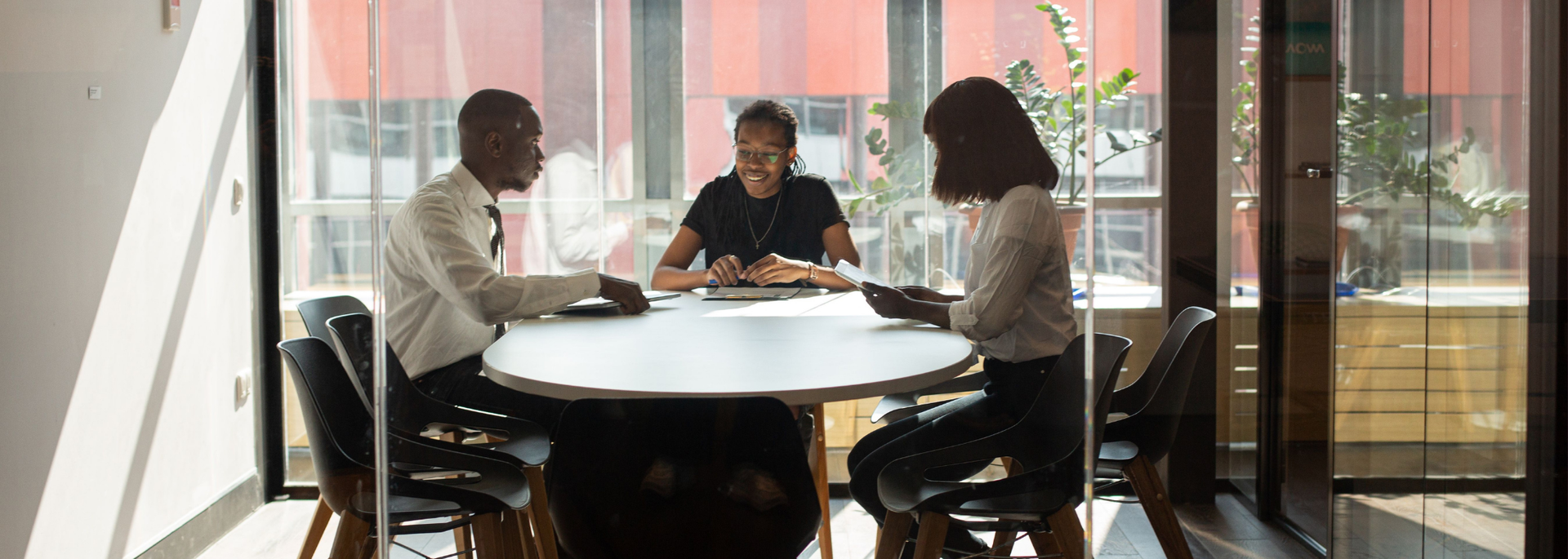
For areas requiring additional acoustic performance or safety, the specification of the glass and partition system becomes particularly important.
Glazing should be selected according to the requirements of the space rather than treating transparency as the only objective. Acoustic privacy, for example, needs careful consideration in meeting rooms, private offices and other spaces where conversations need to remain confidential.
Acoustic laminated glass can help reduce sound transmission as part of an appropriately designed partition system.
Make it feel private, not closed off
People want connection, but they also need privacy.
Sandblasted or frosted glass can introduce privacy without creating a completely solid visual barrier.
It can be used selectively – across meeting-room fronts, at eye level, around sensitive areas or as a decorative feature – allowing designers to control what is revealed and what remains discreet.
ToughGlaze TG SB glass works as either branded panelling or privacy glazing. It can also be protected with a layer of Ritec ClearShield, making the sandblasted surface easier to clean and handle.
Screen-printed and
digitally printed glass
offer another layer of control.
Company logos, branding, patterns and wayfinding graphics can be incorporated directly into the glazing, turning functional partitions into part of the workplace identity.
Glass that adapts to the need
Smart glass takes the idea of control further.
Switchable glass products such as TG SWITCH can move between transparent and opaque states. This lets a meeting room remain visually connected to the office during normal use and provide greater privacy when confidentiality is required.
Where one space needs to support multiple activities, transparency doesn't have to mean making everything visible all the time. It can instead mean giving people the right level of visibility, privacy and control when they need it.
TG SWITCH uses a third-generation NPRLC film and a unique water-resistant interlayer. It can be used for framed and frameless applications and integrated with leading smart building systems, making it well suited to flexible workplace environments.
Finding the right balance
The modern office has to support more ways of working than ever before.
Employees may need collaboration, privacy, concentration and social interaction at different times of the day. Workplace design needs to accommodate all of them.
That's where glass can become particularly useful.
Clear glazing can maintain visual connection. Decorative and frosted glass can introduce privacy and identity. Acoustic glass can support confidentiality. And switchable glass gives users more direct control over visibility.
The aim is not transparency for transparency's sake. It's to create spaces that feel connected without feeling exposed.
At ToughGlaze, we process and supply a wide range of decorative and specialist glass for commercial interiors.
If you're specifying glazing for an office or workplace project, get in touch with our team to discuss the right balance of transparency, privacy and performance.