Approved Document K and what it means for your glass
When overseeing a construction project, building regulations are all-important. Find out what Approved Document K means for your glazing.
The construction industry has never been more tightly regulated. Many would agree that the advantages of tight industrial regulations outweigh the disadvantages. However, it's undeniable that they create an administrative burden for project managers, architects and suppliers everywhere.
This is perhaps nowhere clearer than in the UK's building regulations. These are a set of safety standards applying to the design and construction of buildings. All of them share the same goal: the health and safety of the people who use buildings.
They cover everything from structural integrity to fire safety, from ventilation to accessibility. All these aspects of construction are supported by guidance documents called Approved Documents.
In the UK, all building works must be approved and certified as compliant. This responsibility can fall on the building owner or the builder – exactly who depends on the nature of the project.
In this article, we look at Approved Document K and how it affects the glass you use in a building project. This is a building regulation that focuses on protections against falling, collision and impact. It's one that touches closely on our speciality: safety glass.
Safety glass is a category of glass that's specially manufactured to reduce the risk of injury from breakage. It comes in two main forms:
toughened glass and
laminated glass. Here at ToughGlaze, we provide high-quality examples of both.
Important notes
Before we go any further, it's important to say that this article doesn't constitute official advice. The only text you should consider gospel is Approved Document K itself. This article is more about pointing you in the right direction.
Similarly, we should say that it's always the customer's responsibility to ensure compliance. A glass supplier won't (or shouldn't) tell you what exactly you need to specify to be compliant.
With these caveats out of the way, let's take a closer look at Approved Document K and its implications for your glazing.
What is Approved Document K?

Approved Document K is a UK building regulation that provides guidance on how to comply with requirements relating to protection against falling, collision and impact.
The document outlines specific measures that must be taken when designing stairs, ladders or ramps. It also specifies how glass and glazing should be protected from these things. This could be a case of erecting a physical barrier (a method known as "shielding") or the use of specialised safety glass.
The main purpose of the document is to prevent accidents such as falls from a height and injuries resulting from collisions with windows, doors and other glass installations. It applies to both renovations and new building projects.
Approved Document K has implications for the use of glass. But it also covers the following:
- The geometry, pitch and width of stairs, ladders and ramps, as well as requirements for handrails and guarding
- The design and placement of barriers and railings to protect against falling from places such as balconies and landings
- The protections needed to prevent collisions with vehicles in loading areas
- Guidance on how to prevent people from colliding with open windows and getting trapped by doors
What does Approved Document K mean for my glass?
When it comes to glazing, the key takeaway from Approved Document K is that there are some locations in a building where safety glass must be used.
This is especially true in areas where people are likely to collide with glass. These are called "critical locations" and include low-level glass (below 800 mm from the floor), glass near doors and
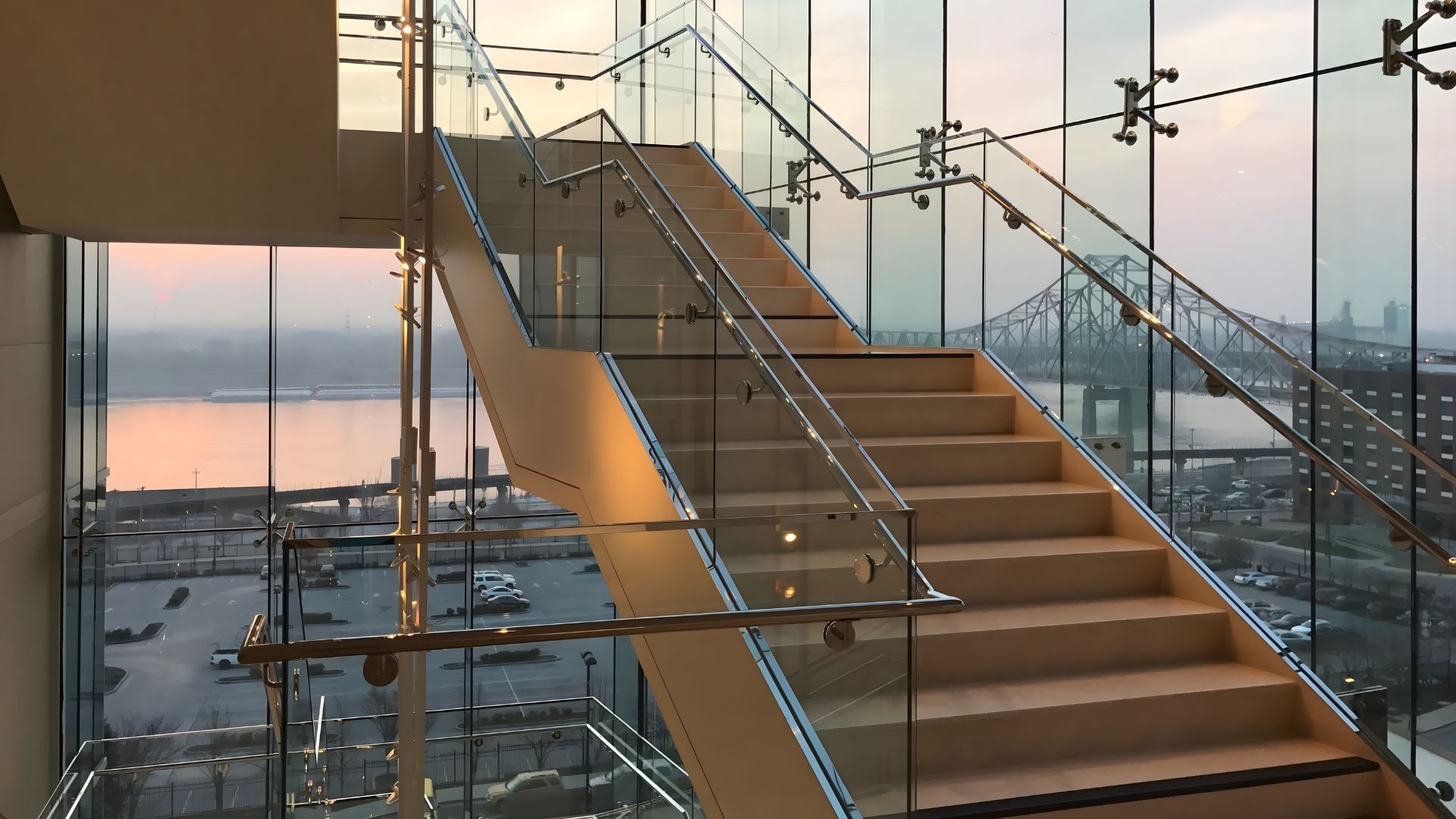
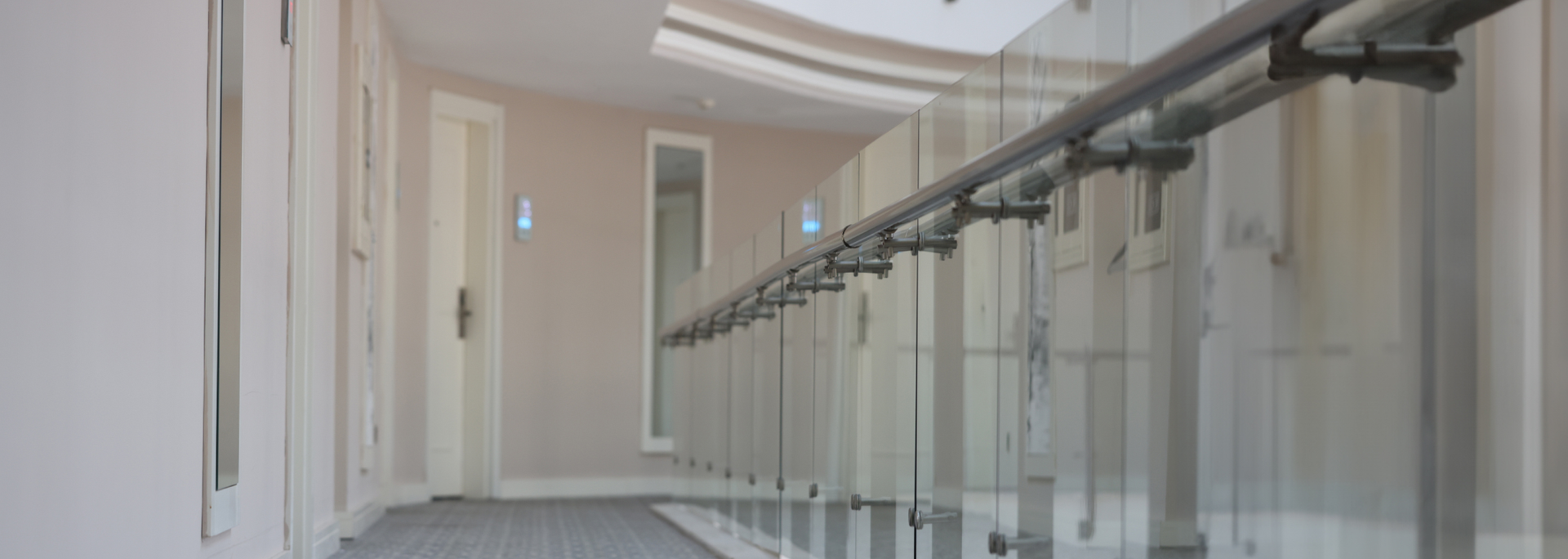
glass balustrades.
Alternatively, these areas must be shielded by a physical barrier. Both measures are mandated to ensure the safety of the building's users and occupants.
Approved Document K also includes rules for doors, windows and how to safely clean glass.
In this context, "safety glass" refers to either toughened or laminated glass. Both are more robust and impact-resistant than standard float glass. On top of this, they break in a way deemed safer by Approved Document K.
Toughened glass (also known as tempered glass) is a type of glass that shatters into lots of small, harmless, pebble-like pieces. This is owing to a sudden and dramatic change in temperature during the manufacturing process.
Laminated glass, by contrast, consists of two glass panes with a plastic interlayer. When it breaks, the fragments are more likely to stay in the unit, protecting passersby from falling glass.
Approved Document K also stipulates the use of permanent markings, known as "manifestations", on large areas of glass that could be mistaken for an opening. This is to ensure people don't collide with large, deceptive expanses of glass.
Finally, Approved Document K includes requirements to stop people from colliding with open windows or being trapped by doors.
Whatever kind of building project you're working on, you should make sure to consult Approved Document K before ordering your materials. You may need to invest in toughened or laminated glass rather than standard annealed glass to ensure compliance.
Where can building regulations be found?
UK building regulations, including Approved Document K, can be found on the official government website as well as the Planning Portal. The Planning Portal also offers additional guidance on building projects and compliance.
How we can help
Here at ToughGlaze, we stock high-quality toughened and laminated glass for use in critical locations. So, if you're looking for
safety glass, get in touch today for a quick, competitive quote. With more than 30 years in the business, we have the knowledge and experience to deliver the glass you need – on spec and on time.