Specifying glass for spandrel panels: what you need to know
Do you need to source glass for spandrel panels? Explore the kinds of glass you can use and key factors to keep in mind.

Buildings are complicated things. In the UK in 2026, making even the simplest and smallest of buildings requires a whole lot of materials – and a whole lot of compliance.
Every piece of the puzzle needs to be manufactured to meet industry standards. The building as a whole, too, needs to meet compliance. Anything less poses a danger to the building users, not to mention the reputations of the designers, architects, management and other stakeholders.
Here at ToughGlaze, we provide a wide range of glass products to a wide range of clients. And we work hard to ensure those products are in line with current Building Regulations and industry standards.
Among the many types of glass we provide are toughened and laminated glass panes for spandrel panels. These are the prefabricated structural panels that are used to conceal unsightly structural elements in curtain wall systems. That includes floor slabs, HVAC and wiring.
Curtain walls use two types of glass: vision glass and non-vision glass. Vision glass can be seen through, whereas non-vision glass is opaque. Spandrel panels need to be opaque – something that has consequences for the type of glass you can use.
Thankfully, there are many types of opaque glass on the market – and because spandrel panels aren't usually classed as "critical locations", you're not restricted to using safety glass.
Nevertheless, there are choices to be made. We hope this guide helps you make them with confidence. And if it's safety glass for spandrel panels you're after, we can supply you with the right materials, too.
What types of glass are used for spandrel panels?
A wide range of types of glass is used for spandrel panels. These are as follows.
Toughened glass
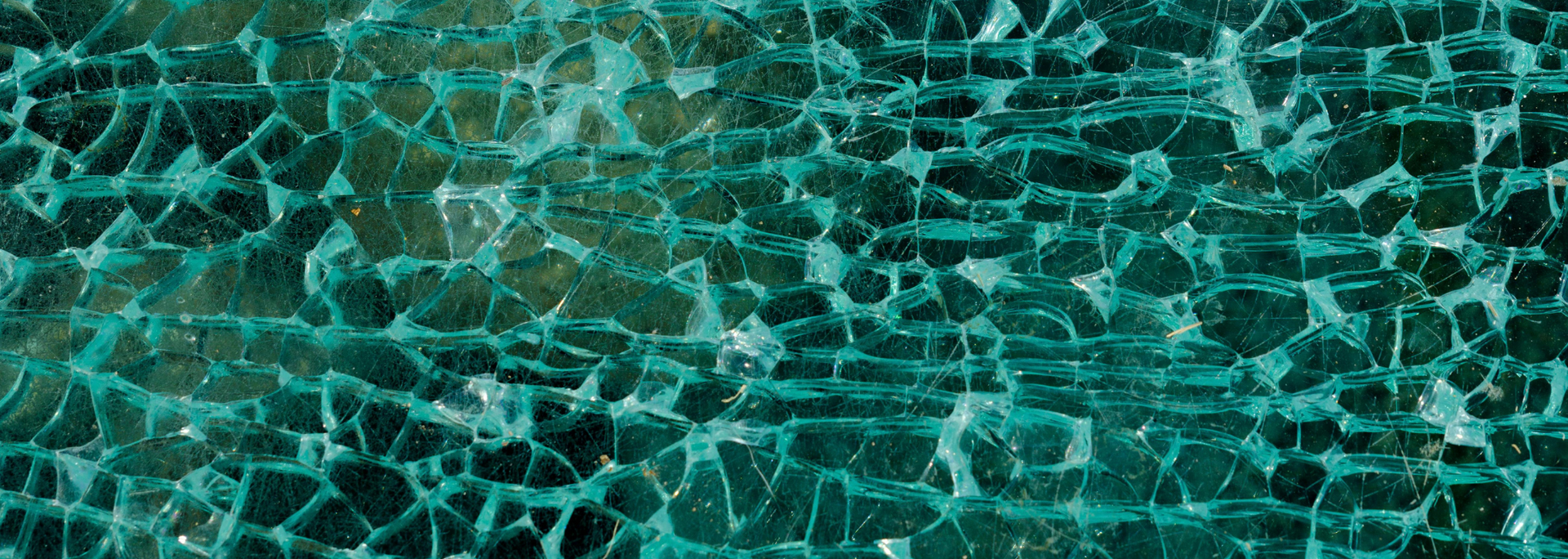
This is our bread and butter here at ToughGlaze. Toughened glass (also known as "tempered glass") is heated at an extremely high temperature and then rapidly cooled. The result is a type of glass that's around five times stronger than standard annealed glass – and when it breaks, it does so safely.
Heat-strengthened glass
This is a similar product to toughened glass, but less durable. It's typically used in applications where wind resistance and thermal resistance are priorities, but safety glass isn't mandated.
Laminated glass
This consists of two or more panes of glass (often toughened) bonded with a plastic interlayer. A typical laminated glass unit is about six times as strong as annealed glass. When it finally breaks, the glass is much more likely to stay in the frame, making it ideal for critical locations.
Coloured glass
Coloured glass is often used to match the appearance of the vision glass in a curtain wall. The glass can be tinted with a coloured interlayer. Alternatively, it can be digitally printed or screen printed with a coloured pattern or design.
Low-iron glass
Low-iron glass is used when a more neutral tone is required. This is because low-iron glass has less of a green tint than standard glass.
How is glass opacified (made opaque) for spandrel panels?
There are a number of ways that glass spandrel panels are made opaque. The first is ceramic frit glass. This involves fusing the glass surface with a durable coat of ceramic paint. Alternatively, the back of the glass can be painted or given a layer of silicone.
There are also shadow-box panels. These use clear or tinted glass over a dark backing rather than an opaque coating on the glass itself.
How are glass spandrel panels applied?
There are two main ways that glass spandrel panels are applied. The first is an insulating glass unit (IGU) as part of a shadow box system. This allows the spandrel panels to match the insulating properties of the adjacent vision glass.
The second is as part of a curtain wall system. The spandrel panel covers up structural elements between floors. These include beams, columns, floor slabs, HVAC and wiring.
What should you consider when specifying glass for spandrel panels?
1. Thermal stress resistance
All spandrel glass should either be heat-strengthened or fully toughened for adequate resistance to thermal stress.
2. Heat soak testing for toughened glass
If you use toughened glass, you run the small but real risk of spontaneous breakage due to nickel sulfide inclusions. For this reason, you should work with a supplier that can heat soak test the toughened glass before you install it.
3. Aesthetics
It can be hard to match the spandrel panels to the curtain wall and achieve a sleek, seamless look. You may stand a better chance of achieving this aesthetic consistency with a kind of coloured glass.
4. Opacification
Your glass can be opacified in different ways. Ceramic frit is the most durable option, whereas back-painted glass is more economical.
4. Shadow box construction
If you're using a shadow box, there should be venting between the glass and the insulation. This is to avoid condensation and heat traps.
5. Acoustics
Laminated spandrel glass or acoustic spandrel glass can be used to help soundproof a building.
6. Fire safety
Spandrel panels play a crucial role in stopping the spread of fire. This means the glass you choose for spandrel panels should meet fire rating standards.
This applies to the whole system, too – not just the glass itself. Fire-rated glass must be fitted and insulated in line with fire safety regulations.
7. Edge quality
If you want your spandrel panels to have better edge strength, you may want to specify fully polished edges.
How we can help
Here at ToughGlaze, we supply a wide range of glass for architecture – including toughened and laminated glass for spandrel panels. This can be opacified and coloured to match the vision glass.
So, if you're looking for high-quality, accredited, made-to-measure toughened or laminated glass, get in touch with ToughGlaze today. We'll be happy to provide a quick, competitive quote and fix you up with the right materials for the job.