Integrity vs insulation in fire-rated glass: what's the difference?
Fire-resistant glass is rated according to its ability to protect against fire, smoke and heat. Learn the difference between integrity and insulation ratings.
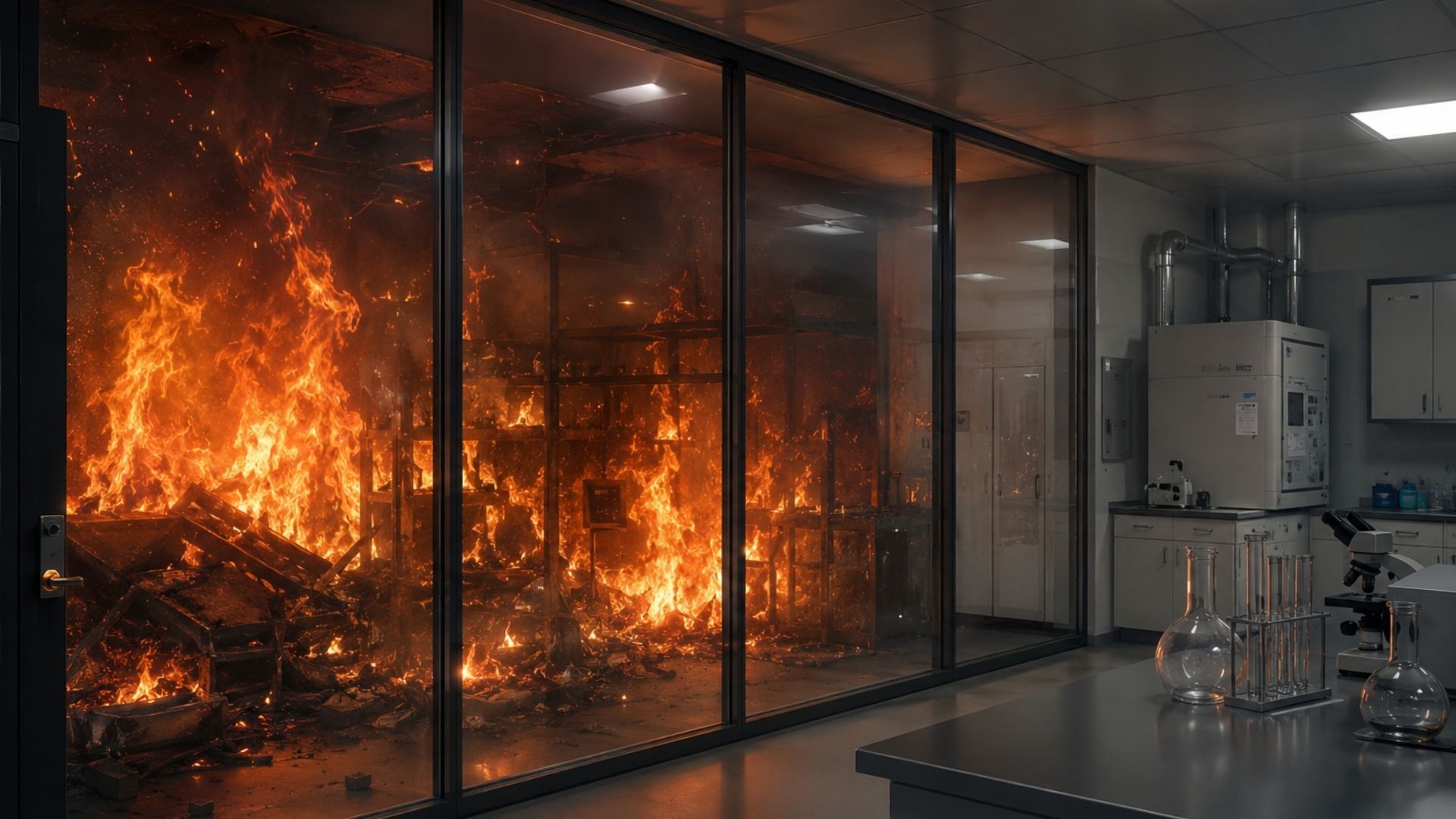
You might have heard of fire-rated glass. You might also have heard it referred to as "fire-resistant glass" or even "fireproof glass".
This last term is one that industry professionals avoid. There are a couple of reasons for that.
First, no glass is truly fireproof. Secondly, calling glass "fireproof" implies that all types of fire-rated glass perform in exactly the same way or to exactly the same standard.
The truth is that different fire-rated glazing products can offer very different levels of protection. Some are designed to stop flames and smoke from spreading, while others also limit heat transfer.
These different types of protection are referred to as "integrity" and "insulation":
- Integrity (E): protection against flames and hot gases
- Insulation (EI):
protection against flames, hot gases
and heat
You'll see these "E" and "EI" ratings applied to different types of fire-resistant glass. Understanding the difference is crucial when specifying fire-rated glazing for doors, partitions, facades and escape routes.
Let's explore the differences in more detail.
What is fire-rated glass?
Fire-rated glass is a specialised glass product that's tested and certified to maintain its structural integrity in the event of a fire. That makes it an essential – and, in many cases, mandated – safety measure to prevent the spread of fire and protect building users.
Different fire-rated glass products are designed to achieve different levels of fire resistance. Performance is typically:
- Measured in minutes (from 30 to 120)
- Designated with "E" (for integrity-only) or "EI" (for integrity and insulation)
- These classifications are based on European testing standards – specifically EN 13501-2.
It's important to note that glass alone can never be fire-rated. It must be tested and rated as part of a complete glazing system – frame, glass and all. When we refer to "fire-rated glass", we're using this as a shorthand for the entire rated glazing system.
What does "integrity" mean in fire-rated glazing?
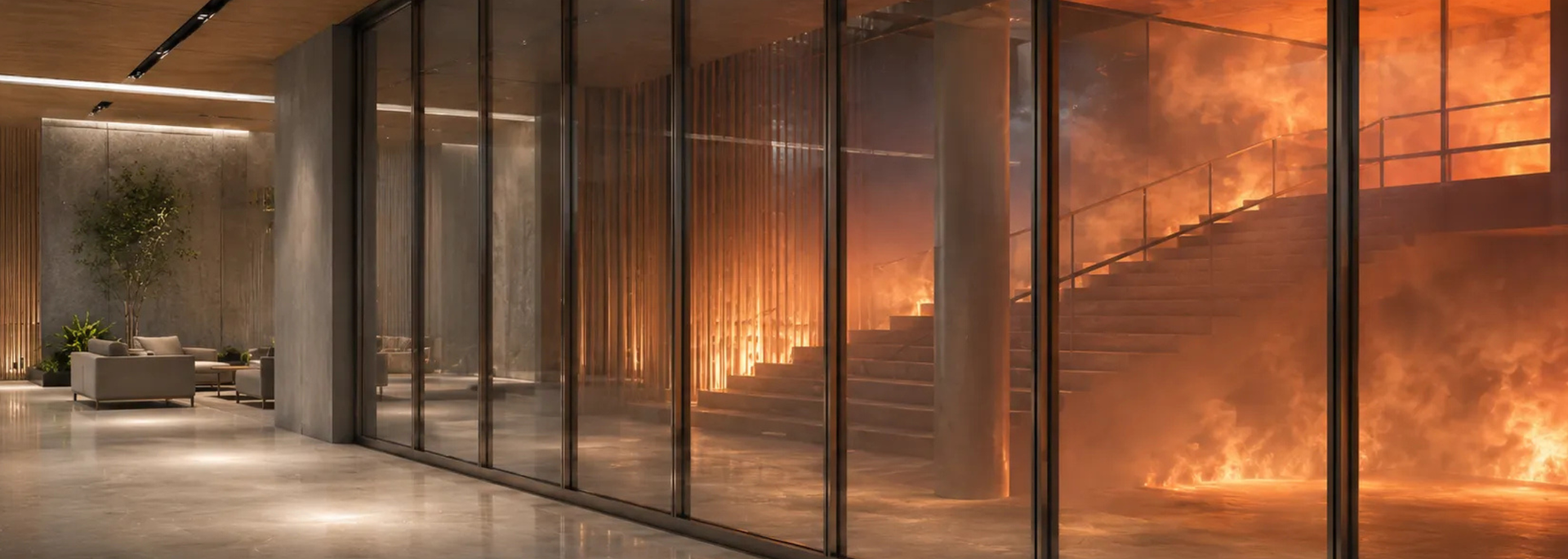
"Integrity" refers to a glazing system's ability to prevent flames and hot gases from passing through.
That means, in the event of a fire, a glazing system rated for integrity should:
- Remain in place
- Not develop openings that allow the fire to spread
- Act as a barrier between compartments
Take, for example, an integrity-rated glass partition wall between two rooms. If a fire starts in one room, the glass should prevent flames from spreading to the next room. However, heat will still transfer from one room to the other.
Of course, no type of glass can withstand flames forever. That's why each fire-rated glazing system is given a performance rating in minutes, based on the results of real-world tests.
For integrity-rated glazing, this is denoted with the letter E and a number. For instance:
- E30: withstands flames and hot gases for 30 minutes
- E60: withstands flames and hot gases for 60 minutes
- E90: withstands flames and hot gases for 90 minutes
What does "insulation" mean in fire-rated glazing?
"Insulation" refers to a glazing system's ability to limit heat transferred through the glass during a fire.
This is important because flames and smoke aren't the only danger associated with building fires. When heat transfers through a barrier, it can:
- Ignite materials on the other side
- Make escape routes dangerously hot
- Increase risks for building occupants and firefighters
Glazing rated for insulation is denoted by "EI". This designation includes the letter E because insulation-rated glazing systems are also rated for integrity. In other words, insulation-rated glazing protects against flames, hot gases and heat.
As with integrity-only glazing, its performance is measured in minutes. For example:
- E130: protects against flames, hot gases and heat for 130 minutes
- E160: protects against flames, hot gases and heat for 160 minutes
- E190: protects against flames, hot gases and heat for 190 minutes
Insulation performance is tested by subjecting the glazing system to extreme temperatures and monitoring the temperature on the unexposed side of the glass.
How fire-rated glass achieves insulation performance
Different types of fire-rated glass work in different ways.
Typically, however, insulated fire glass is constructed from multiple layers of fire-resistant glass along with special intumescent interlayers. "Intumescent" means it expands when exposed to heat.
So, when a fire breaks out, the interlayer reacts by swelling up and turning opaque. This helps block radiant heat transfer.
How are different types of fire-rated glass used?
Every project and every application is different. However, there are certain situations where integrity-only and insulated fire glass are typically used. For instance:
Integrity-only (E) fire-rated glass is often used…
- Within some internal screens
- On vision panels
- To support certain compartmentation strategies
Insulated (EI) fire-rated glass is often used…
- Where protected escape routes are required
- Where occupants need higher levels of protection
- Where regulations demand insulation performance
Which type of fire-rated glass do I need?
There is no "best" form of fire-rated glazing for every situation. The best solution for your application depends on several factors, including:
- Building use
- Location
- Fire safety strategy
- Applicable regulations
- The fire rating you want to achieve
Remember, too, that the entire glazing system must be fire-rated to the desired standard. Choosing fire-rated glass means sourcing insulated or integrity-only glass, as well as a compatible and equally performant framing system.
With all this in mind, it's important to seek expert advice, whether internally or externally. Your glass supplier can offer advice, up to a point. But ultimately, ensuring you have effective, compliant fire-rated glass is your responsibility.
Integrity and insulation (EI) fire-rated glass from ToughGlaze
At ToughGlaze, we've supplied architects and construction firms with specialised glass products for more than 30 years.
TG FR, our unique range of fire-rated glass, is Kitemark-approved and individually certified on a panel-by-panel basis. It comes in five varieties to meet a wide range of use cases:
- E30: an integrity-only format made from a single 6 mm pane of toughened glass
- EI30: a 24 mm multi-laminate construction rated 30 minutes for integrity and insulation
- EI60: a 30mm multi-laminate construction rated 60 minutes for integrity and insulation
- EI90: a 40 mm multi-laminate construction rated 90 minutes for integrity and insulation
- EI120 (vertical only):
a 48 mm multi-laminate construction offering the highest standard performance tier in routine specification – rated for vertical orientation only
Do you need to specify fire-rated glass for a project? Don't hesitate to get in touch with our experts. We're always happy to advise on our extensive product range.