LED glass in office interiors: feature walls, signage and zoning
Looking for creative office design solutions? Let's look at the benefits of LED glass for walls, signs and zoning.
Offices don't have to look boring. It's a simple truth that somehow gets forgotten again and again and again.
At its best, an office can be a warm, welcoming environment. A place where ideas percolate like coffee and bubble like water in a cooler.
And when these dream elements come together, it's often a case of intelligent interior design. Those warm welcoming spaces are often light, airy and tastefully decorated.
They also tend to feature a lot of glass. After all, there's something about glass that creates a simultaneous sense of openness and cosiness – open-plan yet open-hearted.
In office interiors, glass is a versatile material. It can be printed with the company logo or other branding. It can be used to increase privacy without sacrificing an open-plan feel. And with LED glass, it can be used to bring a world of light into your workspace.
So, what is LED glass and how can it be used in feature walls, signage and zoning? Let's find out.
What is LED glass?
With LED glass, light emitting diodes (LEDs) are used to illuminate glass panels.
Typically, an edge-lighting system is used. LEDs lightbars are mounted within a framing system, providing uniform illumination from one or both sides of the glass.
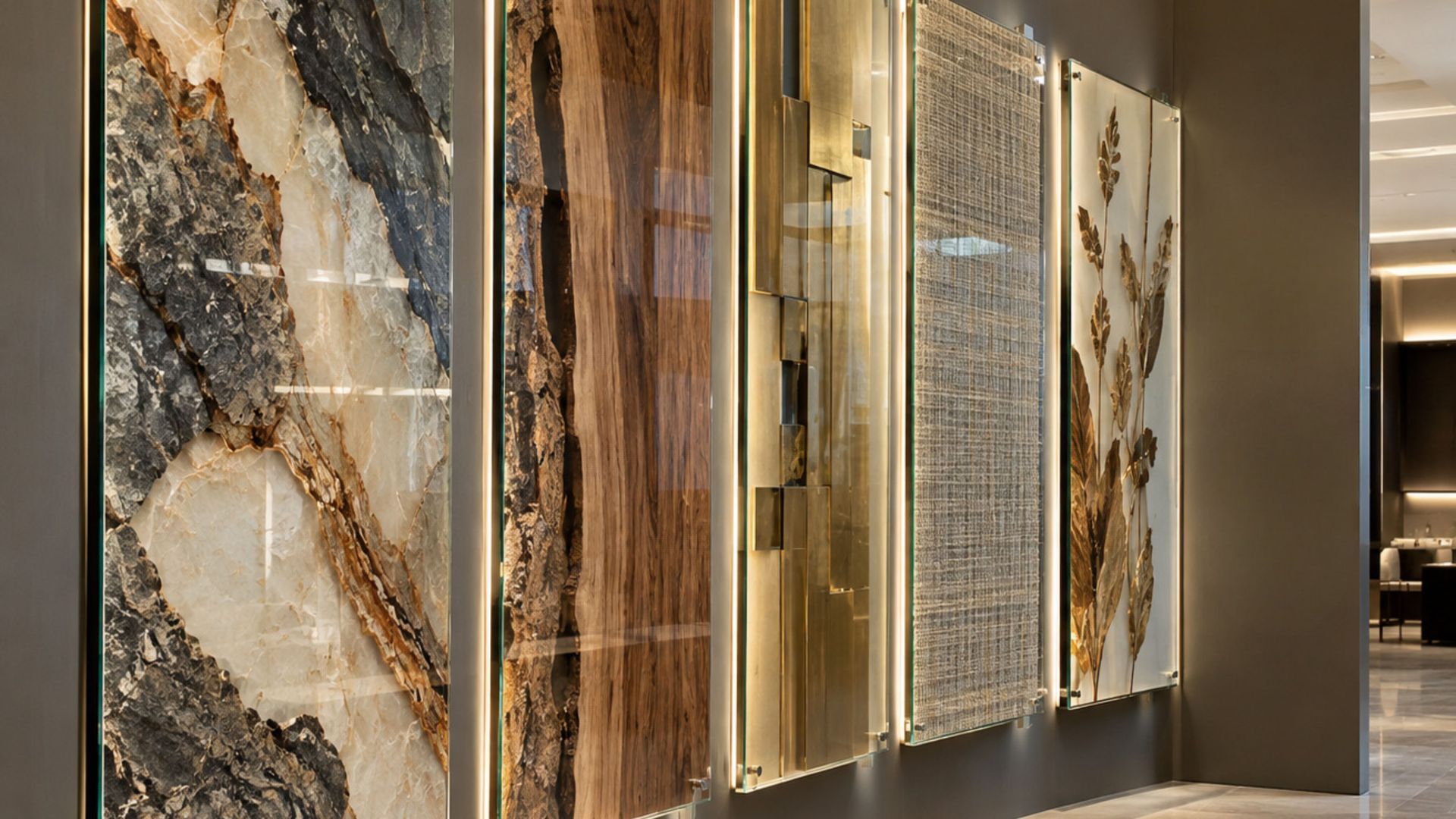
The glass itself can be transparent, translucent or opaque, depending on your design requirements. It can be digitally printed with photorealistic images lit up by the LED lightbars.
And because LED glass can be made from toughened or laminated glass, the resulting display can be resistant to impact, dust and water. Watertight edge-lighting systems are also available, allowing the glass assembly to be installed outdoors, as well as in.
What are the applications of LED glass?
The main aim of LED glass is to make a visual impact. This makes it widely used in both architectural and commercial applications, including office spaces.
Outside of the office, it's used for illuminated art, decorative shelving, edge-lit balustrades, storefront displays and signage in public spaces like airports and train stations.
But it's perhaps in the office that LED glass shines the brightest.
How is LED glass used in office interiors?
Feature walls
In office interiors, LED glass can be used for feature walls. A feature wall is a wall in a room that differs from the others in colour, texture, material or pattern. In short, it's a focal point or feature.
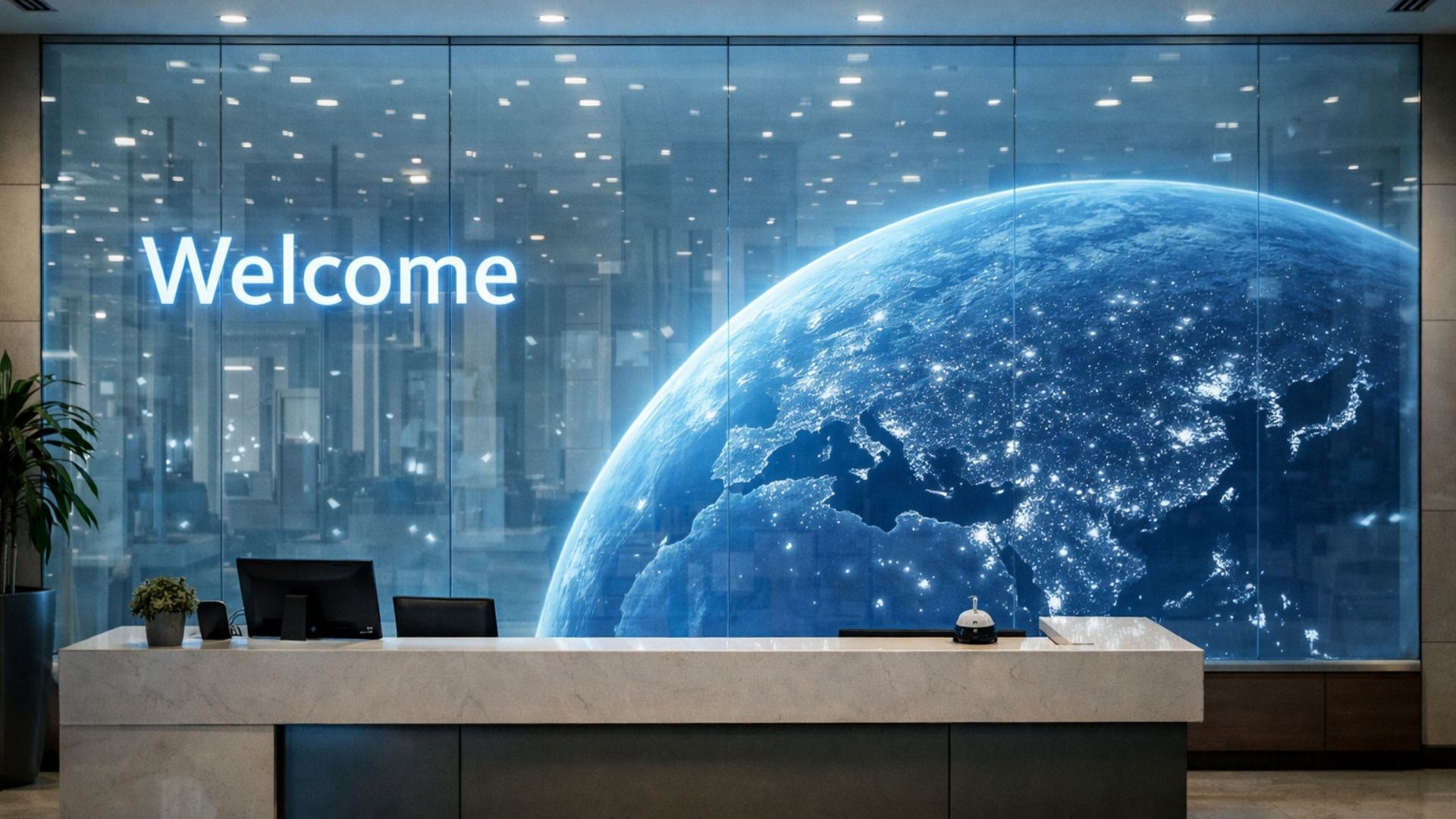
In an office environment, a feature wall can show clients, staff and third parties that you mean business. And because LED glass can be digitally printed, you can combine attractive lighting with company branding.
Illuminated signage
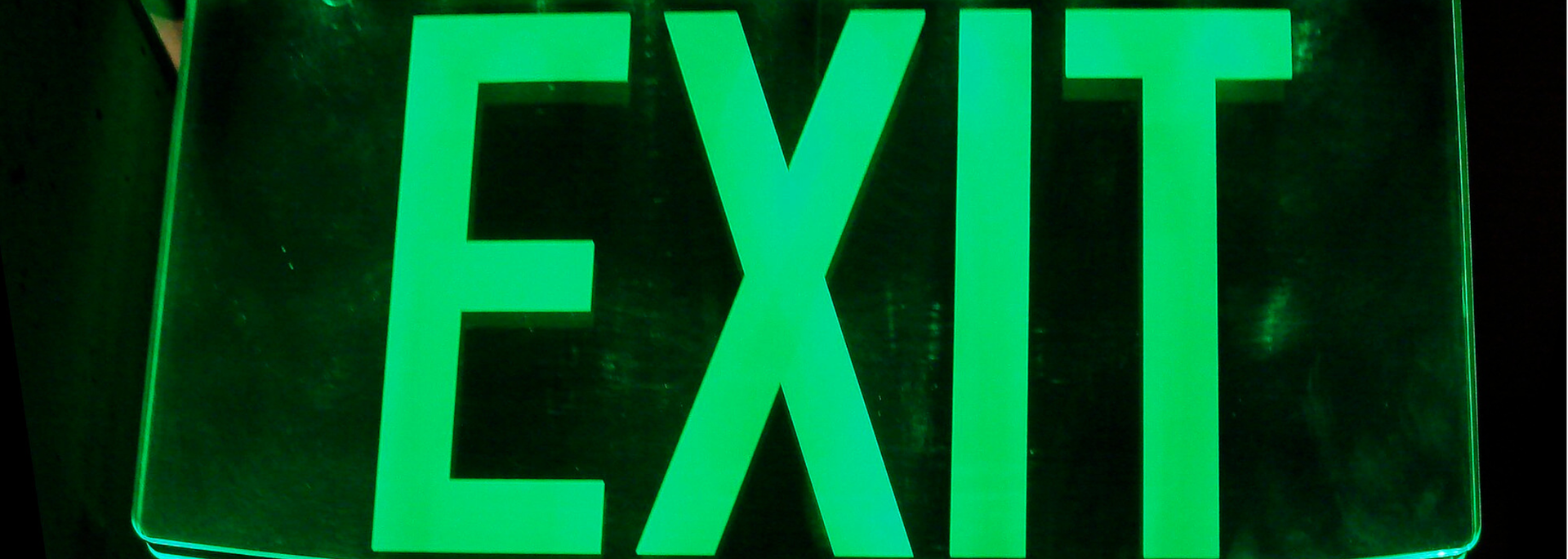
LED glass signs can have printed or sandblasted designs, providing an attractive visual feature that's all but unmissable. Applications include wayfinding signage, compliance signage, branding and smart office integration.
If you're thinking, "Like neon signs?", then yes – LED glass signage covers many of the same applications as neon signs. However, LED glass has four major advantages.
First, LED glass signs can be shatterproof and weatherproof – far sturdier affairs than neon signs with their fragile glass tubes.
Secondly, they consume significantly less energy than traditional neon, making them the material of choice for many environmentally forward companies. They also operate at a low voltage, reducing the risk of shock.
And finally, they can be manufactured in a wider range of colours of designs. That means it's easy to make an LED glass sign mirror your company colours, branding and identity.
Partitions and zoning
As well as feature walls and signage, LED glass can also be used for zoning.
Office zoning is all about strategically dividing a workplace into areas with distinct purposes: a focus zone, a breakout zone or a meeting zone, to take three common examples
This is intended to enhance productivity by tailoring areas of the office to specific tasks. Aside from anything else, it helps control the noise in an office – something that the acoustic properties of glass can also help with.
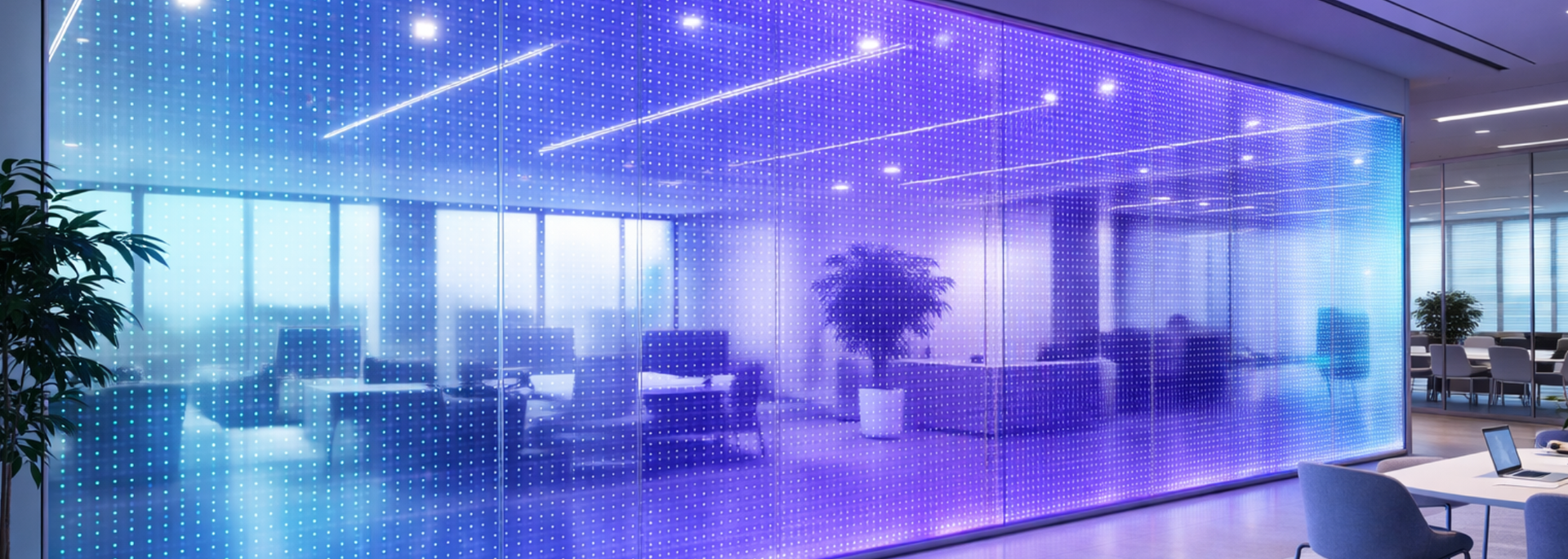
These zones can be separated by partitions, dividers or walls fitted with LED glass. This can help you create an aesthetically coherent workspace with distinct zones for distinct purposes.
How does LED glass work?
Edge-lit LED glass works by installing a lightbar to the side of the glass. This transmits light through the glass, creating an illuminated effect while still preserving the transparency of the material. With fully programmable RGBW LEDs, a vast spectrum of colours can be achieved.
LED glass is operated on low-voltage DC power and typically controlled via computer software. Increasingly, LED glass can be controlled by smartphones or other smart devices.
What's the difference between LED glass and smart glass?
LED glass consists of safety glass embedded with LEDs.
Smart glass(or "switchable glass"), by contrast, is a type of glass that can be switched from transparent to opaque at the touch of a button.
What kind of glass is LED glass made from?
LED glass is often made from toughened or laminated glass. These are both kinds of safety glass. Both are manufactured to be tougher than standard annealed glass and to break safely.
What should you look for in a LED glass supplier?
When sourcing LED glass for your office interior project, you need to make sure you're working with a reputable, experienced and accredited supplier.
By "accredited", we mean a supplier whose products have the Kitemark seal and meet the relevant BS EN standards. These should be clearly displayed on the company website.
What are LEDs?
LEDs are semiconductor light sources. Their low energy consumption and low heat emission make them ideal for everything from street illumination to TV displays, from agricultural grow lights to remote controls.
Are you looking for high-quality illuminated glass? Our World of Light range is fitted with Spanlite's industry-leading edge-lighting system and can be digitally printed in-house using virtually indestructible ceramic inks. Get in touch to find out more or request a quote.