Luxury interior design and fit-outs: why mesh glass feels premium
Want to add a premium feel to a retail or hospitality environment? Find out the role mesh-laminated glass can play.
Why do some materials feel premium and others don't?
In the case of mesh-laminated glass – a type of laminated glass with a woven metallic mesh texture – it's a combination of a few things.
There's the feeling of intentional design. There's the structural sophistication. There's the tactility created by juxtaposing sleek glass with textured metal.
All this works together to create a crafted, even artisanal look. If you're in a shop or bar with mesh-laminated glass features, you're likely to intuit that the designers were looking for custom solutions, not taking obvious routes.
Yes, mesh-laminated glass gives a premium feel in both retail and hospitality environments. In this article, we explore why.
How mesh-laminated glass is used in retail environments
You won't find mesh-laminated glass in many retail environments. This is because it's undeniably a high-end material.
It's durable and decorative, making facades, partitions, balustrades and displays shine with no compromise on safety. It can enhance branding through custom interlayers and create a sense of sophistication through subtle light diffusion.
What's more, its toughness makes it ideal for high-traffic areas. This is because mesh-laminated glass is, as the name suggests, a kind of laminated glass. And laminated glass is designed to keep its structural integrity in the frame after breaking.
It's also versatile. It can be combined with other kinds of glass and other kinds of materials to create premium visual effects.
Here are some key applications of mesh-laminated glass in retail environments:
- Facades and exterior walls
- Partitions and dividers
- Visual merchandising and displays
- Balustrades and staircases
- Wall cladding
How mesh-laminated glass is used in hospitality
High-end hotels, restaurants and bars are always looking for ways to communicate a premium aesthetic. A big part of this is the feeling of curation.
In interior design, curation is the sense that objects have been chosen for a reason. It's the difference between the bare functionality of a budget motel and the bespoke feel of an expensive hotel.
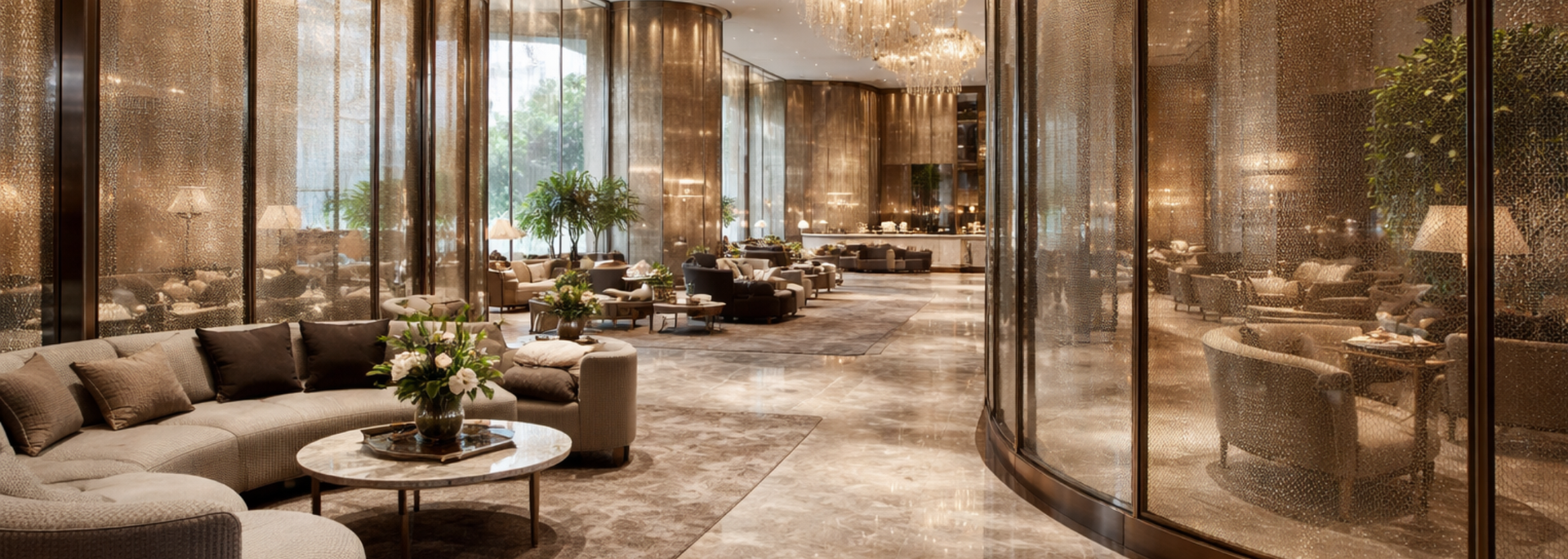
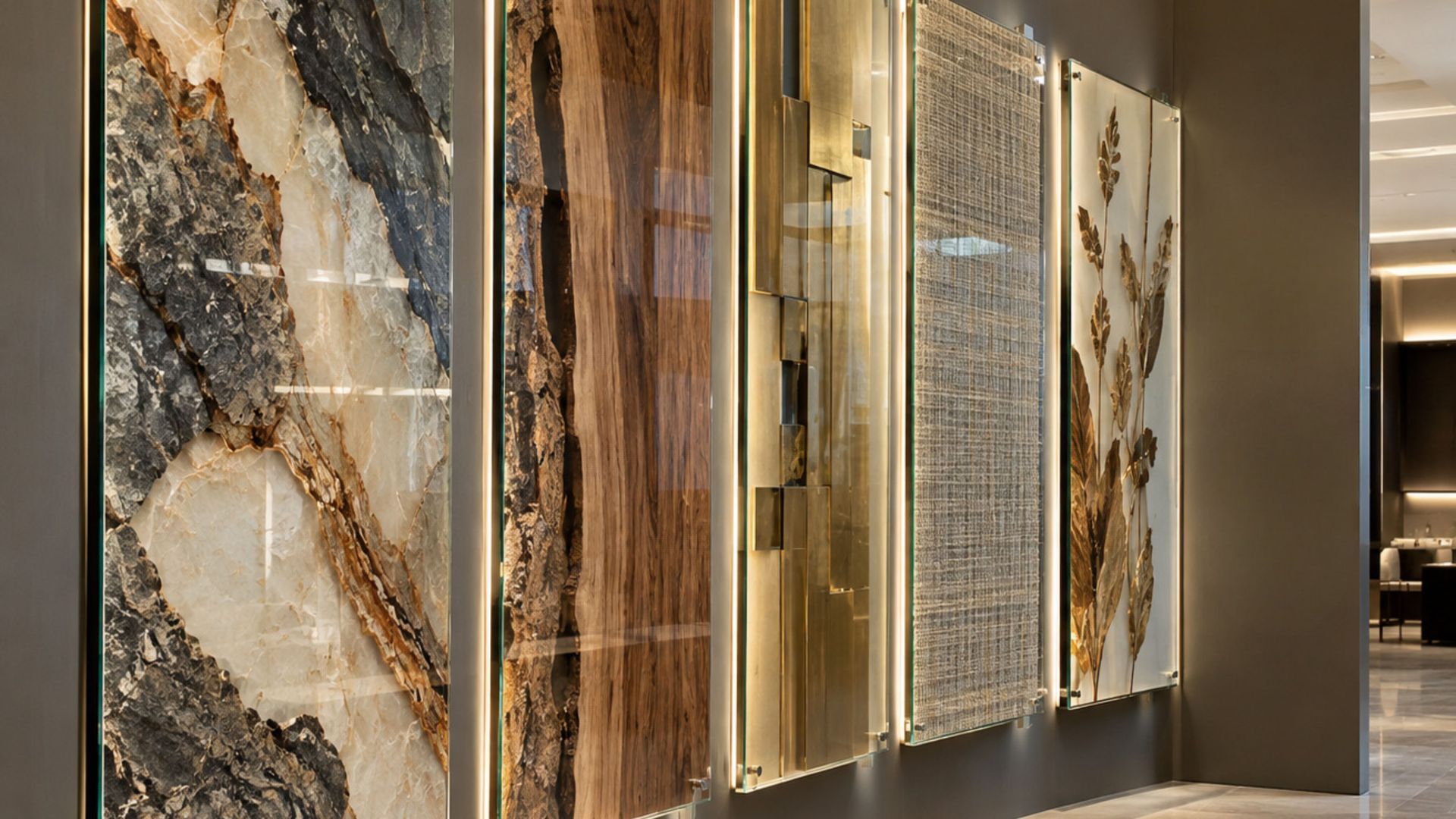
And like marble, exotic woods, precious metals and subtle lighting, mesh-laminated glass lets you know that your experience in this hospitality setting has been curated.
Here are some common applications of mesh-laminated glass in the hospitality sector:
- Partitions and dividers. These are sometimes found in restaurants and bars to create booths and other separated seating areas.
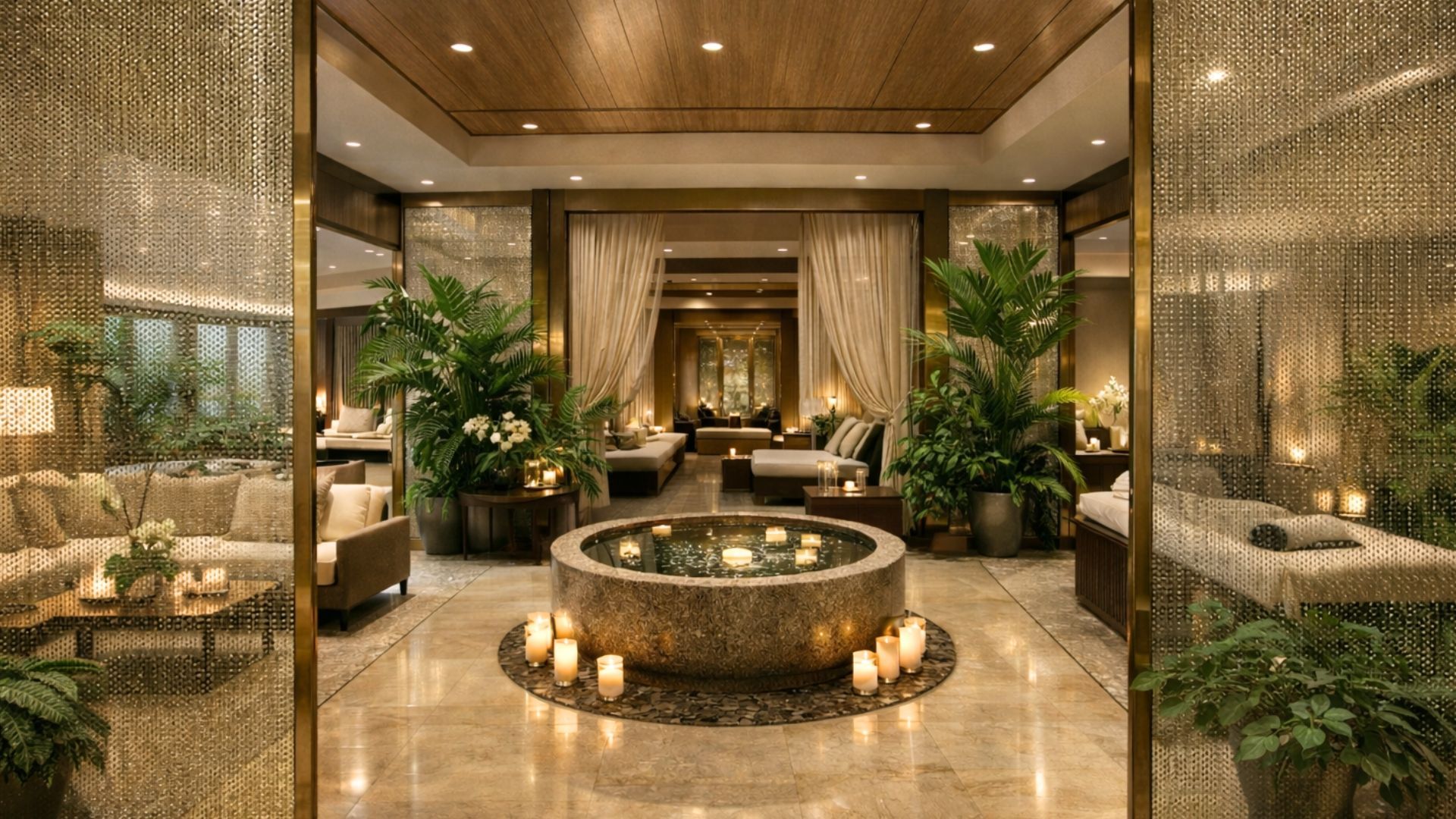
- Decorative wall panels. These act as feature walls or cladding in hotel lobbies, reception areas and restaurant lounges.
- Balustrades and railings. These provide safe yet stylish barriers for staircases, mezzanines and balconies.
- Bar fronts and splashbacks. These add shimmer and shine to bar areas.
- Elevator cabins. These can be internally clad with mesh-laminated glass for a high-end look.
- Furniture.
Mesh-laminated glass is used for cabinet fronts and tabletops, especially in hotels, bars and restaurants going for a quasi-industrial look.
Interior designers increasingly draw on mesh-laminated glass for hospitality for a reason – or, should we say, several reasons.
First and foremost, mesh-laminated glass contributes to a sense of luxury. Stepping into a room with mesh glass textures is like stepping into a jewellery box.
But it's not all about aesthetics. Mesh-laminated glass is highly safe and highly secure. This is all thanks to the lamination process, which results in a glass product that stays intact when broken.
Premium means privacy. So, it's no surprise that mesh-laminated glass is often used in hospitality settings where customer privacy is encouraged, whether through saloon doors or booth dividers.
Premium means low sound volume. Mesh-laminated glass provides acoustic insulation, softening the sounds for diners and drinkers and contributing to a calm yet classy atmosphere.
Premium means diffuse lighting. The mesh in the mesh-laminated glass unit lets light through while reducing glare.
And finally, premium means cleanliness. The plastic interlayer protects the metal mesh from dust and gunk, making it look as good as new.
Why does mesh-laminated glass feel like a premium material?
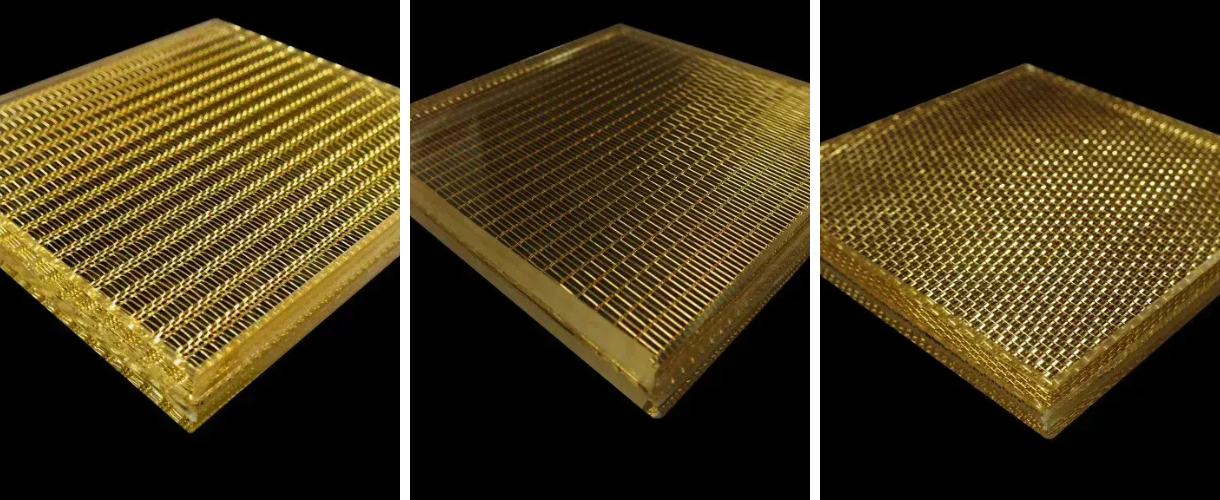
There's no denying that mesh-laminated glass feels like a premium material – as premium as cashmere, walnut or gold.
This is for a number of reasons. It's partly the sense of depth created by the laminated mesh glass. It's partly the way its metallic texture blends in with a range of materials, helping create an industrial-chic look.
It's partly the way it acts as a translucent divider – an effect much sought after in modern retail and hospitality spaces. Similarly, the way the glass muffles the sounds of the bar or hotel contributes to a sense of expense.
There's something premium, too, about the combination of materials. Mesh-laminated glass combines solid glass with metal, giving a sense of heft that other materials just don't possess. Meanwhile, the sleekness and coolness of glass suggest quality and quiet taste.
Finally, mesh-laminated glass is highly customisable. The mesh type is variable: from woven to braided to crimped. This means it can be tailored to specific design requirements, creating a sense of curatorship.
At the end of the day, you only have to look at a piece of mesh-laminated glass to see it's a premium product. It's perhaps this visible sense of luxury that has led to its increasing use in the retail and hospitality sectors.
How is mesh-laminated glass made?
Mesh-laminated glass is made by sandwiching a metal mesh layer between two or more sheets of glass with an adhesive plastic interlayer (often PVB or EVA). The glass panes are usually either toughened or heat-strengthened.
This sandwich is then cooked at extreme heat in an oven. The result is a highly durable decorative panel that can be used in a wide variety of settings.
Are you looking for high-quality, made-to-measure mesh-laminated glass? Get in touch with ToughGlaze today for a quick, competitive quote or explore our range of decorative glass products. We look forward to providing the right materials for the job.