Low-e glass vs double glazing: what's the difference?
Low-e glass and double glazing both improve window performance, but they do different jobs. Learn how they work together in modern energy-efficient glazing.
If you're comparing energy-efficient glazing options, you might hear people talking about low-e glass and double glazing as if they're competing technologies.
They're not.
Double glazing describes how a window is constructed. Low-e describes a special coating applied to the glass. In fact, modern high-performance windows commonly use both.
Double glazing improves insulation by separating two panes of glass with a sealed cavity. Low-e glass improves that performance further by reducing radiant heat transfer through the glazing.
To understand the difference, it helps to look at what each technology actually does.
What is double glazing?
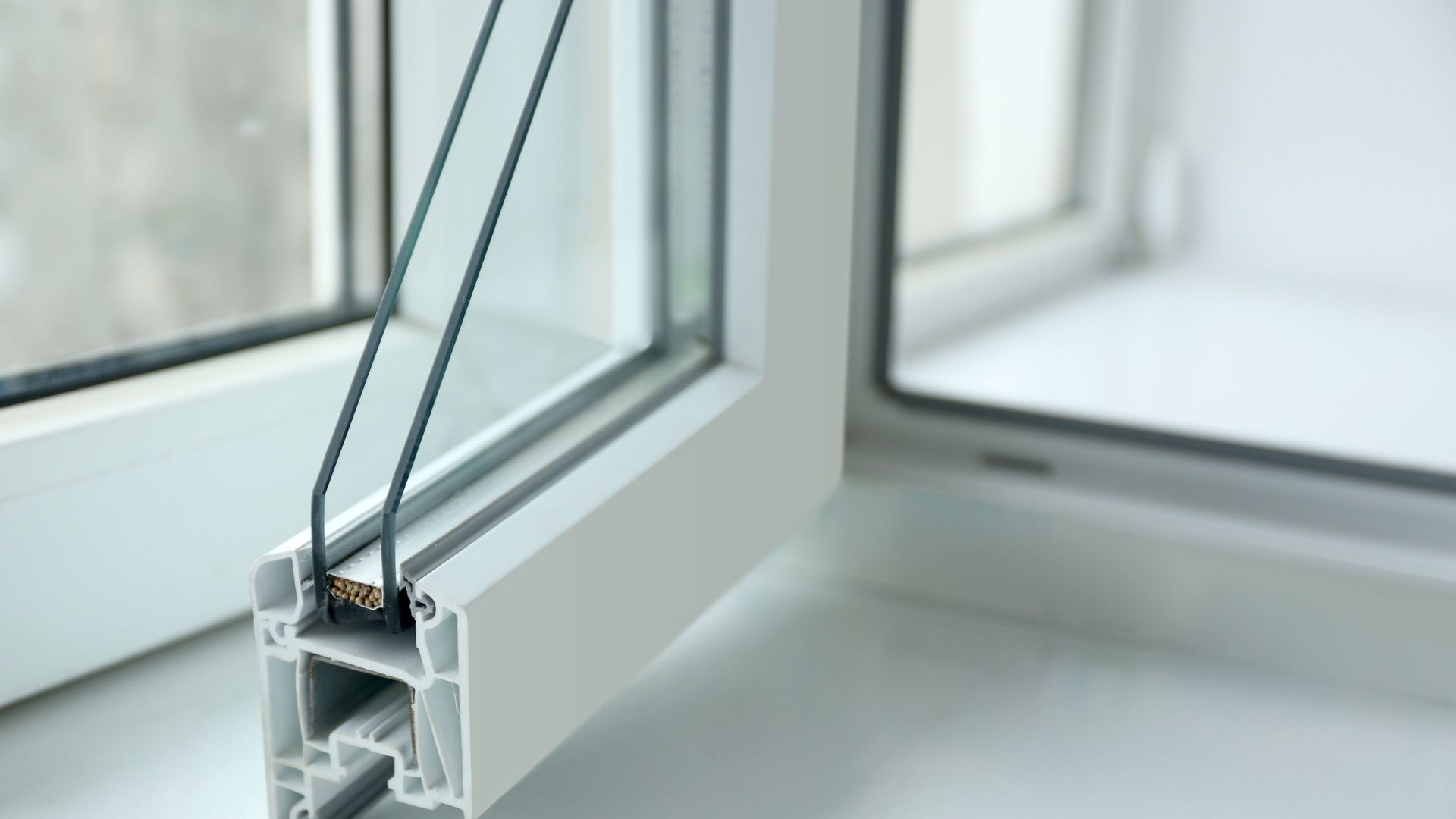
Double glazing consists of two panes of glass separated by a sealed space.
Together, the panes, spacer and sealed cavity form an insulated glass unit (IGU). The cavity normally contains dry air or an insulating gas such as argon.
That gap is important because a sealed gas-filled cavity transfers heat less readily than a solid sheet of glass. So, the gap acts as an insulating layer between the indoor and outdoor environments.
The same principle can be extended to triple glazing, which uses three panes and two cavities.
However, the number of panes isn't the only thing that determines performance. An IGU can also incorporate low-e coatings, solar-control coatings, warm-edge spacers, different gas fills and different types of processed glass.
So, "double glazed" tells you surprisingly little about how well a particular window will perform.
What is low-e glass?
Low-emissivity (low-e) glass has an extremely thin coating designed to reduce radiant heat transfer.
Ordinary glass absorbs heat and radiates some of that energy onwards. A low-e coating has much lower emissivity, so it reflects more long-wave infrared energy instead.
In a typical UK window, that can help reflect heat from inside a building back towards the room. Without the coating, much of it would escape through the glazing.
Crucially, the coating can do this while remaining transparent to visible light.
Different low-e coatings can also offer different degrees of solar control, reducing the amount of solar energy entering through the glass. Modern coatings can therefore be engineered to balance thermal insulation, solar gain and visible light transmission.
Is low-e glass better than double glazing?
This is a little like asking whether insulation is better than a cavity wall. They're different parts of the same solution.
A double-glazed unit creates an insulating cavity. A low-e coating improves how the glass itself interacts with heat.
When you put them together, you can achieve significantly better thermal performance than you'd normally expect from basic uncoated double glazing.
Low-e coatings are a key part of modern insulating glazing, while the cavity itself reduces heat transfer through conduction and convection. In other words, different parts of the IGU tackle different mechanisms of heat transfer.
That's why low-e glass is generally used as part of double or triple glazing, rather than as an alternative to it.
How does a double-glazed low-e unit work?
A modern double-glazed IGU has several components working together:
- The two panes of glass provide the basic structure.
- Between them, the sealed cavity reduces conductive and convective heat transfer. Argon is commonly used instead of ordinary air because it has lower thermal conductivity.
- Around the perimeter, the spacer keeps the panes apart. Warm-edge spacer technologies can further reduce heat transfer around the unit's edges.
- Then there's the low-e coating, which primarily reduces radiant heat transfer.
- Add the frame, seals and installation, and you have a complete window system.
This matters because no single component determines energy efficiency by itself. The performance of an entire window or façade can differ from centre-of-glass figures because frames and edge components also transfer heat.
Does argon replace the need for low-e glass?
No. Again, they perform different jobs.
Argon reduces heat transfer through the cavity because it conducts heat less readily than air. Low-e coatings, meanwhile, target radiant heat transfer.
Using one doesn't make the other redundant. In fact, they're commonly combined precisely because they complement one another.
The same applies to warm-edge spacers, high-performance frames and additional panes. Energy-efficient glazing is less about choosing one magic ingredient and more about designing the complete unit properly.
Does double glazing always contain low-e glass?
Not necessarily.
It's perfectly possible to manufacture a double-glazed unit from two panes of ordinary uncoated glass.
However, low-e coatings have become an important part of modern energy-efficient glazing because they can substantially improve insulating performance without requiring another pane of glass.
That distinction is useful when comparing products.
Two windows can both be described as "double glazed" while having very different thermal characteristics. One might use basic clear glass and an air-filled cavity. Another could combine a high-performance low-e coating with argon, a warm-edge spacer and an efficient frame.
The label alone doesn't tell you enough.
How can you compare the thermal performance?
The most useful starting point is the U-value.
U-values measure the rate at which heat passes through a building element. For glazing,
lower figures mean better insulation.
You'll sometimes see several different U-values:
- Ug-value refers specifically to the glazing.
- Uw-value refers to the complete window, including the frame.
- Similar whole-element figures can be used for doors and other glazed systems.
That distinction is important when comparing specifications. A very good centre-of-glass figure doesn't automatically mean the complete window achieves the same result.
If solar overheating is also a concern, look beyond the U-value to the g-value, which tells you how much solar energy passes through the glazing. And if daylight matters – as it usually does – consider visible light transmission (VLT) as well.
The bottom line: good glazing specification involves balancing insulation, solar control and natural light rather than chasing one number in isolation.
What about triple glazing?

Triple glazing adds another pane and another insulating cavity, which can further reduce heat transfer. However, that doesn't make low-e coatings unnecessary.
Modern triple-glazed units frequently use low-e coatings as well. The extra pane and cavities improve insulation in one way. The coatings improve it in another.
Whether double or triple glazing makes more sense depends on the required performance, frame design, weight, cost and application.
For many projects, a well-designed double-glazed unit with an effective low-e coating can offer strong thermal performance without the additional weight and complexity of triple glazing.
Where does solar-control glass fit in?
This is where the distinction becomes even more useful.
Traditional thermal-insulation low-e coatings are primarily intended to reduce heat escaping from a building. Solar-control low-e coatings can also reduce unwanted solar heat entering from outside.
That can be valuable on large glazed areas or residential windows and doors where summer overheating is a concern.
The challenge is maintaining useful daylight while controlling both winter heat loss and summer solar gain.
That's why specifications should consider Ug-value, g-value and VLT together rather than simply asking whether a product is "low-e" or "double glazed".
Combining low-e glass and double glazing with ClimaGuard® 365
ClimaGuard® 365 provides a good example of how the two technologies work together.
It's a soft-coated low-e glass product designed for use within a double- or triple-glazed IGU, rather than an alternative to insulated glazing.
The coating combines thermal insulation with solar control, helping retain indoor heat during colder weather while reducing unwanted solar gain in summer.
In its standard double-glazed configuration, ClimaGuard® 365 achieves a Ug-value of 1.0 W/m²K and 75% visible light transmission, alongside 38% solar transmittance. It's designed to maintain a bright, neutral appearance while providing year-round thermal performance.
For installers, fabricators and other trade professionals, the important point is this: you don't have to choose between low-e glass and double glazing.
The real question is
what kind of glass should go into the double-glazed unit.
Are you specifying residential glazing where insulation, summer solar control and natural light all matter? Contact ToughGlaze to discuss ClimaGuard® 365 and the most appropriate glass specification for your project.