Mesh glass in balustrades: structural and safety considerations
When specifying a mesh-laminated glass balustrade, there are a few things to keep in mind. Explore them with us in our guide.
In the world of architectural glazing, the success of a feature is never just functional or just aesthetic. Glass has to be safe and aesthetically pleasing. Sacrifice one for the other, and you're putting clients at risk or simply putting them off.
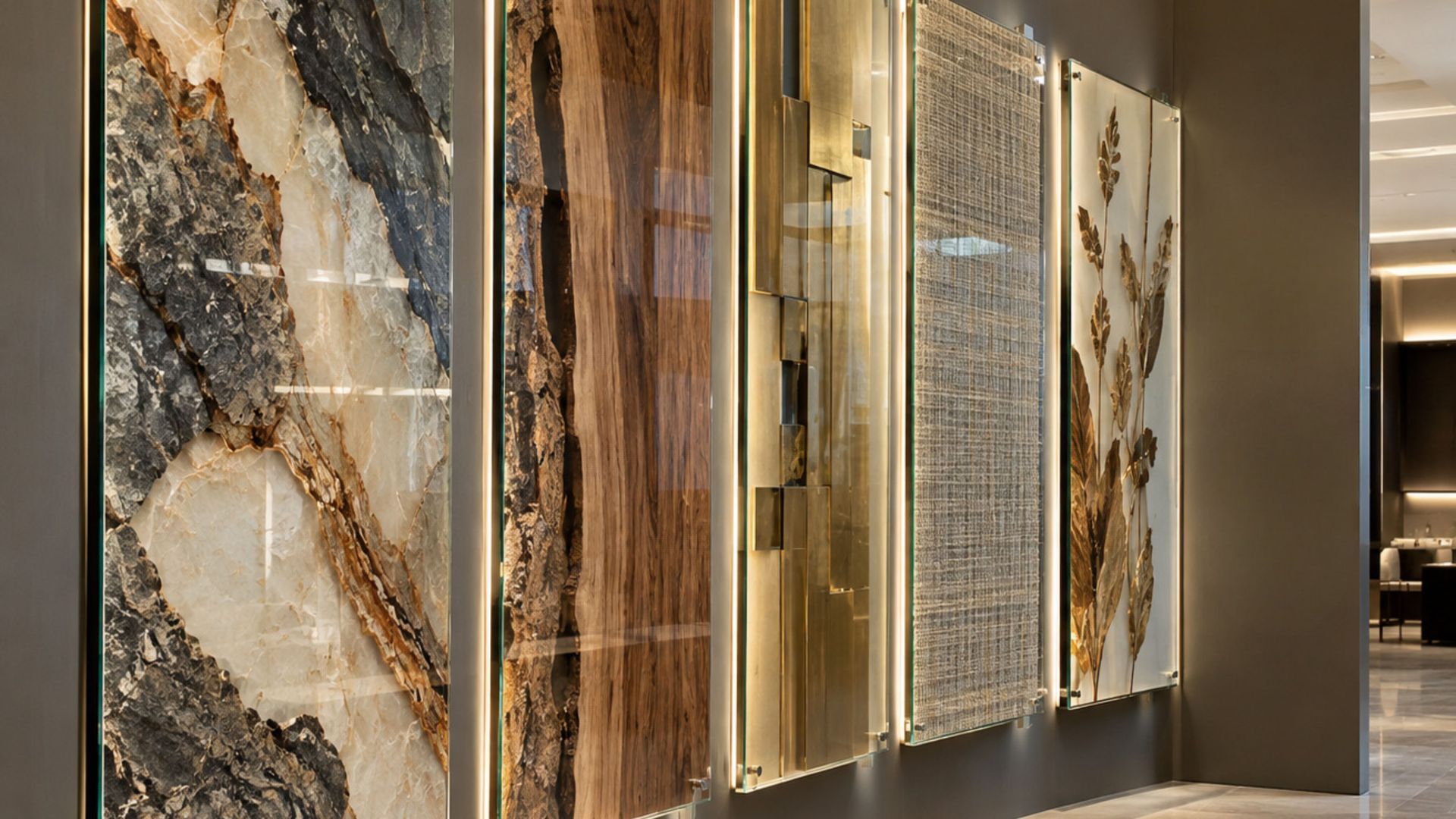
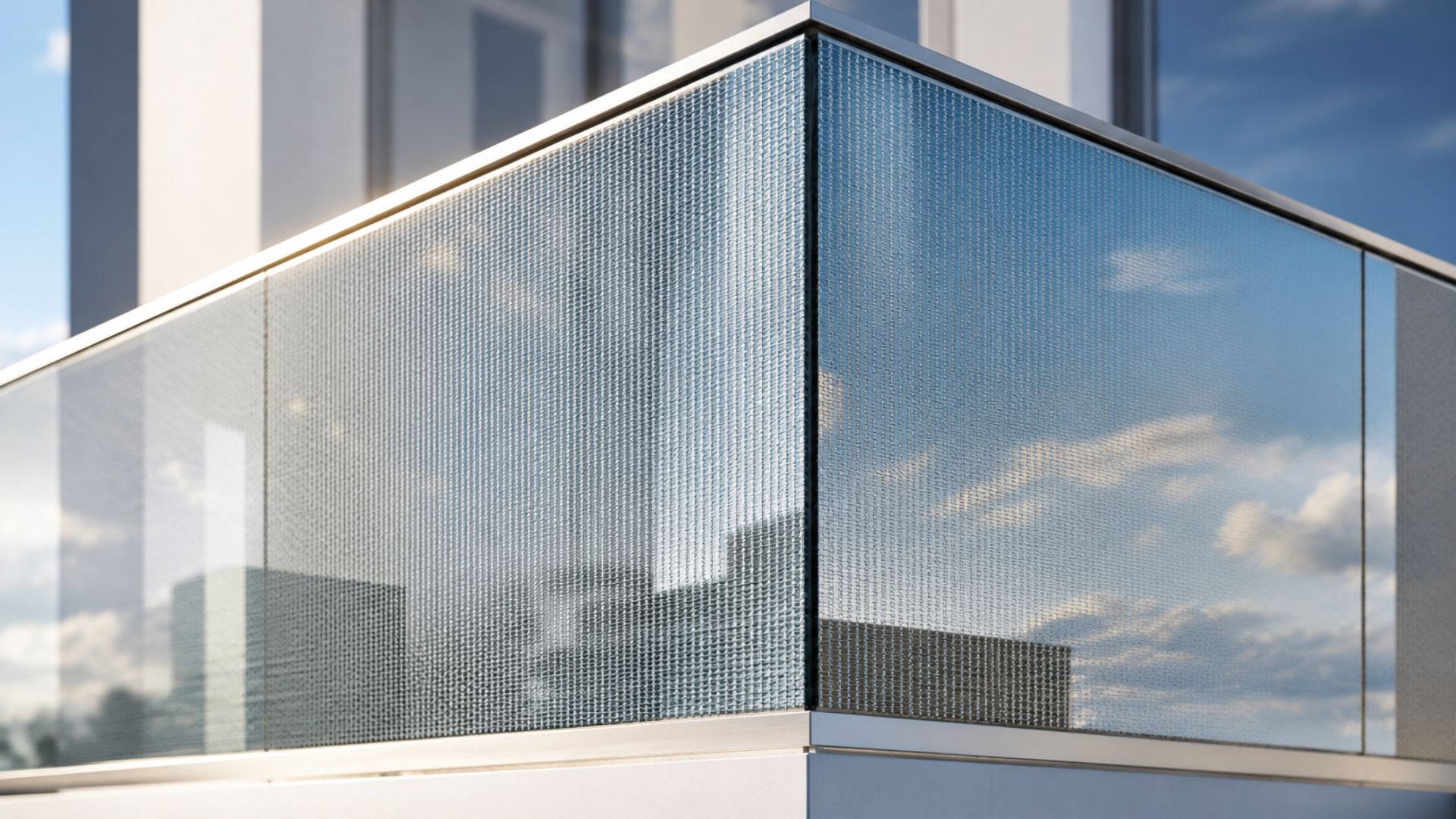
This goes for all varieties of safety glass, including mesh-laminated glass. This is a form of high-strength safety glass that's manufactured by sandwiching a metal mesh between two or more glass panes. This is then bonded together with a plastic interlayer, often made from PVB (polyvinyl butyral).
Mesh-laminated glass can create all sorts of striking visual effects. Depending on its setting, it can be ruggedly industrial, delicately poetic or anything in between. And it can do so while adhering to strict building regulations about safety glass.
Mesh-laminate glass is a versatile product used in a variety of ways. One popular choice in high-end settings is mesh-laminated glass balustrades.
Why is mesh-laminated glass used in balustrades?
Mesh-laminated glass is used in balustrades for two reasons. First, it provides a high-end decorative look and secondly, it offers high levels of safety and structural integrity.
Laminated glass is a super-strong product thanks to its construction and manufacturing process. It takes an enormous amount of force to damage a laminated glass unit. And, when it does finally give way, the cracked glass is designed to remain in its frame, limiting the risk of falling glass.
Add a mesh interlayer and you have a product strong enough to be the main material in balustrades. A material, moreover, that meets relevant industry standards and building regulations for the use of safety glass.
As well as its versatile aesthetic and high levels of safety, mesh-laminated glass is used for balustrades because it maintains privacy while diffusing light.
What are the safety requirements for laminated glass?
To be used for balustrades, all types of laminated glass need to meet specific standards. These are BS EN 12600 and BS 6206.
Laminated glass is mandatory in "critical locations". These are:
- Glazed areas within 800 mm of the floor
- Glazed areas within 300 mm of doors
- Full-height glass (below 1,500 mm) such as windows, partitions and doors.
It's also mandatory for glass balustrades and stair railings.
As well as meeting industry standards, laminated glass – including mesh-laminated glass – needs to be permanently marked as safety glass. This marking should be visible after the balustrade or other glass feature has been installed.
Where are balustrades required?
Balustrades are required in certain settings. The balustrade can be made from any material so long as it conforms to industry safety standards and building regulations.
Mesh-laminated glass is an increasingly popular choice, combining as it does the strength of laminated glass with the aesthetic potential of a metallic mesh interlayer.
Balustrades are required in private dwellings when the difference in floor level exceeds 600 mm. They're also required in commercial, public or multi-occupancy buildings on staircases with more than two risers.
What are the load requirements of mesh-laminated glass balustrades?
There are also requirements surrounding the loading strength of glass balustrades. These depend on the type of building and the type of traffic intended to use it.
The point of these load requirements is to ensure that the glass balustrade won't break if someone falls against it or a large force is applied to it.
The specific load requirements can be found in Building Regulations Part B and BS EN 1991-1 parts 1 and 4. They're measured in kNs (kilonewtons).
Looking after edges
A popular look in high-end applications is a kind of seamless minimalism. This often relies on applications without frames or handrails, giving building users the impression that the glass is free-floating.
It's a popular architectural choice for a reason. However, it can lead to a problem in the form of edge exposure. If laminated glass is left exposed, the edges can become delaminated over time.

Laminated glass consists of two panes of glass bonded with a plastic interlayer. If weathering causes the unit to delaminate, the interlayer becomes vulnerable to rain, dew, humidity and heat.
These can all cause the interlayer to degrade or even detach from the glass. Water ingress can also give the glass a cloudy or milky appearance around the edges.
We've explored the topic of delamination in detail. It can be the result of poor installation. More often than not, however, it's because of sourcing your materials from second-rate processors.
Along with compliance and overall performance, this is a key reason why it's important to choose a high-quality processor when sourcing mesh-laminated glass for a balustrade or other application.
Balancing visual density and building regulations
Building regulations can affect the visual density of a glass balustrade installation. In the case of Juliet balconies, for instance, barriers need to be clearly visible to avoid collisions – even if they're made from transparent glass.
This is less of a concern with mesh-laminated balustrades, the design of which tends to make them visible to building users. Nevertheless, it's something to keep in mind if using a mixture of mesh-laminated and transparent glass for a balustrade installation.
What are the essential documents for glass balustrade installations?
It's important to note that the information in this article is no substitute for consulting essential documents. In the case of mesh-laminated glass balustrades, these are:
- Building Regulations Approved Document B
- Building Regulations Approved Document K
- BS 6180:2011. This is the code of practice for barriers, defining load requirements and safety standards.
- BS 6262: Glazing for building.
- EN 12600 Glass in building – Pendulum test. This specifies the impact test method for glass used in buildings.
- Eurocode EN 1991-1
Are you looking for glass for balustrades? At ToughGlaze, we offer high-quality, compliant safety glass with a huge range of decorative processing options, including mesh lamination. Don't hesitate to get in touch with our experts to discuss your project or request a quote.