Museum and gallery glass: balancing protection and visibility
What glass products are used in galleries, museums and similar settings? Explore product options and specification considerations.
There's a reason glass specification is often a detailed process. Like all building materials, glass serves different purposes in different settings – purposes that must be reflected in your choice of product.
The glass required for a hotel balcony, to take a clear example, will be very different from a recording studio partition.
Yes, glass typically needs to be durable, impact-resistant and thermally efficient. But the degrees of durability, impact resistance and thermal efficiency are context-dependent. Moreover, some applications require functionalities that others don't – opacity, say, or soundproofing.
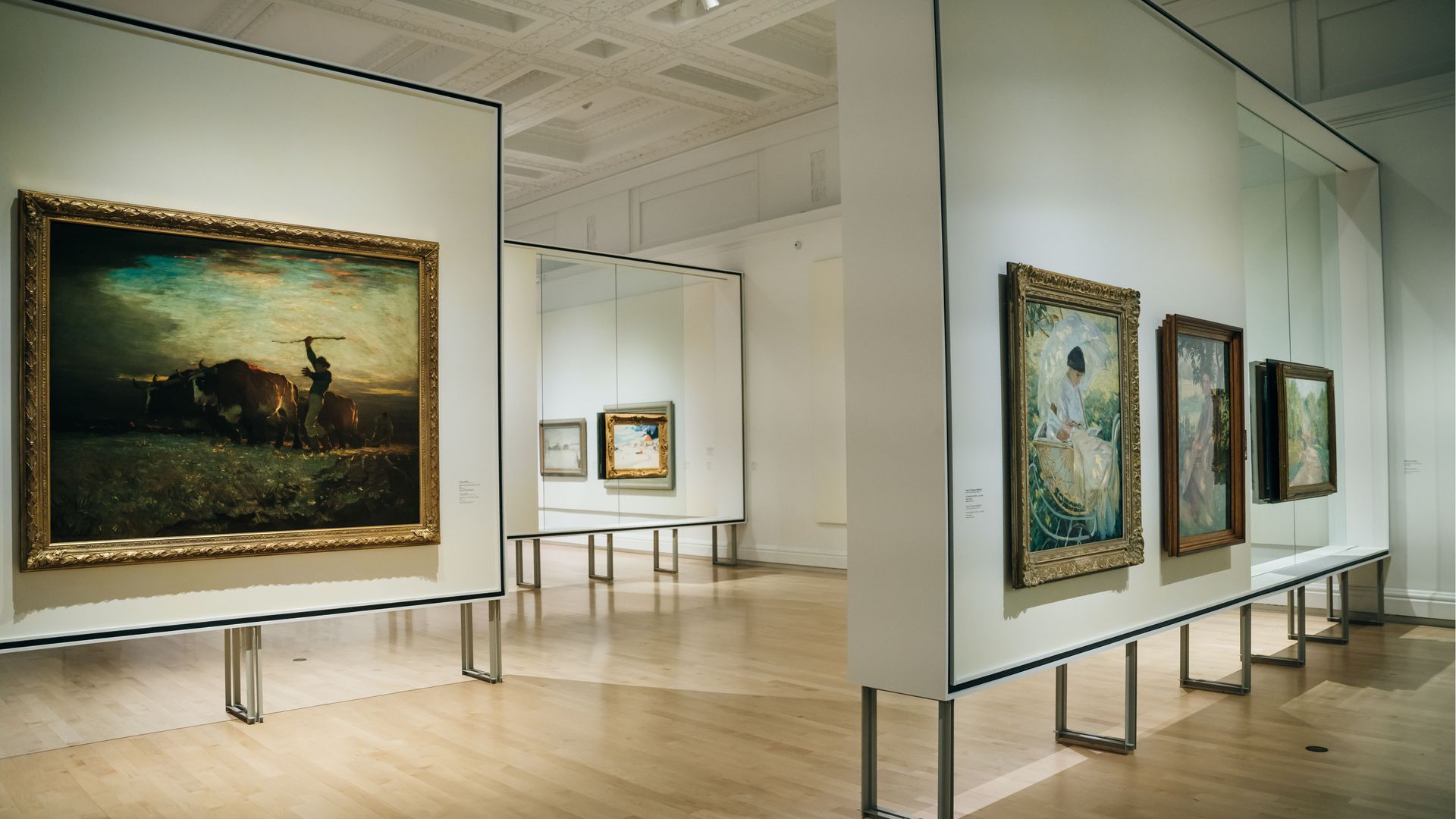
In the case of glass for museums and galleries, there's a balancing act at play. The glass must protect the artworks while maintaining visibility.
In some cases, protection only means a barrier between the visitor and the artwork. In others, it means enhanced protection against vandalism or protection against light exposure.
Visitors need protection, just as the artworks do. If a glass frame or cabinet shatters, you want it to break into small, relatively harmless pieces – not large pieces that could injure visitors.
And, of course, the glass needs to match the atmosphere of the gallery or museum. A museum of folklore likely has a different aesthetic from a contemporary art gallery. These differences should be reflected in the choice of glass alongside other materials.
What does glass in museums and galleries need to do?
1. Provide clarity
Paintings, artefacts, information displays, tapestries – all these (and more) must be presented clearly to the gallery- or museum-goer.
The glass used to protect these objects must provide clarity as well as protection. This means high light transmission, low reflectivity and glare, neutral colouration and as little optical distortion as possible.
2. Protect against light damage
It's not only thieves who pose a threat to artworks. Art objects, including watercolours, prints, drawings, textiles, photos and manuscripts, can all be damaged by exposure to light.
This often necessitates the use of UV-resistant glass. These products filter excessive UV rays to help prevent premature fading or deterioration.
3. Keep objects secure
Objects in museums and galleries are vulnerable to vandalism, theft, forced entry and accidental knocks and bumps. In many cases, these are mitigated with security glass – a type of laminated glass designed to withstand deliberate attack.
4. Keep visitors safe
If glass breaks, visitors must be kept safe. There are two main options here: toughened glass and laminated glass. Both are classified as safety glass.
Toughened glass is designed to break into many small pieces that are easy to clean up and less likely to injure visitors.
Laminated glass, meanwhile, is designed to break but not shatter. That's thanks to its layered design: at least two layers of glass with a plastic interlayer between. The interlayer holds shards in place, helping to maintain some structural stability.
5. Stabilise the environment
Display cases and picture frames are more than just ways of presenting objects. They also help control the environment, protecting objects against humidity, temperature fluctuations, dust, insects and other contaminants. Glass plays a pivotal role in this environmental control.
6. Meet architectural and design requirements
Often, glass in museums and galleries must be strong enough to support large panels. What's more, specifiers often look for glass that's easy to clean, lightweight, durable and compatible with certain frames or display cases.
All these architectural and design requirements help balance protection and visibility and must be reflected in the initial specification.
What kinds of glass are used in museums and galleries?

Low- or anti-reflective glass
Gallery owners use low- and anti-reflective glass for paintings, photos, prints and other artworks that would otherwise be spoiled by reflections.
These glass products reduce glare and reflections and have a clear, neutral appearance. If you're looking at a picture frame in a gallery, you're likely looking through low- or anti-reflective glass.
UV-resistant glass
Paper, textiles, photos, manuscripts, tapestries and other historic items all need protection against UV radiation. Without it, colours can fade, and materials can gradually deteriorate.
Specialist UV-filtering glass can be used on its own, but in museums and galleries UV protection is often combined with other performance requirements. Laminated glass is a common choice because its interlayer can both filter UV radiation and help retain the glass if it breaks.
Laminated glass
Laminated glass consists of two or more sheets of glass bonded together with a polymer interlayer – often polyvinyl butyral (PVB) or SentryGlas.
The main benefit of laminated glass is that it's designed to hold together if it breaks. This protects both the artwork and anyone nearby when the glass breaks. It's also ideal for large display cases and structural glazing within a museum or gallery.
Toughened glass
Toughened glass begins life as standard annealed glass. It's strengthened in a furnace until it's up to five times stronger.
It's used for its strength and its distinctive breakage pattern. When it breaks, it shatters into small, relatively safe pebble-like pieces rather than big shards.
Alternatives to glass
Some museums and galleries use acrylic or polycarbonate for display cases and glazing. Acrylic is lightweight and highly transparent, while polycarbonate boasts high impact resistance.
How these types of glass meet different use cases
Usually, a display case or picture frame fulfils multiple functions. At the very least, it's built to balance protection and visibility.
If the priority is reducing reflections, designers and fitters will often specify low-reflective or anti-reflective glass. If UV rays need to be blocked, specialist UV-resistant glass or laminated glass will tend to be specified. Toughened and laminated glass are used for extra impact resistance, security and safer breakage behaviour.
Here at ToughGlaze, we provide museums and galleries with high-quality toughened and laminated glass. This balances protection and visibility and fulfils other functions essential to the smooth running of a museum or gallery space.
Are you fitting out a museum or art gallery? Our UK experts can help you choose the right glass for the job. Get in touch with ToughGlaze online today.