Designing with texture: the architectural potential of mesh-laminated glass
Looking to add mesh textures to a facade or other architectural feature? Explore the textural potential of mesh-laminated glass.
Form and function haven't always been easy bedfellows. When designing architecture, there's often a gap between an aesthetic vision and practical considerations. In fact, you could say that this gap is where architecture begins and where it blossoms.
That said, it's never been easier to realise architectural ideas – and this is partly because core materials such as glass are now more versatile than ever.
No longer are you forced to choose between high performance and aesthetics. Today's architectural glass covers both bases, whether you're incorporating texture, light control, colour, printed designs or switchable smart glass.
A great example of this is mesh-laminated glass. This is a laminated glass unit with a metal mesh inside. The mesh can be made from brass, aluminium, stainless steel, bronze or copper, and gives you the solar control of glass with the look of metal.
It's a fantastically versatile glass product that can create striking visual effects in all sorts of buildings in all sorts of styles.
In this article, we take a closer look at mesh-laminated glass and how it can help you realise your architectural vision.
But before we go any further, it's important to say that all glass is not created equal. While regulations apply to all glass manufacturers, processors and suppliers, you're not guaranteed the highest quality glass.
For that, you need to look for a reputable, experienced supplier that's happy to talk you through your options and limitations.
What is mesh-laminated glass?
Mesh-laminated glass is a kind of safety glass. This is a broad category of glass products that includes
toughened glass (also known as "tempered glass") and
laminated glass.
Toughened glass is manufactured so that it breaks into many small, relatively harmless pieces rather than jagged shards. It's up to five times stronger than standard annealed glass.
Laminated glass, by contrast, is a unit consisting of two or more panes of glass with a plastic interlayer. When smashed, the interlayer ensures the unit as a whole retains structural integrity, stopping glass from falling and potentially causing injury.
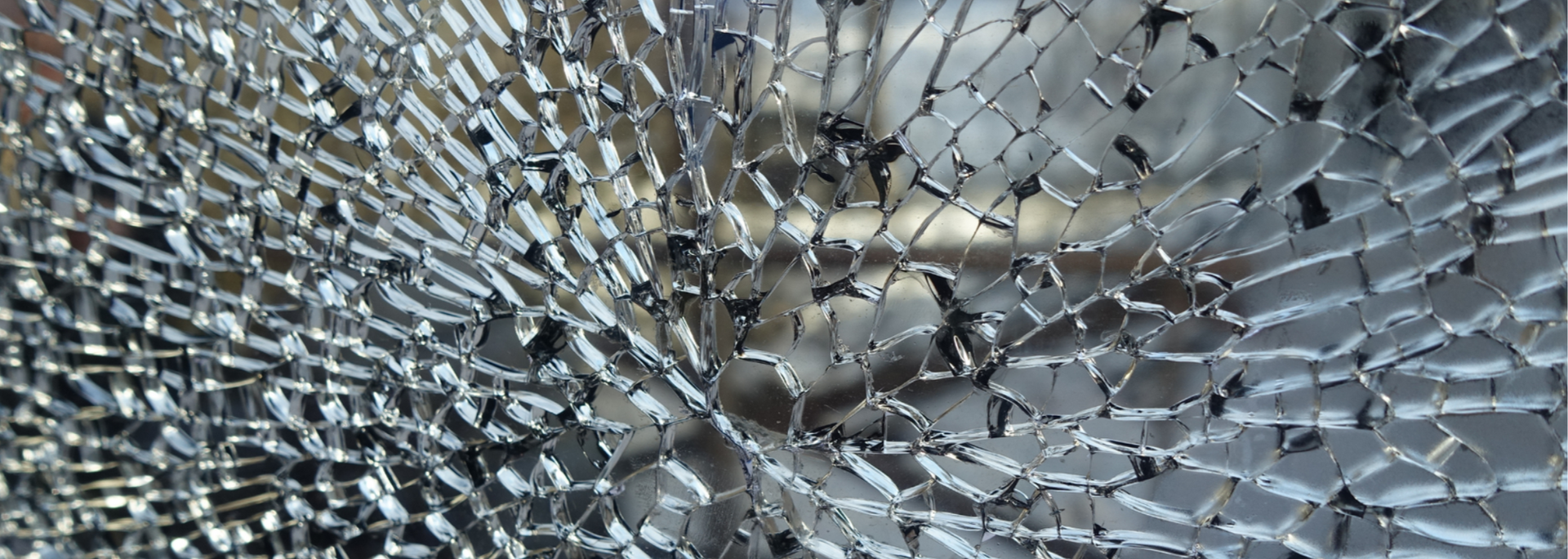
In the case of mesh-laminated glass, you get a laminated unit (sometimes made with panes of toughened glass) with a mesh interlayer. This gives you all the durability, impact resistance, UV protection and sound insulation of laminated glass with an appealing decorative, textured aesthetic.
How is mesh-laminated glass used in architecture?
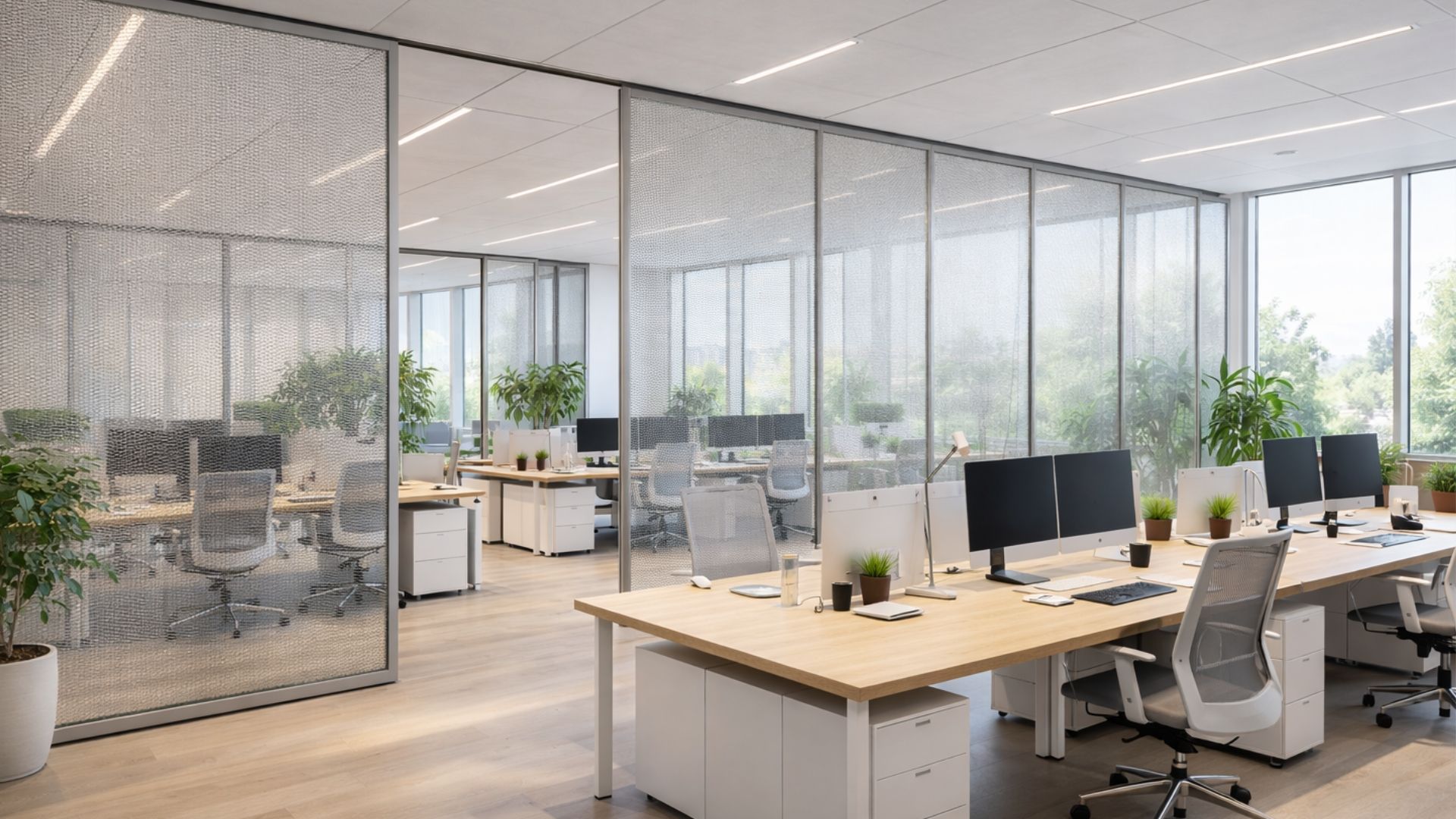
Mesh-laminated glass has many applications in architecture. It's used in office spaces, hotels and shops for partitions and doors, defining space without blocking light.
It's also used for balustrades and railings, providing barriers for staircases and balconies that are beautiful as well as protective.
Mesh-laminated glass can also be found in curtain wall facades, providing superior solar control alongside a unique, metallic aesthetic. The same goes for feature walls and cladding.
It's also found in facades, skylights and windows. Like other kinds of translucent glass, this allows light to flow while maintaining privacy.
Finally, it can be used for elevators, providing passengers with aesthetic appeal as they travel up and down a building.
These applications are mostly found in upmarket areas, providing a touch of chic to functional architectural features. And because it tends to be installed in high-traffic areas, laminated glass is required to ensure durability and safety for building users.
What are the benefits of mesh-laminated glass in architecture?
The primary appeal of mesh-laminated glass in architecture is its aesthetic appeal. As with many modern glass products, however, the benefits of mesh-laminated glass are functional as well as aesthetic.
The fact that the product is laminated makes it highly safe and secure. Laminated glass is up to six times stronger than standard annealed glass. This makes it exceedingly hard to shatter – and when it does finally break, it's more likely to maintain structural integrity and remain in its frame.
Mesh-laminated glass is versatile. The mesh can be made from a range of metals to suit different requirements. The metal itself can be stylistically diverse, with woven wire, expanded metal, perforated metal and crimped mesh being popular options.
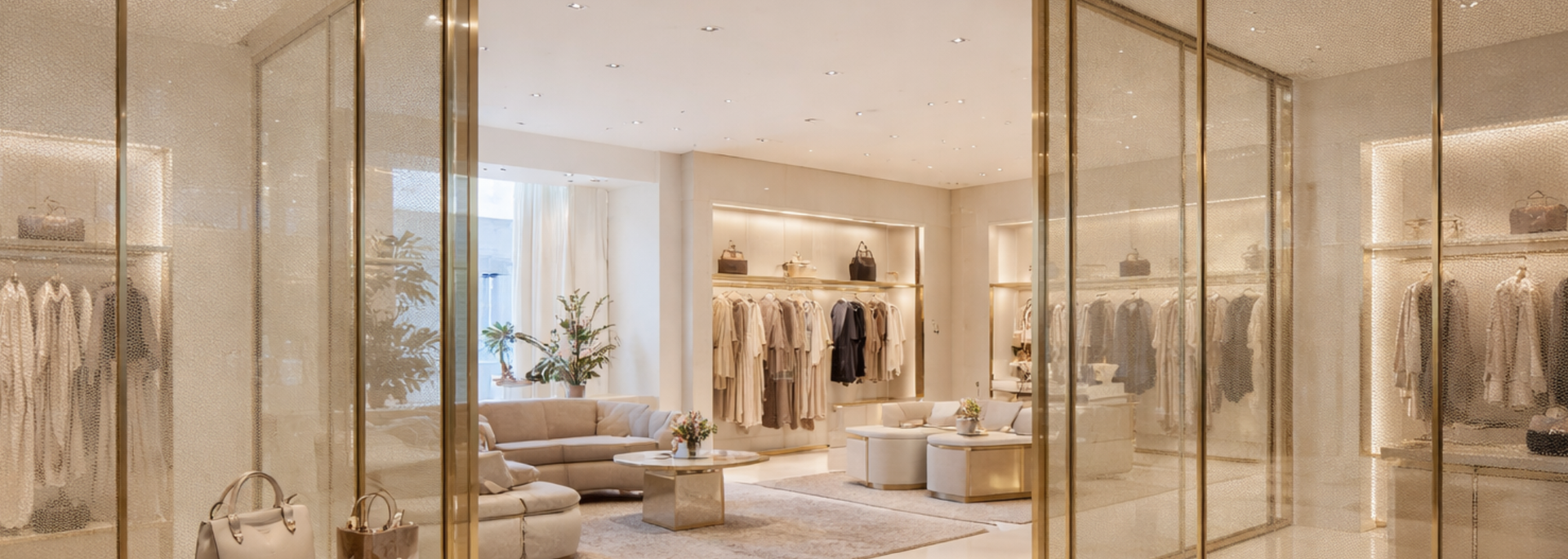
Finally, mesh-laminated glass is great for architectural installations because it balances the flow of light with privacy. Light enters the building without exposing building users to any prying eyes. This can be invaluable in hotels, offices, boutiques and other buildings where privacy is all-important.
What should you look for in mesh-laminated glass?
When choosing mesh-laminated glass for your architectural project, there are a number of things to look out for.
You should ensure you buy a product where the mesh is properly aligned and bonded without air pockets.
You should also ensure the product is made from the right type of glass for your intended use case. This could be toughened, heat-strengthened or annealed glass.
It can be wise to invest in mesh-laminated glass with a waterproof interlayer. Without it, you can't feasibly install mesh-laminated glass in exterior applications, such as curtain walls and external windows.
Finally, you should always make sure that the manufacturer, processor or supplier you're working with has the right credentials.
We mean a few things by "credentials". The firm should be experienced and reputable, with a proven track record of success and positive testimonials.
It should also be able to demonstrate that its manufacturing and processing methods are compliant. Look for the Kitemark seal of approval and compliance with BS EN standards.
How we can help
At ToughGlaze, we provide a wide range of architects with robust and attractive mesh-laminated glass. Like all our products, it's Kitemark-approved and tested to all relevant BS EN standards.
Whatever architectural application you have in mind, our mesh-laminated glass will do the job. Its waterproof interlayer makes external applications possible.
The mesh interlayer can be made from brass, aluminium, stainless steel, bronze or copper, and we'll cut your glass to your exact specifications.
Want to learn more about our mesh-laminated glass? Check out TG ML, our mesh laminate product, or explore specific use cases for mesh glass.