Glass Juliet balcony building regulations explained

Simon Edward • 9 March 2026

Are you involved in sourcing materials for a glass Juliet balcony? Get the jargon-free facts you need to stay compliant.


Are you involved in sourcing materials for a glass Juliet balcony? Get the jargon-free facts you need to stay compliant.

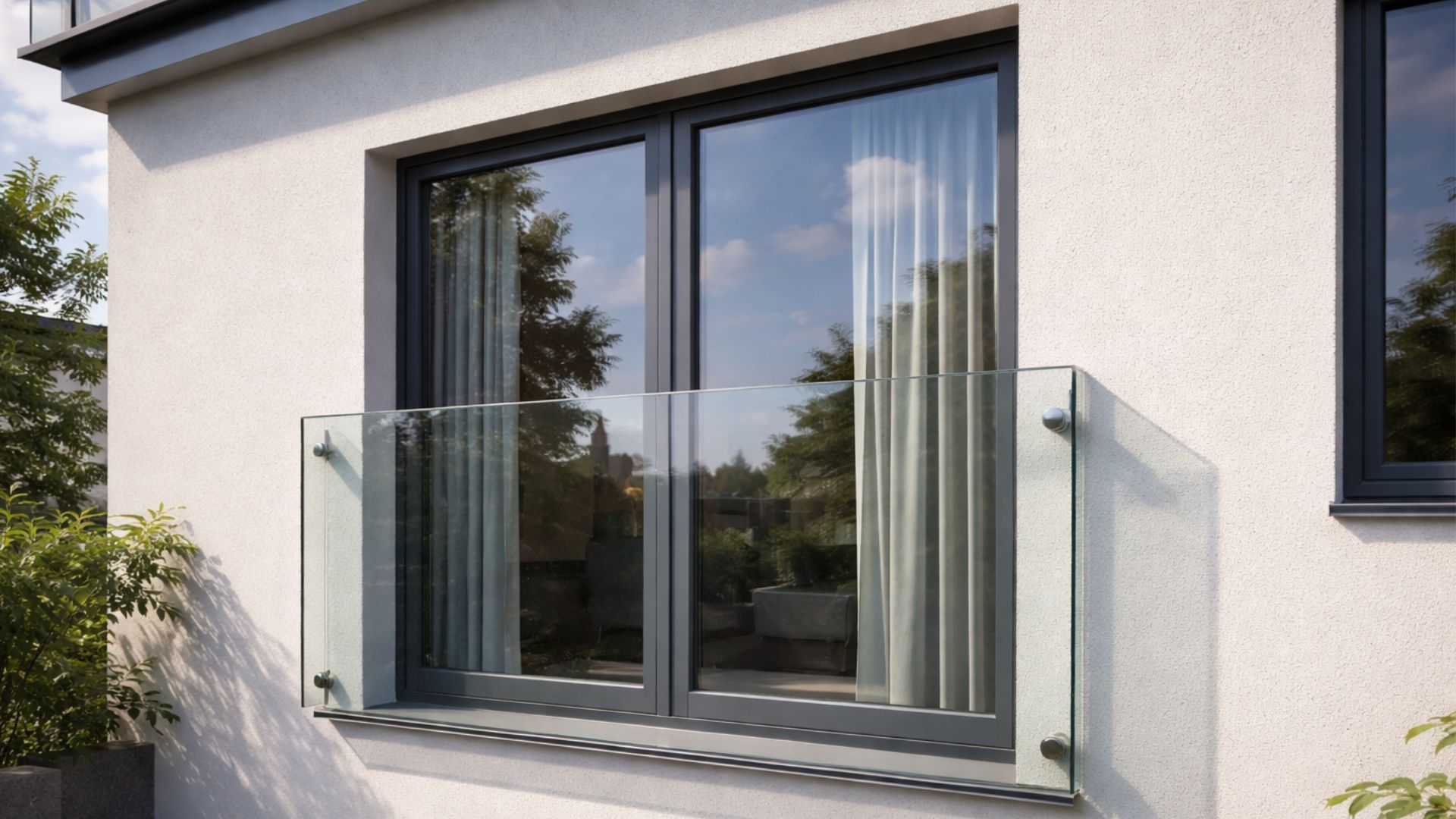
Like all kinds of structural glazing, glass Juliet balconies in the UK must adhere to strict building regulations. This is to ensure safety for building users. The requirements in question are mostly covered by Approved Document K.


Key requirements include:

  • A minimum height of 1,100 mm from the floor level
  • The use of toughened or laminated safety glass
  • The ability to withstand specific load resistances

Before we go any further, it's important to note that this blog post isn't a substitute for the building regulations themselves. If you're sourcing glass for a Juliet balcony, it's your responsibility to ensure the materials and installation are compliant.

Key building regulations and standards

When installing a glass Juliet balcony, the balcony barrier must be at least 1,100 millimetres high from the floor level to the top of the rail.


The balcony glass must be toughened or laminated safety glass. The thickness of the glass typically ranges from 10 millimetres to 21.5 millimetres.


The balcony glass must be designed to withstand specific uniformly distributed loads (UDLs). These are typically 0.74 kN/m in domestic and commercial settings.


Any gaps in the glass barrier must be no bigger than 10 centimetres. This is primarily to ensure the safety of any children using the balcony. Similarly, the design should avoid any structural elements that make it easy for children to climb.


Picture of a child holding on to a balcony.


Installation is also covered by building regulations. The structure must be securely fixed. Most use stainless steel fixings to ensure durability and weather resistance.


Finally, the height can't exceed 1,100 millimetres if the balcony is part of a designated fire escape route.


Compliance and planning

Before installing a glass Juliet balcony, you should consult your local building control authority to ensure compliance. They may require a glazing report.


Juliet balconies don't require planning permission so long as they fall within permitted development rights. It's important, however, that you check local regulations. If you fall foul of these, you could be forced to remove the structure.


The design should also comply with British Standards (BS) 6180. This is the code of practice that covers barriers in and around buildings.


Finally, you should always work with a reputable supplier to ensure high-quality, compliant materials. It's important to note, however, that it's the installer's responsibility to ensure safety and compliance, not the supplier's.


Why is it important to follow building regulations when

installing a glass Juliet balcony?

When installing a glass Juliet balcony, it's important to follow building regulations for two reasons: first, to ensure the safety of the building users and secondly, to avoid fines in the event of a non-compliant installation.


Are you looking for high-quality toughened or laminated glass products for a Juliet balcony? Get in touch with ToughGlaze today for a quick, competitive quote. We look forward to getting you the right materials for the job.


Looking to add mesh textures to a facade or other architectural feature?
by Simon Edward 6 March 2026
Looking to add mesh textures to a facade or other architectural feature? Explore the textural potential of mesh-laminated glass.
The thermal conductivity of glass is a key consideration when designing and constructing sustainable
by Simon Edward 2 March 2026
The thermal conductivity of glass is a key consideration when designing and constructing sustainable buildings. Find out more in our guide.
Specifying train station glass means considering factors like safety, strength and regulatory
by Simon Edward 28 February 2026
Specifying train station glass means considering factors like safety, strength and regulatory requirements. Get to grips with the basics.