The moiré effect in patterned glass: causes and how to avoid it
Want to avoid the moiré effect in patterned glass? Learn what causes it and strategies to mitigate or even harness it.
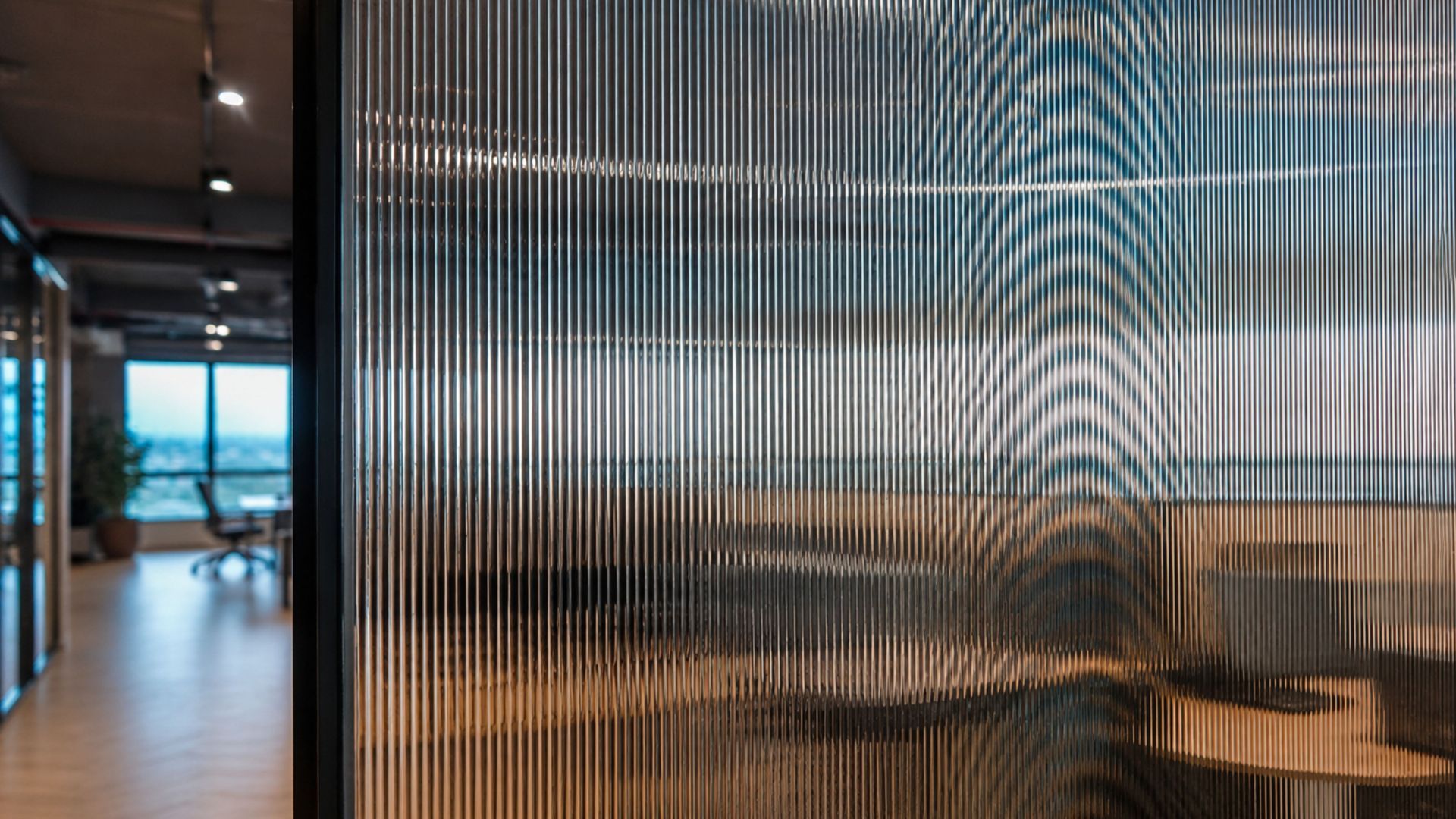
All glass is susceptible to visual distortion. One such effect is the notorious "moiré effect" – a wavy pattern created when repetitive patterns are overlaid or superimposed at a slight angle.
Sometimes, the moiré effect is harnessed by processors, architects and designers as a deliberate aesthetic effect. But for many customers, it's an unwanted blemish on otherwise aesthetically pleasing glass products.
After all, a big selling point for many glass products, patterned or not, is their clarity. In building design and interior design, clarity means control. When visual distortion appears, you lose some level of control over how things look.
At ToughGlaze, we provide our customers with a wide range of toughened and laminated glass products, both functional and decorative. We pride ourselves on minimising all kinds of visual distortion through high-quality manufacturing processes and quality control.
So, what causes the moiré effect in patterned glass – and how can you avoid it? To answer that question, we first need to explore the moiré effect in a little more depth.
What is the moiré effect?
The moiré effect is an optical illusion. It happens when two similar patterns, such as fabric meshes or pixels, clash. It's often seen on TV screens and in photos and can appear in printed images. When looking at the moiré effect, you'll notice that the pattern shifts as you move.
The effect has been variously described as shimmering, wavy or rainbow-like. It consists of dark and light bands in a herringbone or checkerboard pattern that dances over images.
The moiré effect in patterned glass
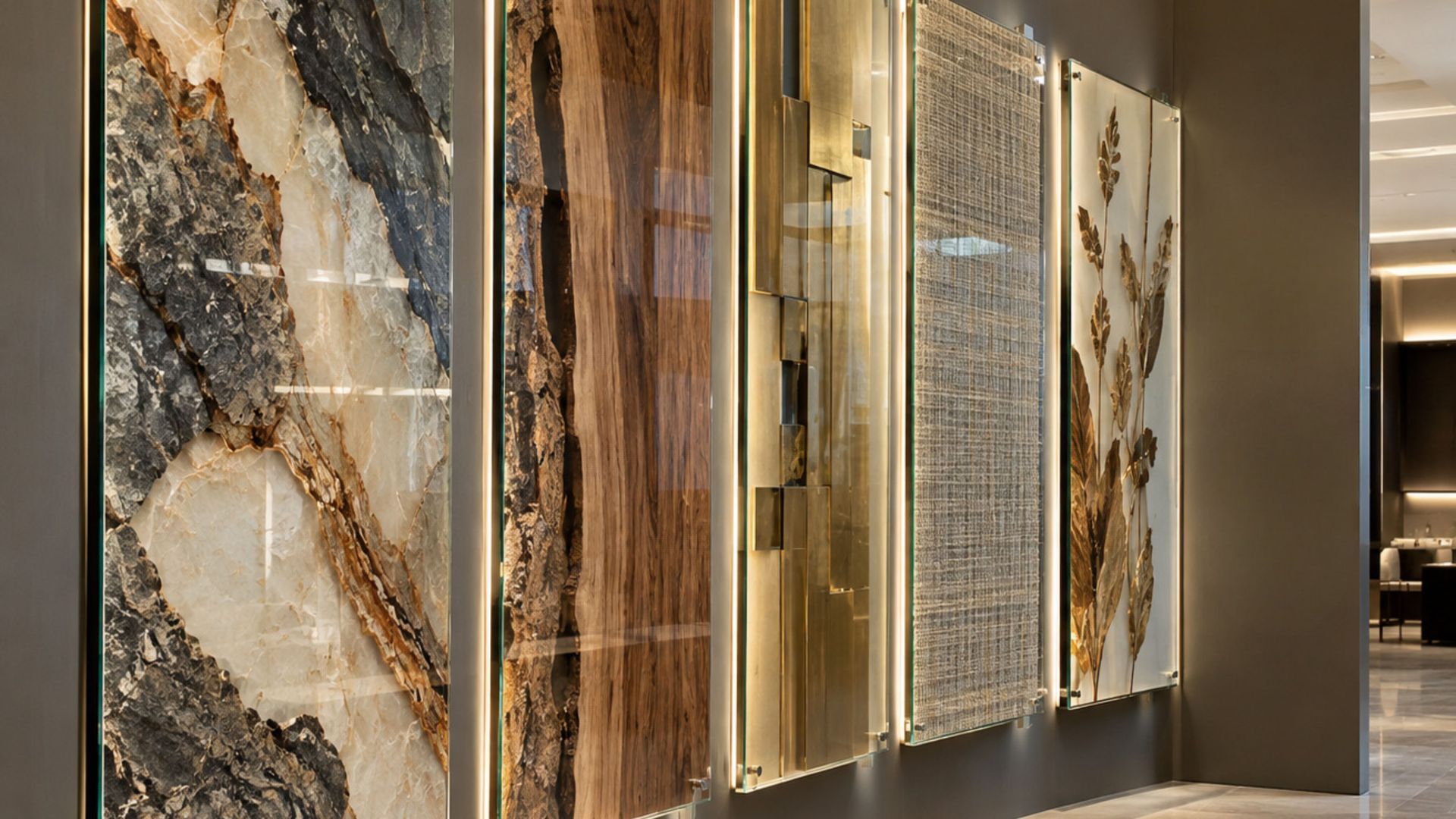
In patterned glass, the moiré effect can occur when two patterns are overlaid that are too similar. It can create a wavy, shimmering, dancing pattern on mesh-laminated, fabric-laminated, sandblasted and coloured glass.
What causes the moiré effect in patterned glass?
The moiré effect isn't caused by the glass itself – although it can be exacerbated by poor-quality glass. Instead, it's caused by the interference created by two fine and overlapping patterns. It can be seen when the glass is printed or otherwise decorated with lines, frits or dots.
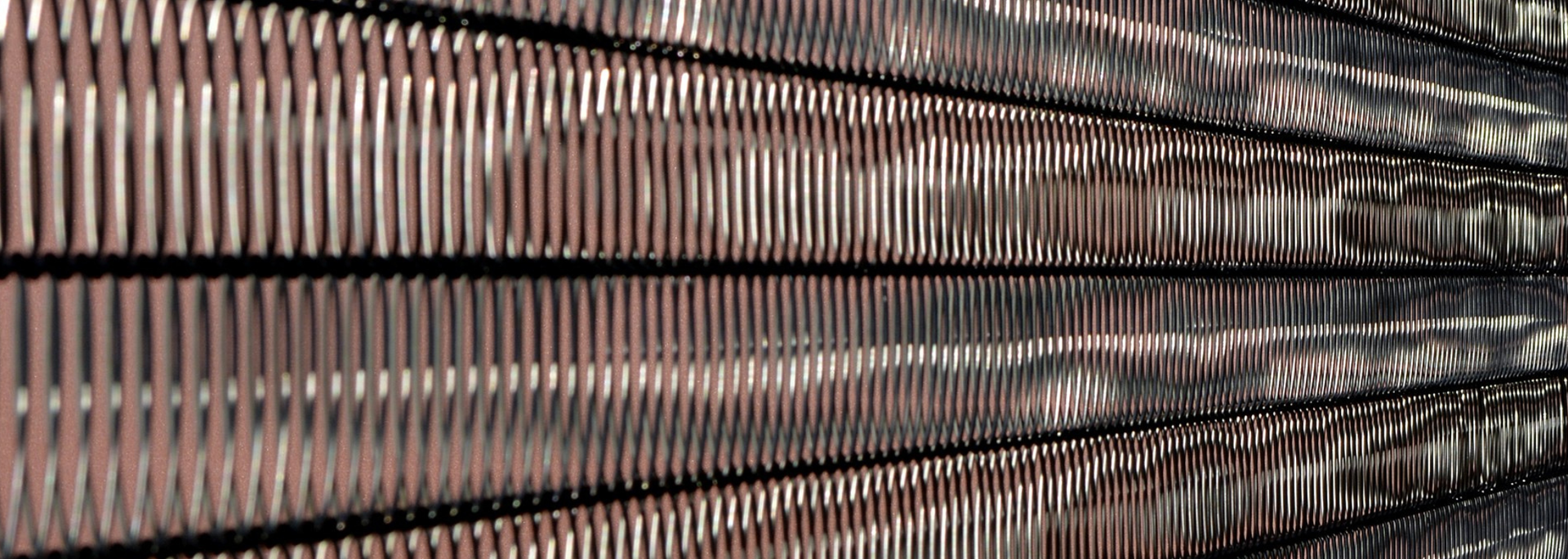
The moiré effect can also be caused when patterned glass is overlaid by a patterned fabric. This could be an insect screen, a blind or a translucent curtain.
How can the moiré effect be avoided?
The main way to avoid the moiré effect in patterned glass is to think carefully about the pattern. If you use glass layers, make sure any frit, line or dot patterns aren't overlaid in such a way as to cause visual interference.
If in doubt, you can check with your processor before you submit the design for processing. They'll be able to tell you the likelihood of the moiré effect or other visual distortion in the finished product.
The moiré effect can be exacerbated by too much light. For this reason, you might want to think carefully about the lighting in the room where the patterned glass is installed. Soft, diffused light pointing away from the glass is likely to be best.
If the glass has a single pattern, you should avoid overlaying fabric with a similar pattern. When choosing a screen shade, sheer curtain or insect screen, consider whether it's likely to produce the moiré effect.
Finally, you increase your chances of getting patterned glass without the moiré effect by using high-quality glass. A good manufacturer and processor will have systems in place to avoid visual distortion in their finished products.
Is the moiré effect always a bad thing?
Among photographers, the moiré effect is a bad thing. But in the world of glazing, it can be harnessed as a distinctive visual effect.
Take Torre Glòries, the 38-storey skyscraper in Barcelona, Spain. One of the city's most famous buildings, it has a unique nighttime lighting system that can create some 16 million colours. Its creator, Yann Kersalé, described it as "a vaporous cloud of colour that seeks moiré".
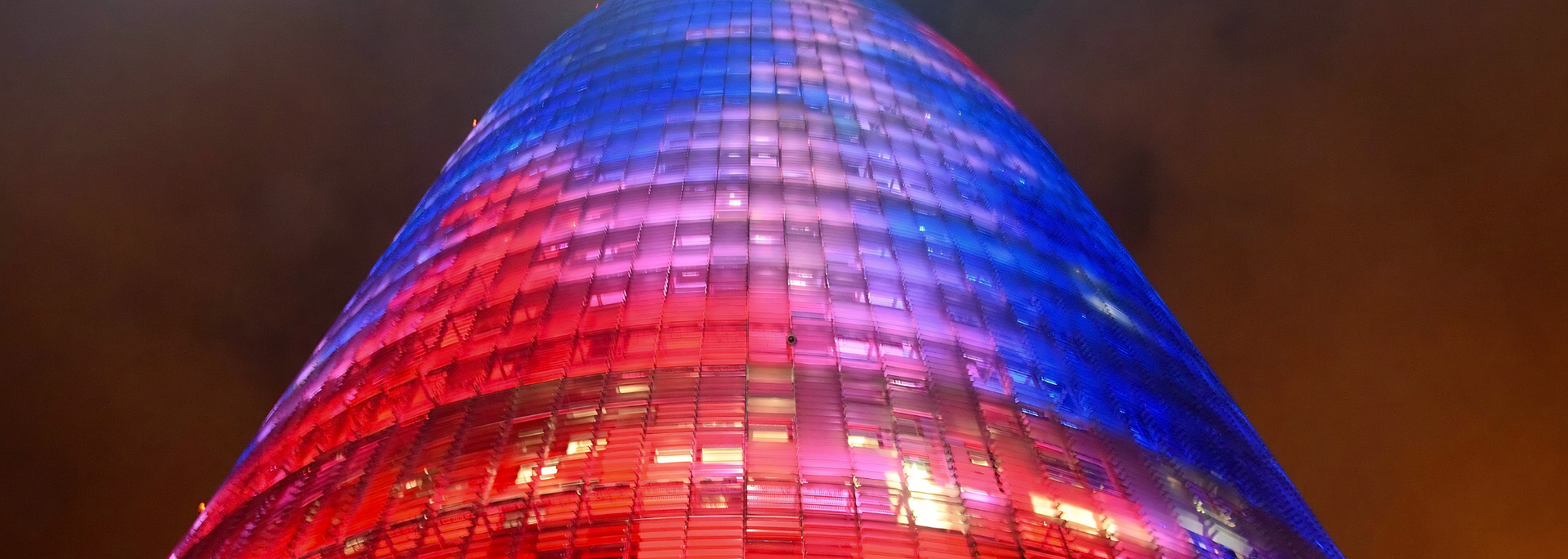
More directly, the moiré effect can be used in a range of decorative interior settings: from glass railings to lift cabs to hallways. This intentional visual interference creates a sense of movement, flair and novelty.
The moiré effect is also applied to glass to make it visible to pedestrians. Known as "distraction bands", these dotted, lined or geometric patterns create a haze of wavy lines.
Outside of the world of glass, the moiré effect has been used by painter Bridget Riley, sculptor David C. Roy and artist Richard Scott.
What other kinds of visual distortion can glass have?
The moiré effect is a kind of visual distortion that can, as we've seen, be something people want to avoid or embrace. Other kinds of visual distortion in glass, however, are rarely welcomed by customers.
Toughened glass is sometimes vulnerable to roller-wave distortion: a series of consistent rippled lines caused by heated glass sagging between furnace rollers.
When unevenly cooled, glass can bow or warp – and under polarised light, "leopard spots" or rainbow patterns can appear due to stress within the glass.
Visual distortion is like nickel sulfide inclusions in toughened glass – a byproduct of the manufacturing industry that can be significantly reduced but never eliminated.
A good processor will use advanced manufacturing and processing techniques to minimise visual distortion as much as possible.
If it's a notable concern during the specifying process, speak to your processor about the likelihood of visual distortion and your tolerances. This will help ensure you get the products you need without disappointment.
What kinds of patterned glass does ToughGlaze supply?
Here at ToughGlaze, we supply a wide range of high-quality patterned glass products, including:
- Mesh-laminated glass
- Sandblasted glass
- Fabric-laminated glass
- Digitally printed and screen-printed glass
- Glass with coloured interlayers.
Our experts are always happy to advise on visual distortions in glass and how to mitigate them. Simply get in touch online or call +44 (0)208 8384400 today.