Embodied carbon in glass: what specifiers need to know
Conversations about sustainability in construction increasingly focus on embodied carbon. Learn what it means for you – and your glass.
Today, the global built environment sector is responsible for nearly 40% of energy-related CO₂ emissions (UN Environment Programme).
With that in mind, it's little wonder that architects and building managers are embedding sustainability as a core facet of their practice. Increasingly, buildings are being designed and used with a view to improving energy efficiency throughout their operational lives.
But as strides are made to reduce operational carbon emissions, the conversation is increasingly turning to another, less visible problem: embodied carbon.
In this guide, we put glass under the microscope and examine its embodied carbon footprint. Just how much is glass contributing to global embodied carbon emissions? And what can you, as a specifier, do about it?
What is embodied carbon?
Traditionally, the conversation around sustainability in the built environment has focused on operational carbon. This refers to the carbon emitted during a building's day-to-day use – through heating, lighting, ventilation and other energy-hungry operations.
However, operational carbon only tells half of the story. Estimating operational carbon can help us plan for a more sustainable future, but it tells us nothing about the past. Where did those building materials come from? How were they made? And just how much carbon was emitted in the process?
That's where
embodied carbon
comes in. Embodied carbon is the sum of greenhouse gas emissions produced to manufacture a material and get it where it needs to be. That includes emissions generated during:
- Manufacturing
- Processing
- Assembly
- Transport
- Disposal
As buildings become ever more energy-efficient, attention is shifting away from operational waste and towards these so-called "hidden" emissions. This, proponents argue, helps engender a shared sense of responsibility for the whole material lifecycle – from production to construction and beyond.
And from a big-picture perspective, it's nothing to sniff at. Embodied carbon now accounts for 11% of global carbon emissions (World Green Building Council).
Manufacturing flat glass is energy-intensive, so it's no surprise that the embodied carbon of glass is falling under closer scrutiny.
For specifiers, that doesn't necessarily mean avoiding glass. Instead, it's about understanding where its carbon impacts come from, making informed choices at the design stage and considering the performance of glazing throughout its life.
Where does embodied carbon in glass come from?

The bulk of embodied carbon in glazing comes from its fabrication, including raw material extraction and melting these materials into flat glass. Together, these account for 78% of embodied emissions (Glass Magazine).
The rest of the embodied carbon comes from processing (10%) and assembling the glass into IGUs (12%).
Let's break these steps down in a little more detail.
Raw materials
Flat glass is primarily made from materials such as:
- Silica sand
- Soda ash
- Limestone/dolomite
- Recycled glass cullet
Extracting and processing these materials produces significant emissions – emissions that are "locked in" to the glass for the remainder of its useful life.
Melting
This is the big one.
Glass furnaces operate at very high temperatures, requiring significant energy. The source of that energy and the efficiency of the furnace have a major influence on the carbon footprint of the glass.
On top of that, specifiers must consider process emissions. These are emissions associated with the chemical reactions involved in melting certain raw materials.
Processing
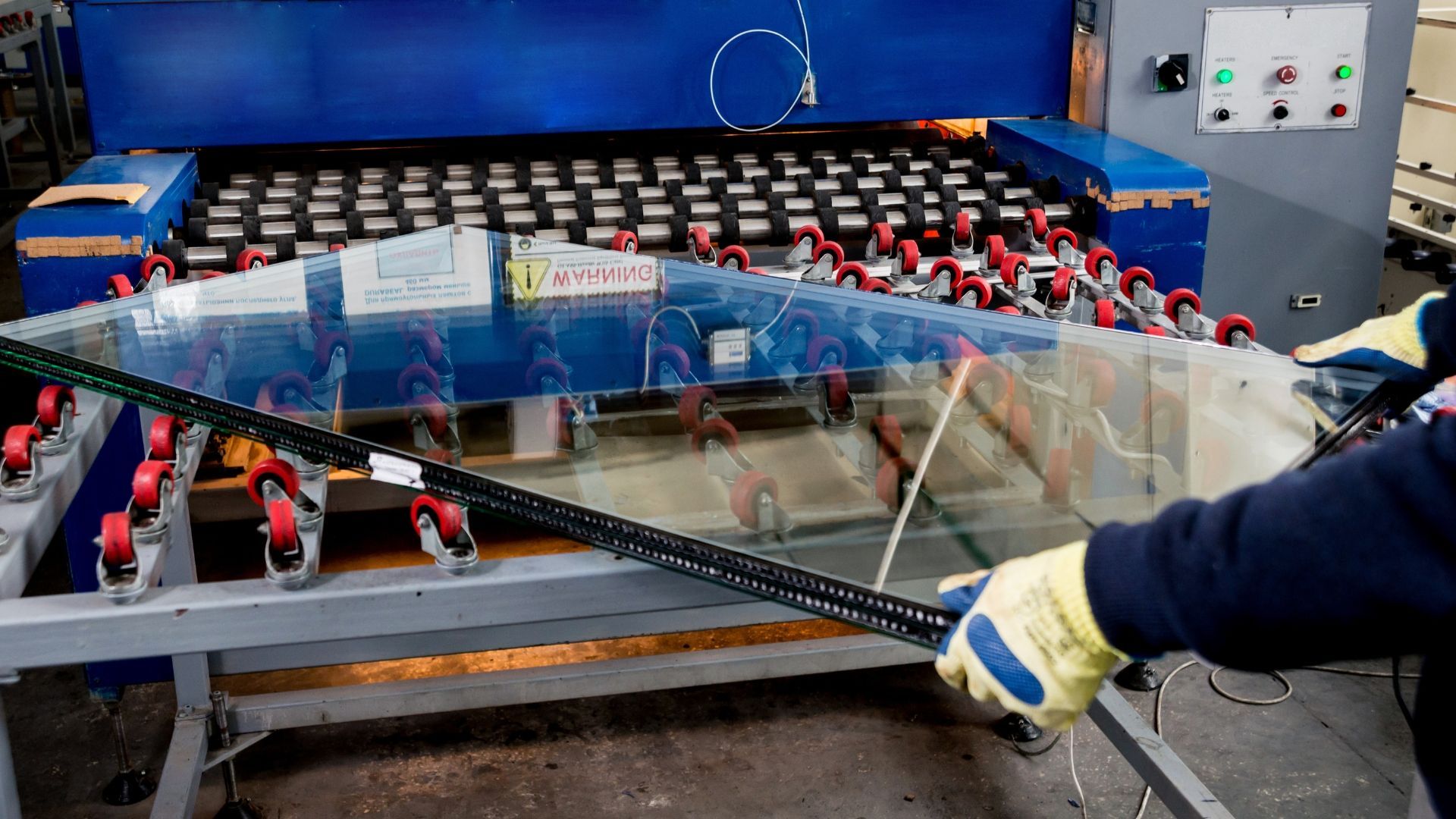
Glass processing – our speciality – is a relatively minor contributor to embodied carbon, accounting for just 10% of the locked-in carbon footprint of the glass.
However, we'd be the first to admit that it's hardly a carbon-neutral process. Heat-treating, cutting, laminating and printing glass all have associated carbon emissions. These must be considered if the goal is to minimise embodied carbon.
Assembly
More often than not, flat glass ends up installed in an insulated glass unit (IGU). The fabrication of these IGUs involves many processes that can be surprisingly carbon-intensive. That includes the carbon costs of operating industrial machinery, as well as the procurement and use of materials like inert gases and sealants. These materials, after all, come with their own embodied carbon baggage.
Transportation and installation
The transportation and installation of glass also contribute to its embodied carbon makeup. Just how much they contribute depends on many and multifarious factors, including:
- The weight of the glass
- How far it travels
- The mode of transport
- Installation methods and associated equipment
If you think this seems murky and undefined, you'd be right. But that raises a key point: glass does not have one universal carbon footprint. Its environmental impact depends on the product, its manufacture and what happens to it throughout its life.
These are all factors that a specifier can influence with enough smart thinking and forward planning.
How can specifiers reduce embodied carbon in glass?

Embodied carbon emissions are often known as "locked-in emissions". After all, while you can offset embodied carbon through operational initiatives, you can't undo the emissions that are already baked into the material.
That's why reducing embodied carbon requires careful planning and cooperation between design, procurement and construction teams. As a specifier, you can play a key role in reducing embodied carbon – but doing so requires buy-in from every stakeholder in the chain.
Consider:
- Only specifying as much as you need: the more material you have, the more embodied carbon comes with it. Less glass isn't always better – after all, glass can play an important role in solar design and other operational sustainability initiatives. However, ordering too much glass can be bad news for your budget and the environment.
- Factoring in the whole glazing assembly: a lower-carbon glass product doesn't always mean a lower-carbon glazing system. It's important to consider how other components might contribute to embodied carbon, including frames, sealants and spacers.
- Using recycled cullet where possible: glass is endlessly recyclable. Specifying glass with a higher ratio of recycled to virgin cullet can help reduce embodied carbon because recycled cullet takes less energy to process.
- Interrogating your suppliers: don't be afraid to ask questions about furnace efficiency, transport distances, carbon-reduction targets and the like. A trustworthy supplier will happily answer these queries.
- Specifying for longevity: embodied carbon isn't just about provenance – service life and disposal are part of the picture, too. Specifying high-quality glass that performs effectively can result in a lower embodied carbon footprint than using poor-quality or unsuitable glass that will need replacing sooner.
How we can help
At ToughGlaze, we aim to be the only glass processor you ever need to work with. We want to get you the right materials for the job, right on time and right on spec.
As part of that mission, our experts are always ready to advise on topics related to glass provenance and sustainability, including embodied carbon. While we can't take responsibility for compliance, our expertise can be a valuable asset to your procurement strategy.
We've also taken steps to reduce our own carbon emissions, including by introducing a custom water filtration system that reuses water from our preparation process.
So, if you're looking for a supplier of high-quality commercial glass products with years of expertise to back it up, don't hesitate to get in touch. We'd love to hear from you.