Glass guide: glass for the framing industry

simon • 1 August 2025

In museums and galleries, glass helps protect artworks. Find out the types of glass that are used.


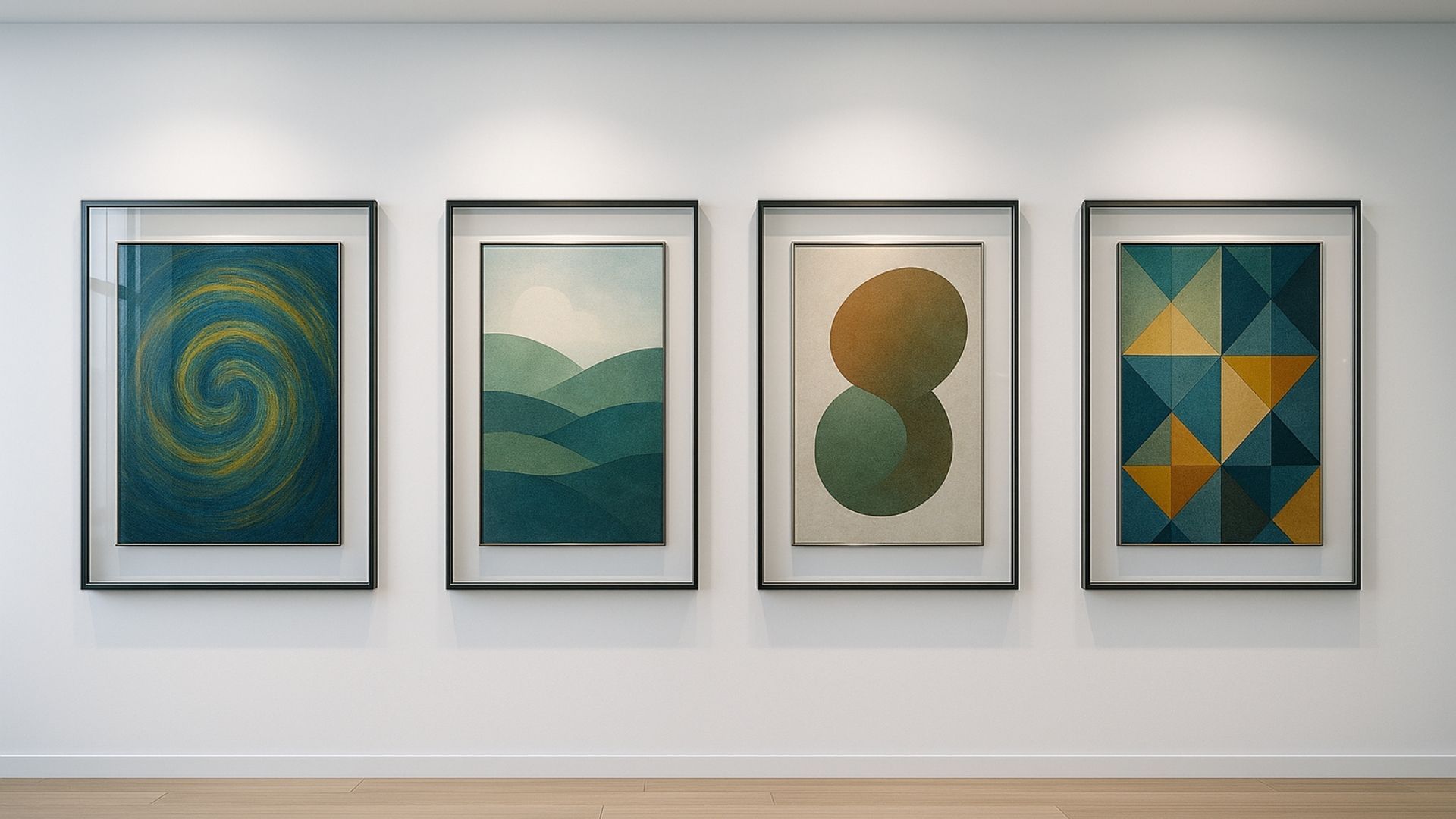
Four framed abstract art pieces on a white wall; swirl, mountain range, overlapping circles, and geometric shapes in blue, gold, and green.

Museums and galleries often use glass to frame artworks. The type of glass used can be known as "framing glass", "conservation glass" or "museum-quality glass".
These, however, are umbrella terms. "Glass for framing" covers several different types of glass. The choice of material will depend on factors like the strength needed and whether the artwork needs special protection from heat and UV rays.

Whatever type of glass is used, framing glass needs to simultaneously exhibit and protect an artwork. As
Tate Modern says:
"In selecting the most appropriate glazing for works of art on paper, or indeed for any work of art, the safety of the work itself is paramount."

Different institutions will use different types of glass to achieve this. If you need special protection against breakage, we recommend
laminated glass . This gives a high level of optical clarity and high levels of robustness.

What types of glass are used for framing?

In some settings, standard annealed glass does the job just fine. Some institutions, however, choose low-iron glass. This is made from a special iron-free silica and has a higher level of light transmission than regular glass.
If extra protection is needed, many museums and galleries opt for laminated glass. This maintains its structural integrity when it breaks, meaning the artwork is less likely to be damaged in the event of vandalism or other physical impact.

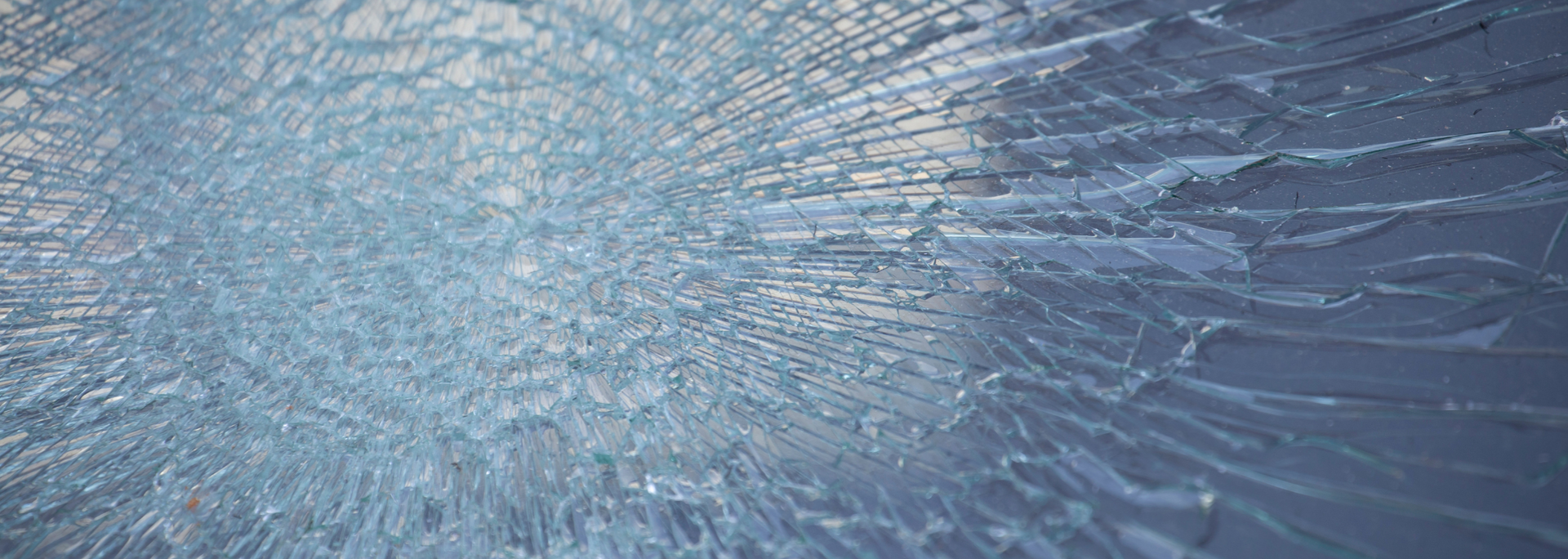
Shattered glass with radial cracks. The glass is primarily shades of blue and white, with a dark blue background.

Another type of glass used is acrylic. This has a high level of light transmission. On top of this, it's lightweight and shatter-resistant.
All these types of glass can be given surface treatments to filter out UV rays. This is especially important for old and delicate artworks. This includes photos and art on paper.


Why use laminated glass for framing?

Laminated glass is built to be shatter-resistant. It takes a lot of effort to break – and when it does break, a crack spreads across the surface. However, it doesn't shatter. This makes it ideal for expensive or delicate artworks.
It's usually made from two sheets of glass with a polyvinyl butyral (PVB) interlayer. These are bonded together at an extremely high temperature.
To give you an idea of its strength, laminated glass is the material of choice for structural glazing in areas vulnerable to extreme weather. It's also used for load-bearing structural glass.
Laminated glass can also be treated to make it bullet-resistant. In the context of framing, this is unusual but not unheard of. No less than theMona Lisa is framed using bulletproof glass .
Laminated glass is preferable to
toughened glass. When toughened glass shatters, it breaks into lots of little pieces, which could damage the artwork.
So, if you're looking for clear, robust glass for framing, laminated glass could be the product for you. Don't hesitate to
get in touch with ToughGlaze today for a quick, competitive quote and expert industry advice.

Does your architectural project require solar shading? Find out how mesh-laminated glass can help
by Simon Edward 16 March 2026
Does your architectural project require solar shading? Find out how mesh-laminated glass can help you effectively control light and heat.
Are you involved in sourcing materials for a glass Juliet balcony? Get the jargon-free facts
by Simon Edward 9 March 2026
Are you involved in sourcing materials for a glass Juliet balcony? Get the jargon-free facts you need to stay compliant.
Looking to add mesh textures to a facade or other architectural feature?
by Simon Edward 6 March 2026
Looking to add mesh textures to a facade or other architectural feature? Explore the textural potential of mesh-laminated glass.