Mesh laminate in feature walls and partitions: a designer's guide
Mesh laminated glass can be used for a wide variety of decorative purposes in feature walls, partitions and more. Let's explore the options.
For as long as there have been interiors, there has been interior design. Humans, it seems, have an inborn taste for decoration.
From this point of view, feature walls and partitions aren't so different from cave paintings. They're a way of leaving our mark on a dwelling.
The difference is that today's decorations are more diverse, more versatile and more technologically advanced.
Take the case of glass – our speciality. Glass is an astonishingly versatile decorative material. It can be coloured, sandblasted, printed, made "switchable" – you name it.
This decorative potential can be applied to everything from simple windows and doors to features like partitions and feature walls.
Partitions are transparent or translucent glass walls used to create zones within a room. Feature walls, meanwhile, are specially manufactured walls that stand out from the others and act as focal points.
In both cases, the design possibilities are near-endless. But one underused type of glass is mesh-laminated glass. In this article, we explore its remarkable artistic possibilities.
What is mesh-laminated glass?
As the name suggests, mesh-laminated glass is a variety of laminated glass – those glass units made from two sheets of glass and an interlayer.
In standard laminated glass, the interlayer is made from plastic. Mesh laminated glass, however, also includes an interlayer made from a kind of metal mesh. This can be stainless steel, copper or brass, to take just a few examples.
The result is a glass unit with delicate, varied and striking textures. It's created by bonding the interlayer between glass sheets at high pressure and heat.
Mesh-laminated glass is mostly used for high-end, luxury applications: things like partitions, balustrades, lift cars, feature walls and facades.
Here at ToughGlaze, we stock our own range of mesh laminated glass, TG MI.
What are the benefits and features of mesh-laminated glass?
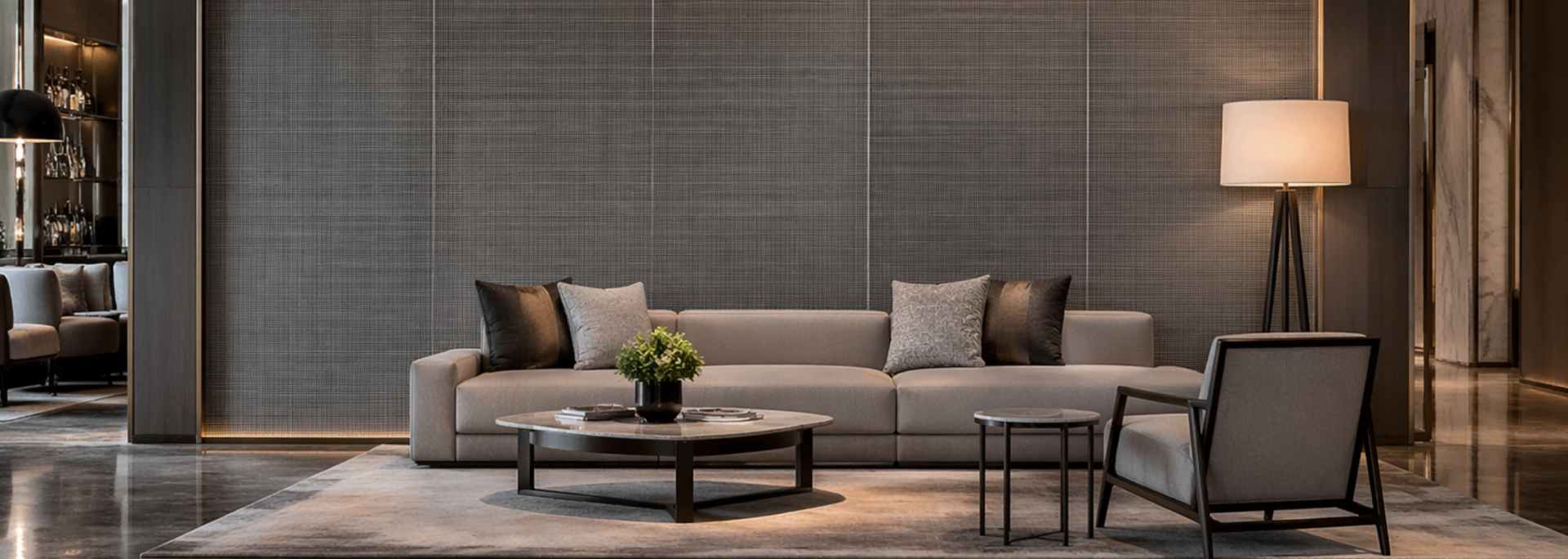
The main purpose of mesh-laminated glass is to introduce unique and attractive textures into residential and commercial settings. They often communicate a sense of style and luxury, especially in tasteful combination with other textures, colours and pieces of furniture.
But mesh-laminated glass has the benefits of laminated glass, as well as the benefits of attractive meshes.
Laminated glass is constructed in such a way that when it breaks, the fragments adhere to the interlayer. This keeps building occupants safe even in the event of a breakage.
This structural sturdiness is also a reason for the mesh's durability. Sealed between glass panes, it's largely protected from moisture and corrosion, ensuring a long-lasting installation.
Finally, mesh-laminated glass has the advantage of offering privacy without blocking light. Mesh-laminated partitions, for instance, diffuse lighting rather than block it. This can help create warm, welcoming environments with sophisticated textural accents.
How can mesh laminate be used in feature walls?
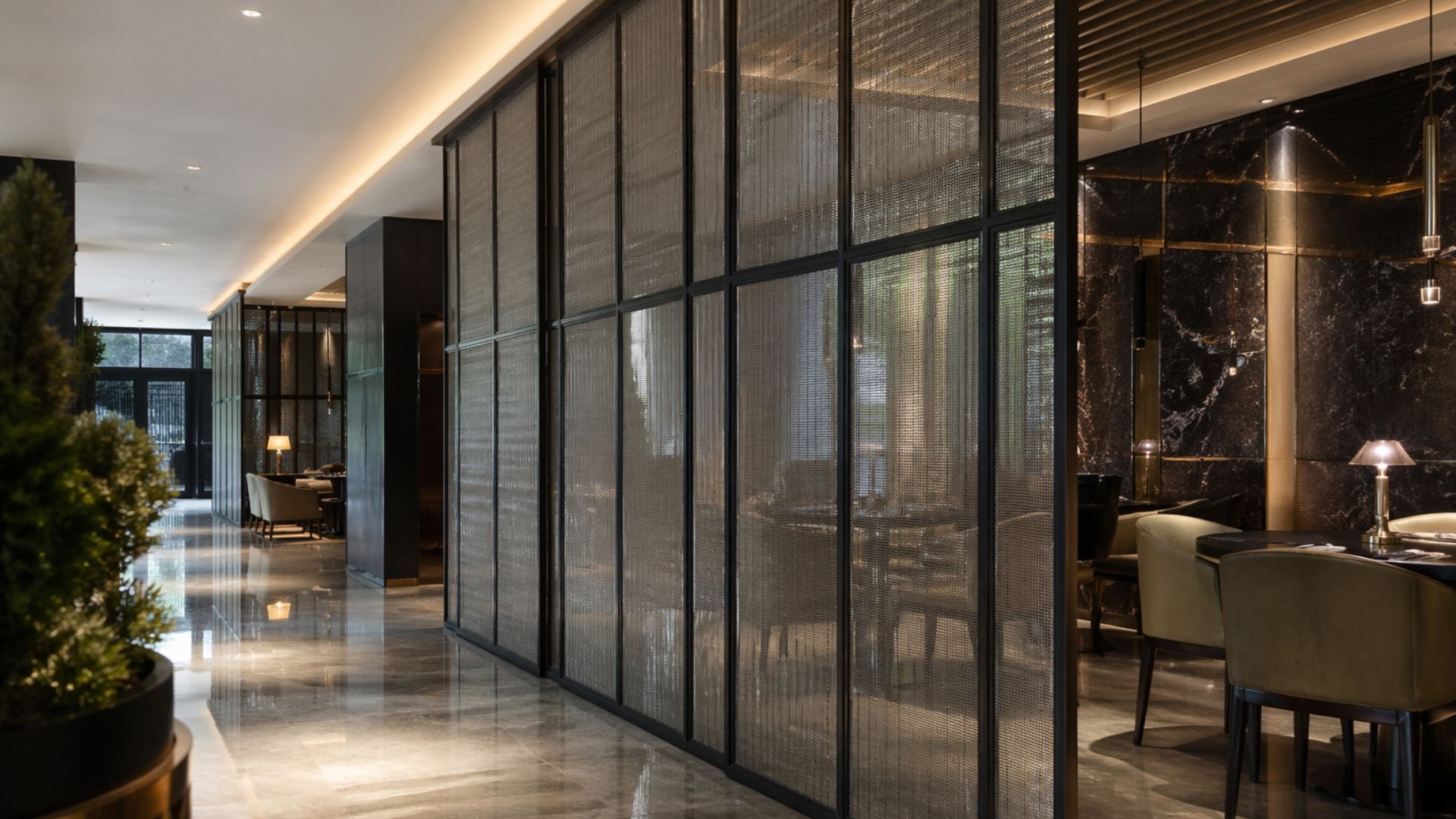
Mesh-laminated glass is most often used in feature walls for high-end residential and commercial settings. These attention-grabbing installations combine the aesthetic appeal of metallic textures with the soft translucency of glass.
The aesthetics of mesh laminate is often undeniably modern. This makes it an appealing proposition for hotels, offices and restaurants. But the aesthetic potential is wider than just a splash of the new.
Mesh-laminated glass designs range from the delicate to the industrial, from the nostalgic to the brutalist. It all depends on how the design interacts with its setting.
These feature walls can also be illuminated using LEDs. This can create a soft and calming glow even in a high-traffic environment.
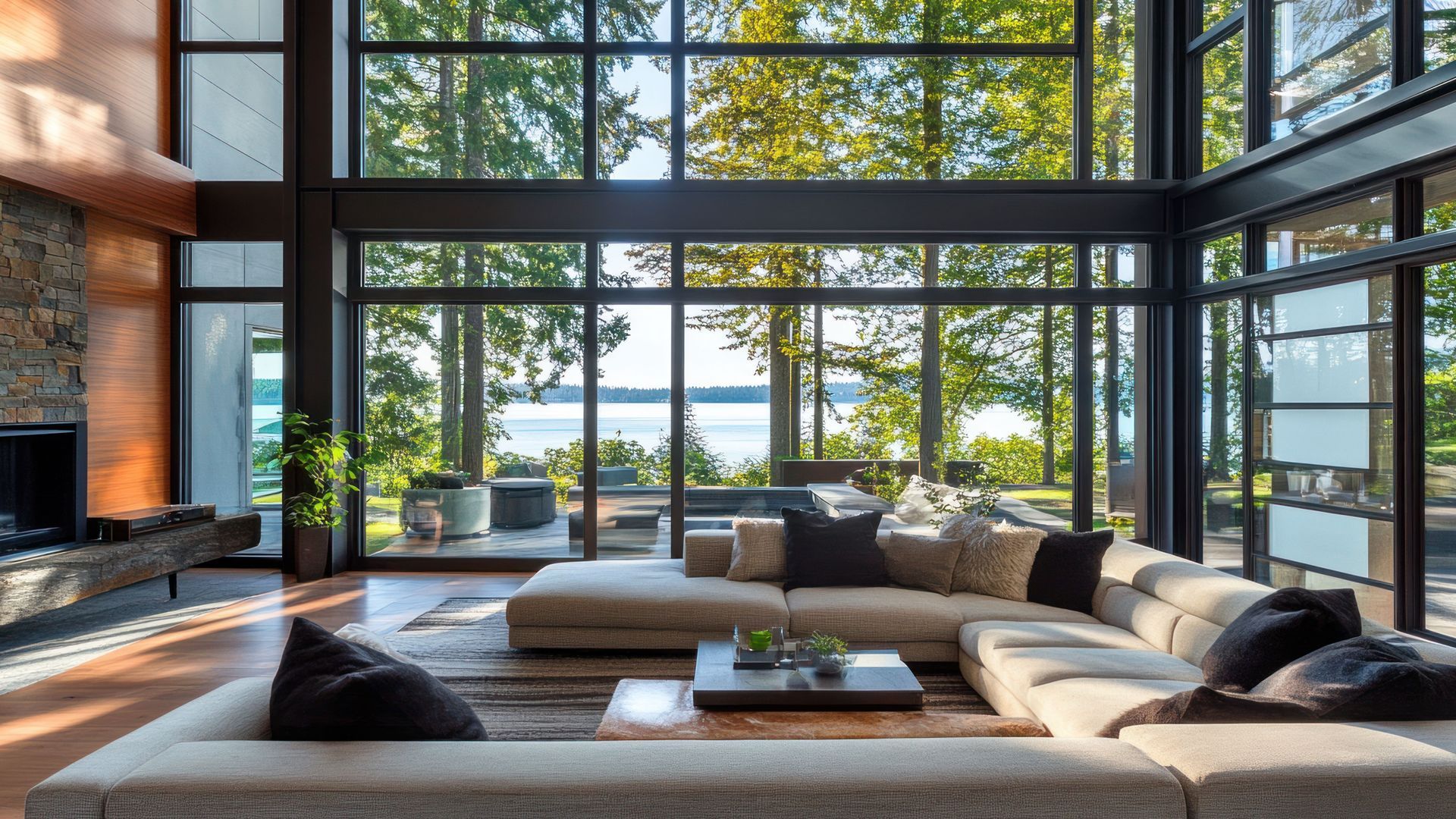
Mesh-laminate feature walls are far from the preserve of businesses, however. They're also used to create focal points in living rooms and other domestic settings.
How can mesh laminate be used in partitions?
Mesh laminate can be used in partitions in many of the same ways as feature walls. They combine structural sturdiness and safety with luxury aesthetics. They decorate a room with no loss of durability.
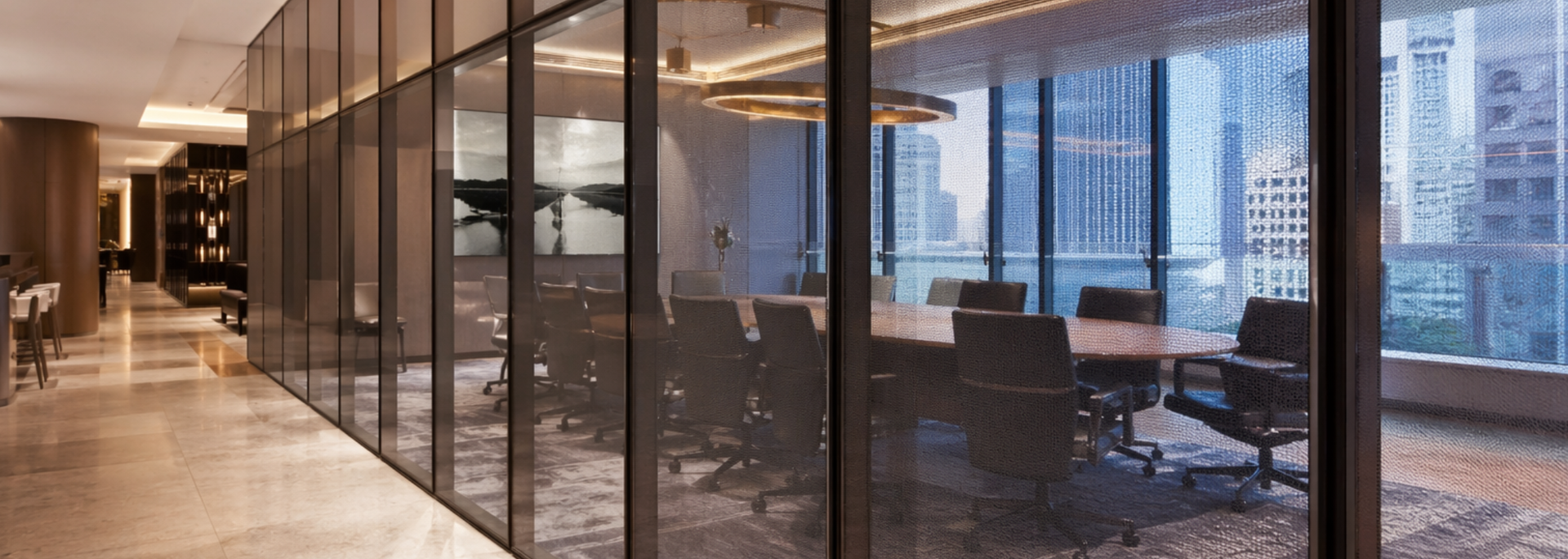
The key difference is, of course, that a feature wall is the outer limit of a room, whereas a partition is used to divide it into distinct zones.
These mesh-laminated partitions can be found in a range of settings. Offices are a popular one, but they can also be found in shops and healthcare facilities.
An advantage of partitions – mesh-laminated or not – is that they're often modular in design. This means they're easy to install and can be rearranged with ease. This can be a worthwhile investment for a company that's growing or expecting to grow.
Glass partitions are often used to maintain spatial separation in an open-plan environment. Mesh-laminated glass can do this, too, but the mesh interlayer can add a stronger visual identity than clear glass. This can help with everything from company branding to staff well-being through the creation of an aesthetically appealing work environment.
The range of interlayers available for partitions is the same as for feature walls. In the case of our mesh-laminated glass, this means aluminium, stainless steel, bronze, brass and copper.
About our mesh-laminate glass
Here at ToughGlaze, we manufacture high-quality, made-to-measure mesh-laminated glass that can be used in feature walls and partitions in both commercial and residential settings.
Like all of our products, TG MI carries the Kitemark seal and has been tested to all relevant industry standards.
It's a versatile product that can be cut and treated to meet the exact requirements of your products. It comes in textures from steel to copper, from brass to bronze.
Meanwhile, when fitted with a waterproof interlayer, it's highly suited to outdoor applications and moist environments like bathrooms.
So, if you're looking for a high-quality, versatile decorative laminated glass product, don't hesitate to get in touch with our experts. We can discuss your practical and aesthetic requirements and help you source the right glass for your project.