Is heat-strengthened glass a type of safety glass?
Heat-strengthened glass is a versatile glass product used in a range of industries. But does it qualify as safety glass? Let's find out.
When learning about the different types of glass, you'll find that the names used for different products can be confusing.
"Standard glass", "annealed glass" and "float glass" are interchangeable terms, as are "toughened glass" and "tempered glass".
Meanwhile, heat-strengthened glass isn't the same as toughened glass, even tough toughened glass is, by definition, strengthened by heat.
Then there's "safety glass": a term referring to glass that's designed to resist breaking or present less of a hazard when broken.
It can all get a bit complicated. That's why we've put together this jargon-free guide to heat-strengthened glass, safety glass and how it all fits together. We hope it helps you source the right materials for the job.
What is heat-strengthened glass?
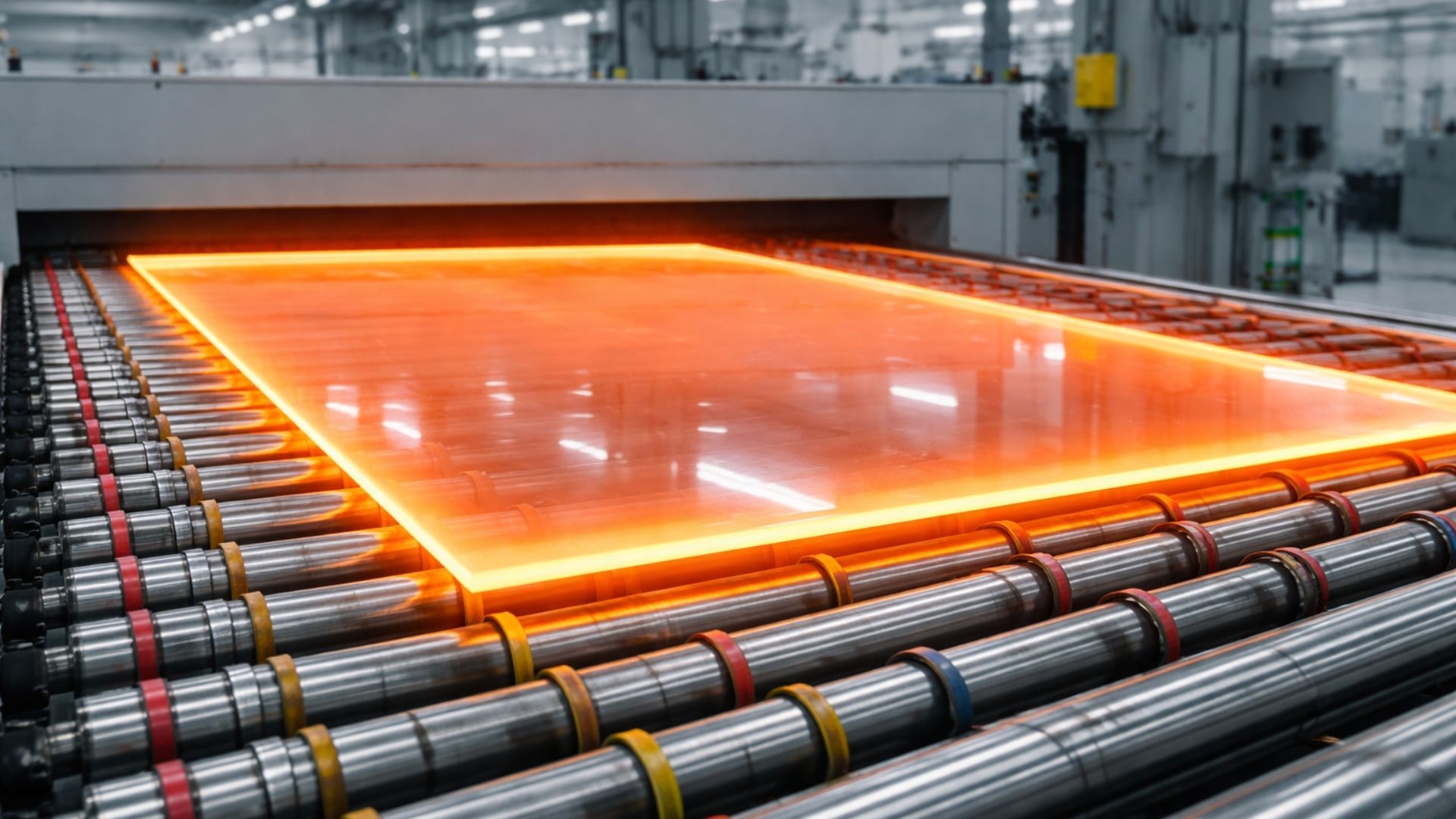
As the name suggests, heat-strengthened glass has been strengthened by furnace heat. It's around twice as strong as standard annealed glass and more resistant to thermal stress.
Toughened glass is also strengthened by heat, but is around three times as strong as heat-strengthened glass. It also has a distinctive breakage pattern that makes it a safer option than heat-strengthened glass in most circumstances.
What is safety glass?
Safety glass has been specially treated to be stronger and safer than regular glass. It's installed in locations where public safety is critical.
The most common types of safety glass are toughened glass and laminated glass. These are used in doors, windows, vehicle windscreens and more. Laminated glass is the glass of choice for structural glazing.
Toughened glass
Toughened glass is made by rapidly heating and cooling a sheet of standard annealed glass. This increases the strength around fivefold.
When broken, toughened glass shatters into small, pebble-like pieces rather than jagged shards. It can be processed in a huge number of ways.
Laminated glass
Laminated glass is made from two or more glass layers bonded by an interlayer made from polyvinyl butyral (PVB) or a similar material.
It takes a lot of force to break a laminated glass unit. When it does finally break, the interlayer stops it from shattering. Instead, it keeps its structural integrity.
Is heat-strengthened glass a type of safety glass?
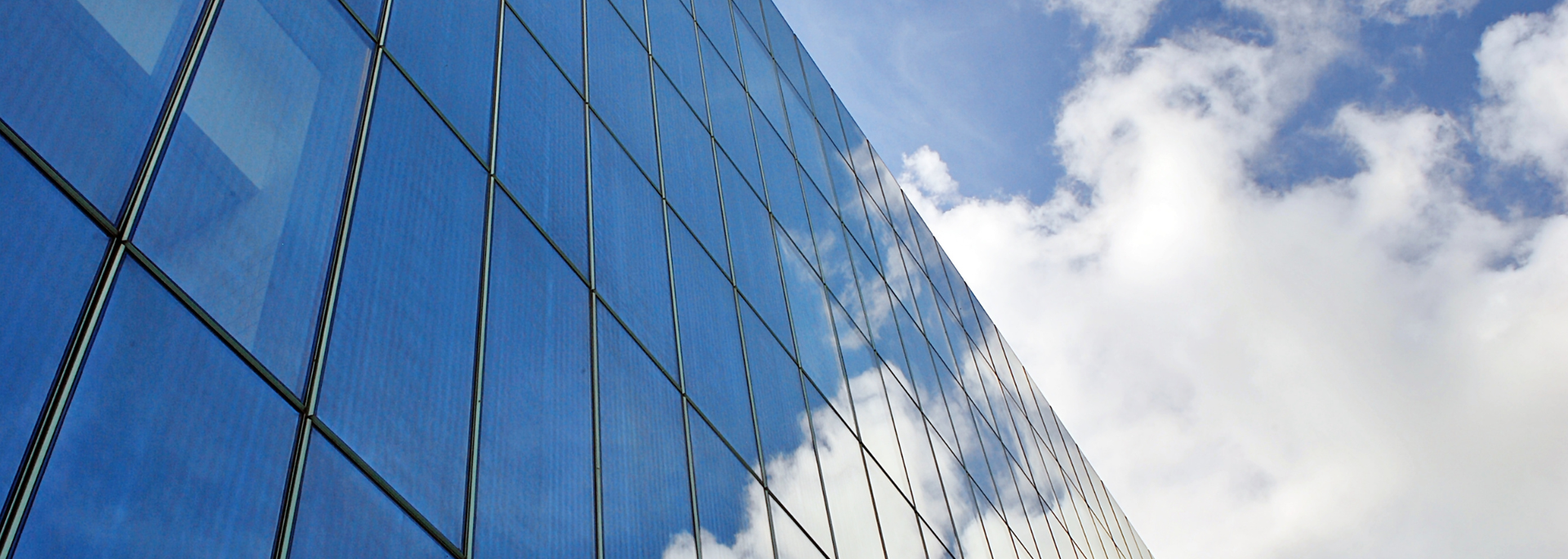
Heat-strengthened glass isn't classified as safety glass. However, sheets of heat-strengthened glass can be laminated, and the resulting unit can be used as safety glass.
Laminated heat-strengthened glass is often used in large facades, windows and structural glazing – in other words, in applications where strength and thermal resistance are essential.
What are the uses of heat-strengthened glass?
Heat-strengthened glass is used where strength against wind loads or thermal stress is needed, and its larger breaks are acceptable. If a location is classed as "critical" by building regulations, heat-strengthened glass isn't an appropriate material.
Let's look at a few specific applications for heat-strengthened glass.
Building facades and curtain walls
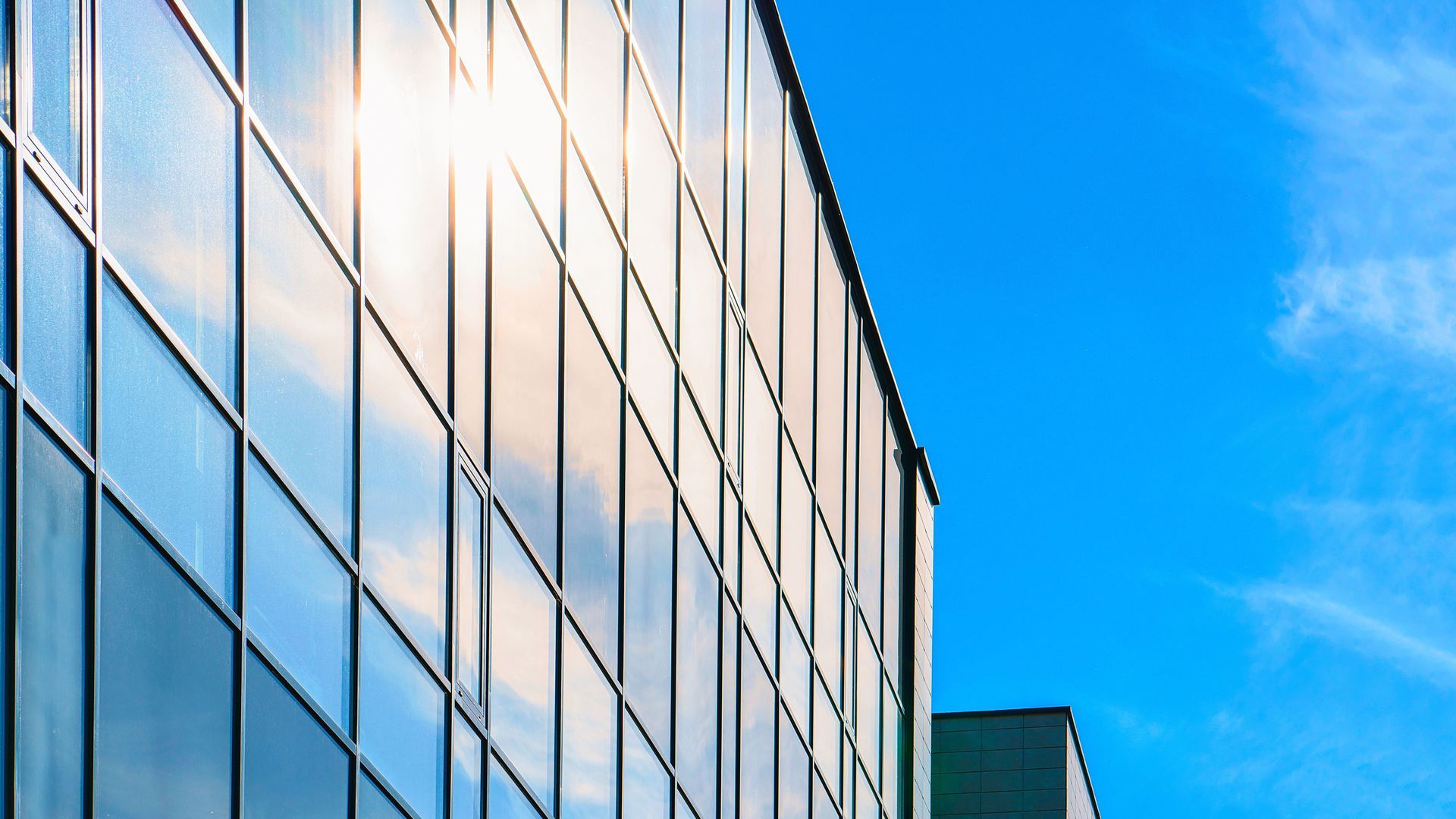
Heat-strengthened glass can withstand high wind loads and thermal stress while maintaining flatness. This makes it ideal for large-scale external installations such as building facades and curtain walls.
Its ability to withstand high winds – and, in some cases, snow – is down to its durability. To put this into perspective, heat-strengthened glass is about twice as durable as standard annealed glass.
Meanwhile, its ability to maintain flatness and optical clarity is due to the manufacturing process. Like toughened glass, it's heated at a high temperature in the furnace. When it's taken out, however, it's cooled more slowly.
In curtain walls, heat-strengthened glass is often used in laminated assemblies. This combines the optical clarity and flatness of heat-strengthened glass with the structural integrity and unique breakage pattern of laminated glass units.
Spandrel panels
Spandrel panels are used in opaque areas of curtain walls to hide structural components, HVAC or wiring.
They're commonly made from heat-strengthened glass. This is because they have the strength required to resist high thermal stress and wind stress without the risk of spontaneous breakage sometimes associated with toughened glass.
It's also frequently used in insulated glass units (IGUs) as the outer (and sometimes the inner) pane for spandrels.
Because heat-strengthened glass is not a type of safety glass, it's only appropriate for the "non-vision" (opaque) and non-impact parts of a curtain wall.
Laminated glass assemblies
Heat-strengthened glass is often paired with polyvinyl butyral (PVB) or SentryGlas Plus (SGP) interlayers.
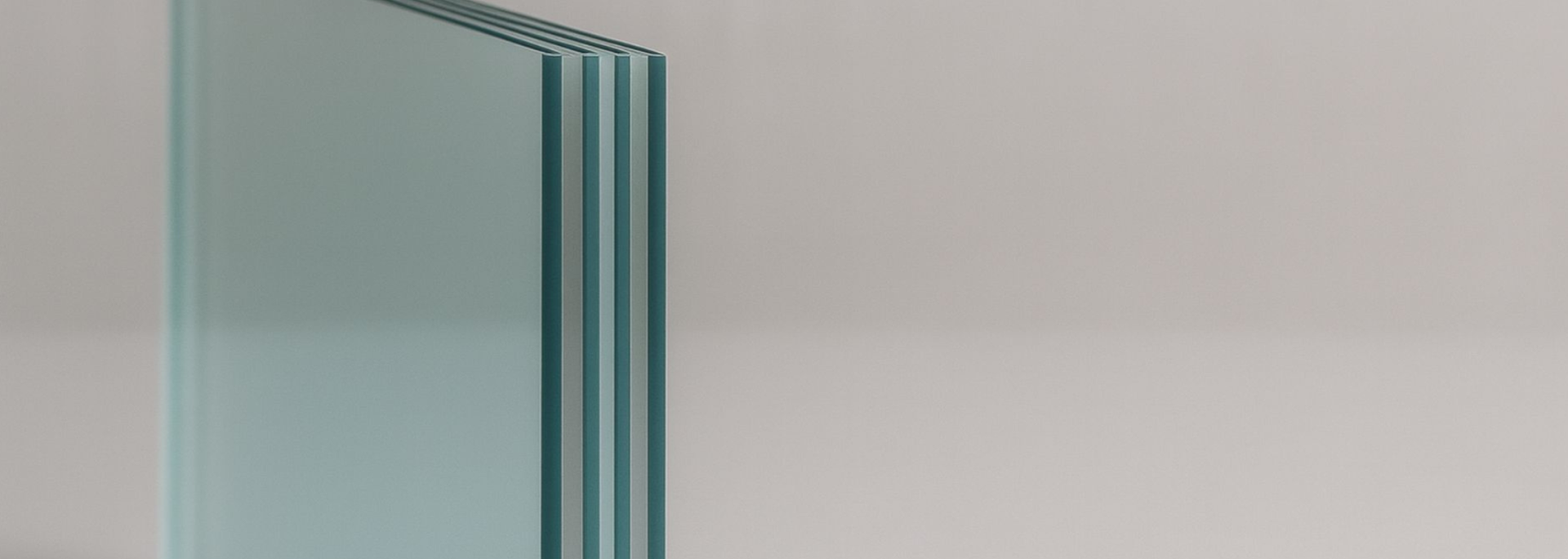
The resulting laminated assemblies are used wherever additional strength and post-breakage safety are required. Common applications include overhead glazing, skylights, and balustrades.
In some cases, heat-strengthened glass is laminated with toughened glass. This mixed laminate configuration, frequently used in skylights and other overhead glazing, combines the high strength of toughened glass with the improved post-breakage behaviour of lamination. In other words, it helps to retain glass fragments if the laminate is accidentally broken or in those rare cases of spontaneous breakage.
Cars and other road vehicles
Heat-strengthened glass is often used in cars and other road vehicles to increase passenger safety. Common applications include side windows, rear windscreens and sunroofs, where high resistance to impact and thermal stress is required.
Marine environments
Heat-strengthened glass is also used in marine environments. As with its other applications, it's used wherever resistance to heat, wind and mechanical loads is necessary.
In marine environments, you can find heat-strengthened glass in vessel windows, marine doors and partitions, deck railings and partitions, and ship facades.
And as with the other applications we've mentioned, heat-strengthened glass on boats and other marine vessels is often laminated.
Storefronts
Building regulations typically require storefronts to be made from safety glass, so heat-strengthened glass alone won't cut it.
However, laminated heat-strengthened glass – sometimes laminated with toughened glass, too – is sometimes used for storefront applications. The same goes for other kinds of structural glazing, such as balustrades and partitions.
What are the benefits of heat-strengthened glass?
- It's around twice as strong as standard annealed glass.
- It offers significant resistance to wind and heat.
- It offers superior optical clarity to toughened glass.
- It's ideal for laminated assemblies.
- It doesn't spontaneously break (although this is a rare occurrence with toughened glass, especially after heat soak testing).
Are you looking for high-quality heat-strengthened glass or safety glass? At ToughGlaze, we cut and process a wide range of glass products from one state-of-the-art UK facility. Get in touch with our experts today for a quick, competitive quote.