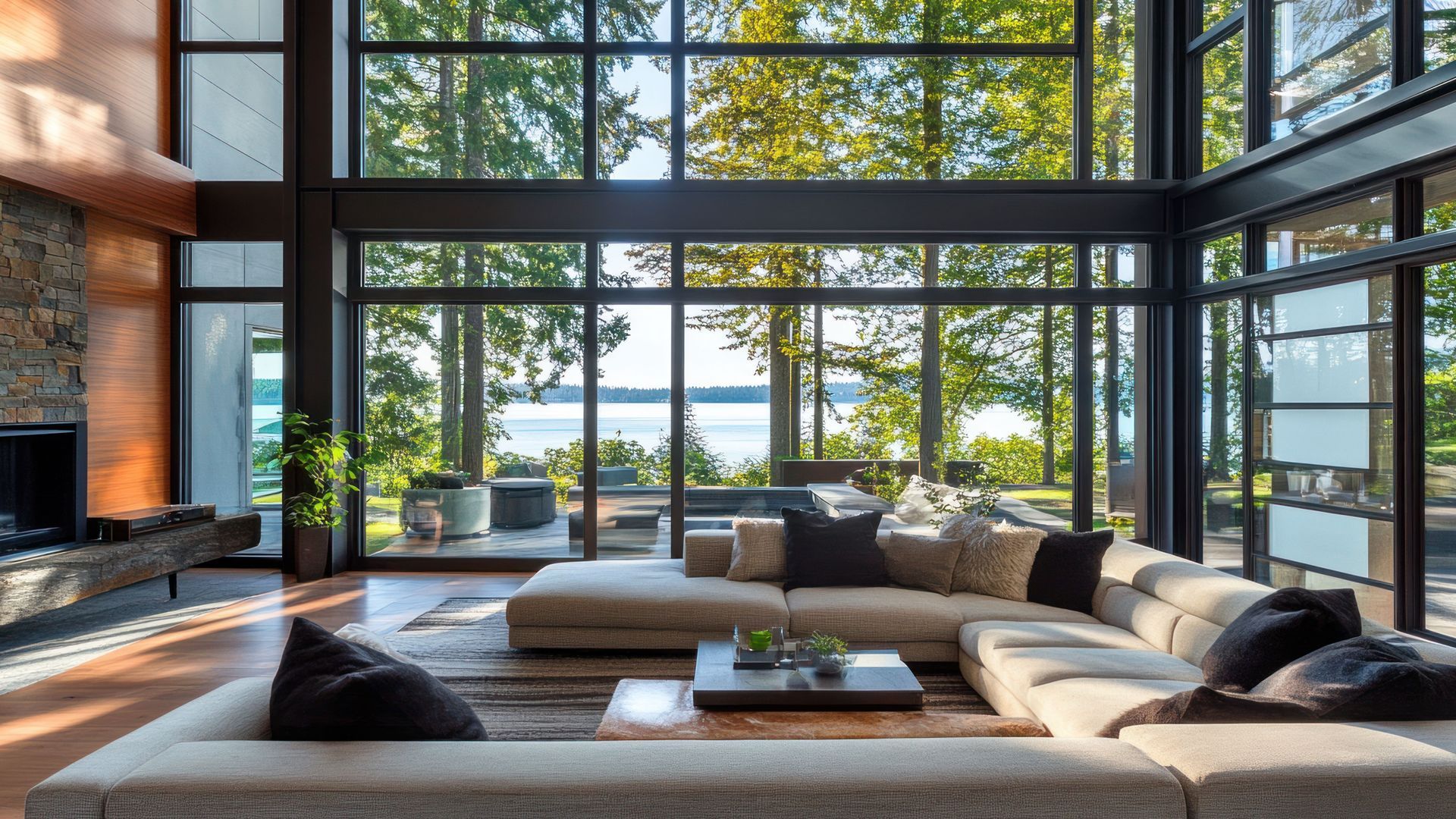
Interior design: glass and its role in material language
Interior designers love glass for a reason. Explore how it can speak volumes in "material language".
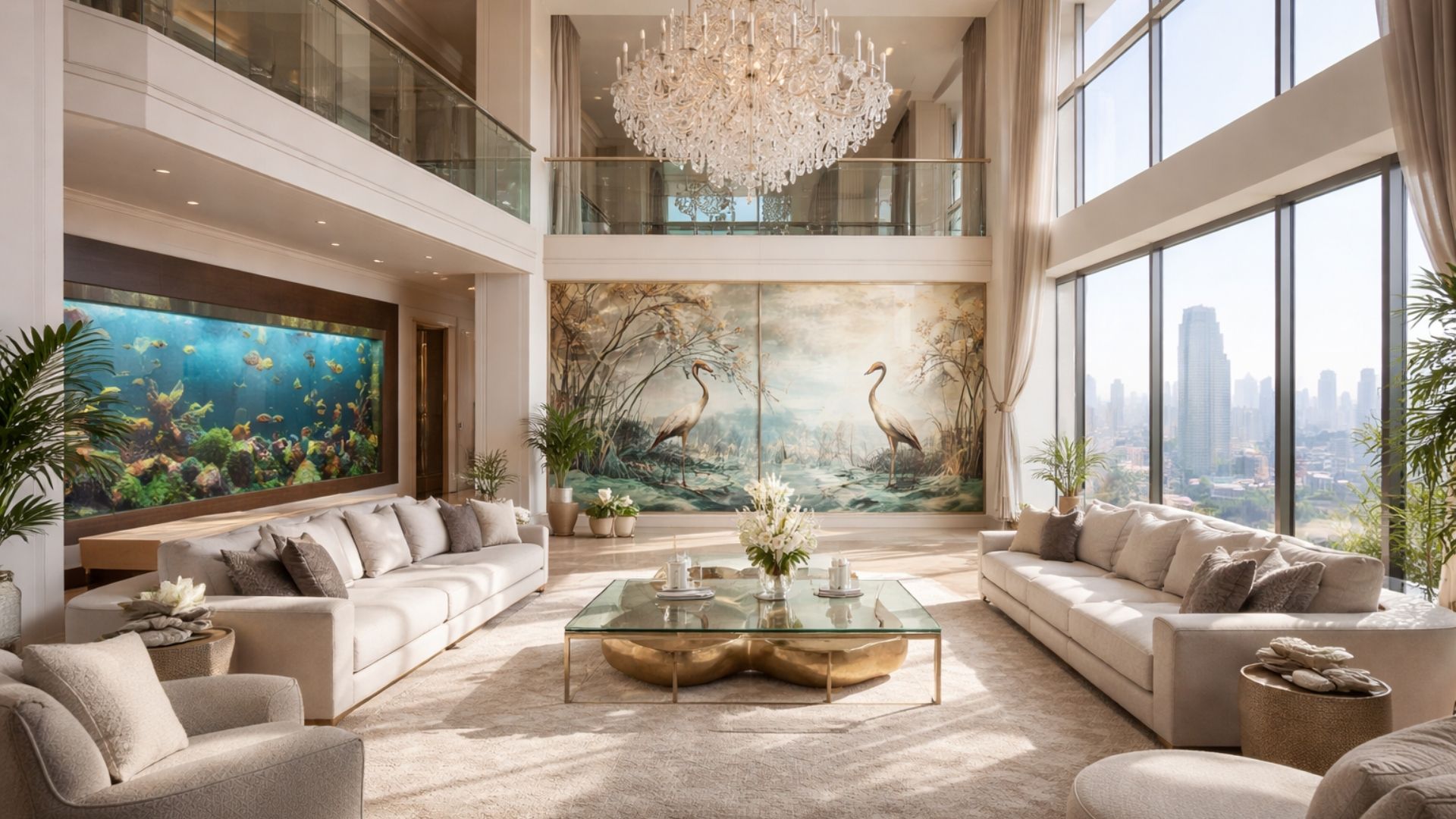
If a room could speak, what would it say?
No, we haven't gone cuckoo. It's a question that interior designers the world over ask themselves in one way or another every time they embark on a project.
Walk into any room, you see, and you pick up cues about the character, intentions and social status of the person who owns it. You also get cues about the mood of the room and even the story it's telling.
These cues come from a variety of places. They come from the decor, the furniture, the layout and the materials. In fact, in interior design, the effect materials have comes with its own name: "material language".
Material language is all about what happens when materials are selected and orchestrated. It mostly refers to the ways that they interact – wood and stone, say, or metal and fabric.
More than that, it's about the sensory experience of materials. After all, interior design isn't just something you look at. It's something you sit in and touch, too. Creative interior designers embrace this, thinking about roughness, smoothness, warmth and coolness as well as appearances.
From these considerations comes atmosphere and personality. So, what role can glass play? The simple answer is "a lot". Here are some examples that show off its versatility.
How is glass used in interior design?
Glass is used in a huge number of ways in interior design. Glass walls and partitions create rooms within rooms, while glass staircases and railings appear to float. Doors slide and pivot, skylights maximise natural light, mirrors reflect and surfaces sparkle.
Glass can also be used to maximise space. If a room is cramped, a mirror can create the illusion of space without the builders coming in and knocking down a wall.
Increasingly, interior designers have sustainability at the top of their agendas. Glass can aid in these efforts, maximising natural light and reducing reliance on electric light.
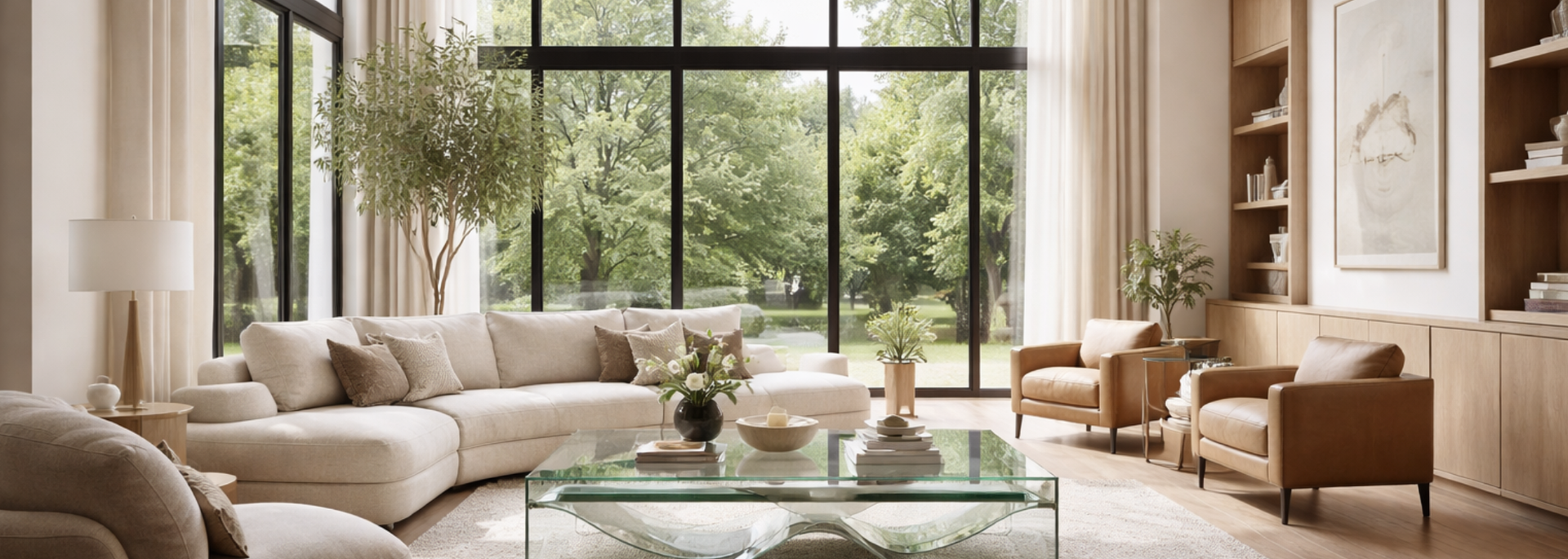
Finally, glass in all its myriad forms can be used in combination with other materials such as wood, stone and metal. When it comes to glass in material language, the only limit is the designer's imagination.
The role of glass in material language
1. Tactility
Materials aren't just there for visual appeal. They're also tactile – and glass, like other much-used materials, has a lot of tactile potential.
Take sandblasted glass. This is made by blasting sand at a glass surface. It can cover the whole surface with its gritty texture or pick out a stencilled pattern. Meanwhile, some types of anti-glare glass have a velvety smooth feel.
2. Visual texture
This is the big one. Interior design is all about texture – and glass provides it in spades.
The most obvious use of visual texture might just be the mirror. This is because of how the reflections interact with the rest of the room. It's also because the frame itself can be used to bring out and complement textures.
But glass can be textured in all sorts of other ways. It can be tinted any hue under the sun with a coloured interlayer. It can be given a fabric or metal mesh interlayer. With switchable smart glass, it can even be changed from transparent to translucent to opaque with the click of a button.
If you want to introduce patterns to an interior design, you can get glass panels screen printed or digitally printed with a design of your choice.
All this is before you enter the world of material combinations. Glass can be combined with any material effectively – it all depends on the designer's taste.
3. Patina
When designing interiors, people often consider "patina". Patina refers to the sheen that develops on lived-in surfaces – the quality that makes wood look aged, for instance.
Patina gives interiors a sense of warmth, soul and history. In the case of glass, this can come from vintage pieces – old mirrors, for instance, old furniture with glass surfaces or reclaimed stained glass.

Alternatively, you can buy new glass but get it treated in such a way that it has that lived-in look. Coloured glass can be given warm, traditional colours, while screen-printed and digitally printed glass can fill the room with vintage designs.
4. Sensory experience
Aside from the sense of touch, glass – like all materials – can help interior designers create a sensory experience.
Acoustic glass, for instance, can help soundproof a room, making it a more hushed and peaceful environment. Glass cabinets and other pieces of furniture can be fitted with LED lighting to create a dramatic effect.
Last but not least, switchable smart glass can be used to add sensory stimulation to any surface.
Switchable smart glass is a state-of-the-art glass product that can be integrated into a smart home system and changed from transparent to opaque. Whether you have a smart glass window or a partition, tabletop or wardrobe, it adds colour, vibrancy and sensory excitement to any room.
5. Layering and contrast
What does interior design have in common with lasagne, haircuts and fashion? It's all about the layers.
Designers often layer glass with wood, stone and metal. To take just one example, a glass tabletop could be placed over a wooden base or a glass surface fitted with a fabric or metal interlayer.
Another kind of layering can be achieved with backlit glass panels – especially if the glass is textured or printed. This can add a dramatic effect and act as a focal point.
We've covered a lot of possibilities and yet still haven't scratched the surface. Whatever your interior design vision, glass has its part to play. Happy designing!
Are you an interior designer looking for high-quality, accredited glass products? At ToughGlaze, we cut and process all our glass in one state-of-the-art UK facility. Get in touch today for a quick, competitive quote.