Mesh vs fabric laminated glass: aesthetic and practical factors
Mesh laminated glass and fabric laminated glass add different things to building projects. Explore the differences in our glass guide.
Specifying glass can be surprisingly complex – especially if you're new to the game.
It's partly because there are just so many different kinds of glass products on the market. The versatility of glass may not make the headlines, but each year the portfolio bulges that little bit more.
The most eye-catching recent additions are probably
switchable smart glass
and self-cleaning glass – two products that seem to have been beamed into our everyday lives straight from a sci-fi movie.
Less lauded but no less impressive, however, are
mesh-laminated glass and
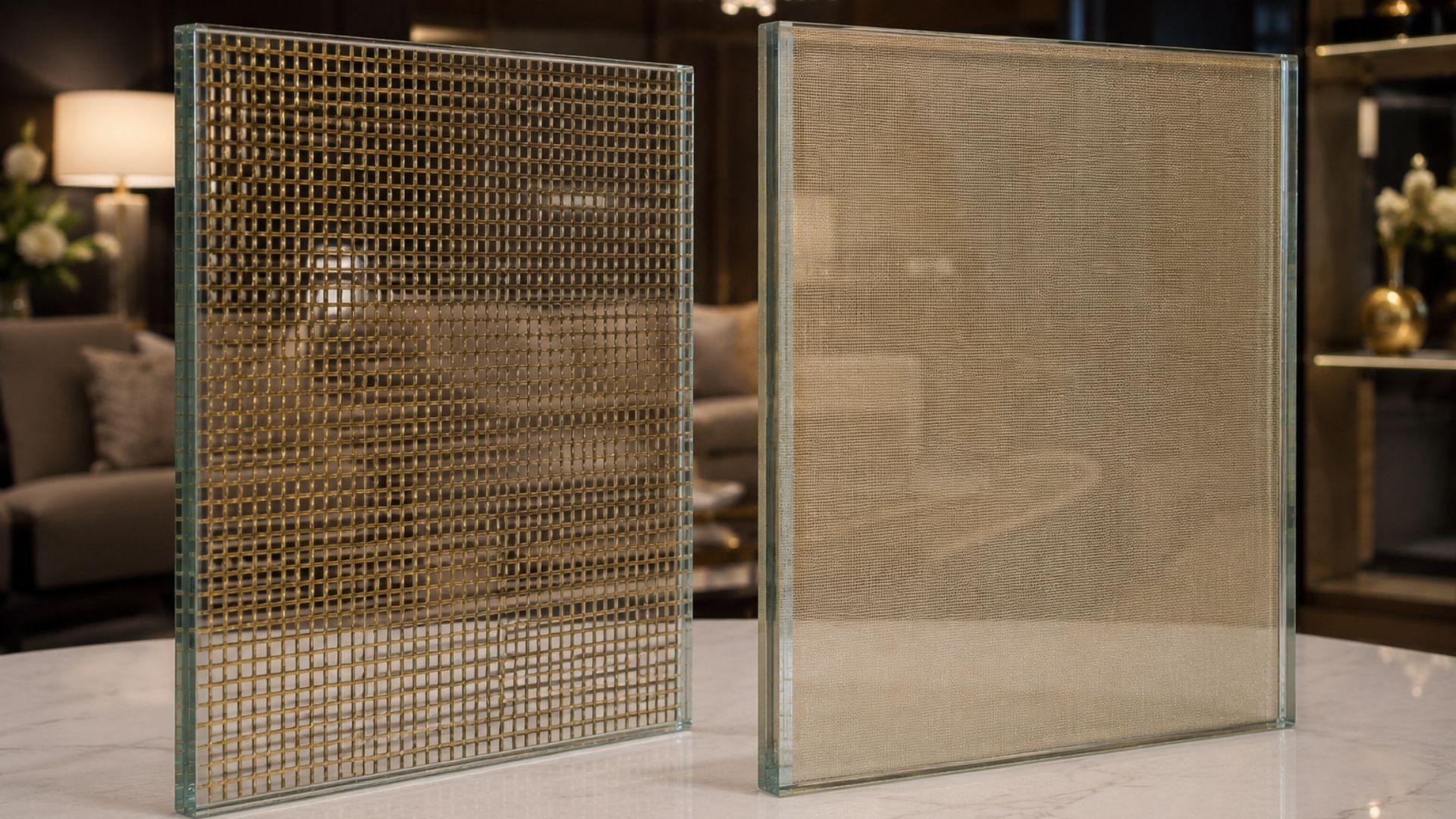
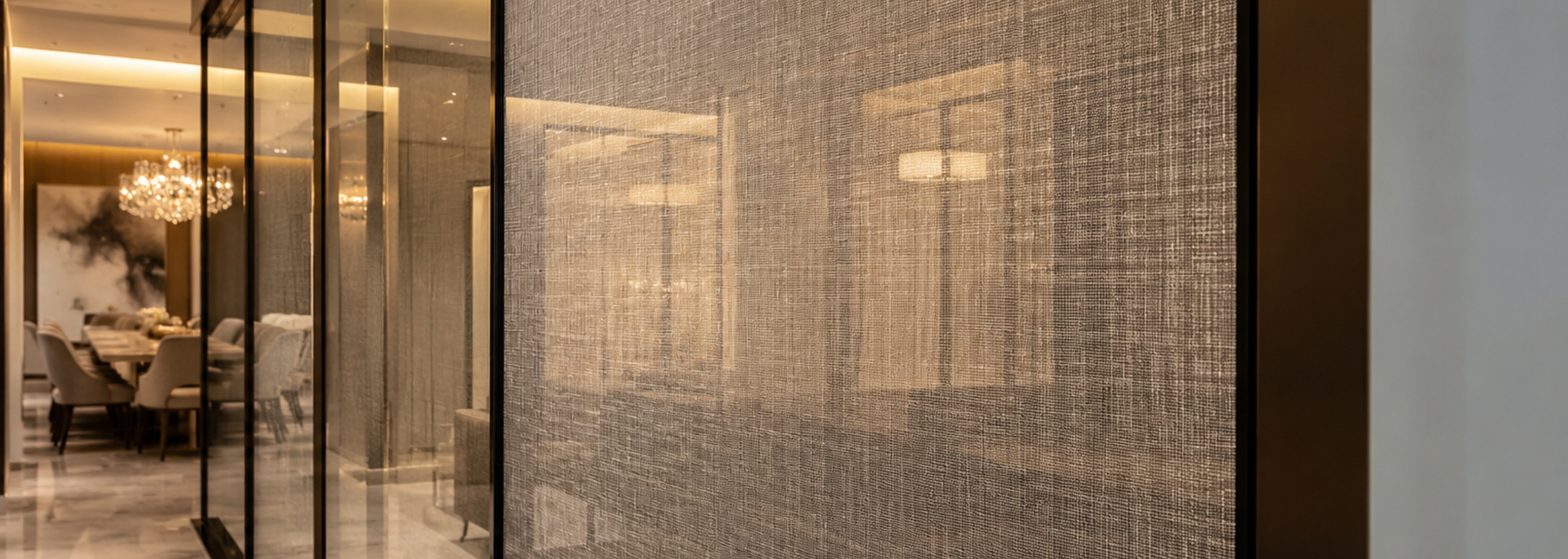
fabric-laminated glass. These two products both consist of a laminated glass unit with a textured interlayer and a plastic interlayer (usually PVB).
In the case of mesh-laminated glass, the texture interlayer has a metallic woven texture. Fabric interlayers, meanwhile, can be made from any fabric under the sun.
Harnessing the safety, security and durability of laminated glass, these two glass products are great examples of how highly functional modern glass can be. They're also great examples of its aesthetic potential.
Both are show-stoppers and conversation-starters. But what do you need to consider when choosing between them and specifying them for your building project?
In this guide, we explore the aesthetic and practical factors that will inform your decision.
Mesh- vs fabric-laminated glass: aesthetic factors
Both mesh- and fabric-laminated glass are used for their aesthetic effects. After all, if it were purely a question of function, you could choose a plain laminated glass unit.
Mesh-laminated glass is bold, industrial and modern. Its metallic textures give it a look sometimes described as "industrial chic" – in other words, a pleasing combination of the rugged and the elegant.
Fabric-laminated glass, by contrast, is soft and elegant. Its silk or linen interlayers give it colour and tactility in comparison to the metallic threads of mesh-laminated glass.
This isn't to say that mesh-laminated glass is brutally industrial. In fact, the use of stainless steel, copper, brass and aluminium for the interlayer often gives it a shimmering or mirror-like effect.
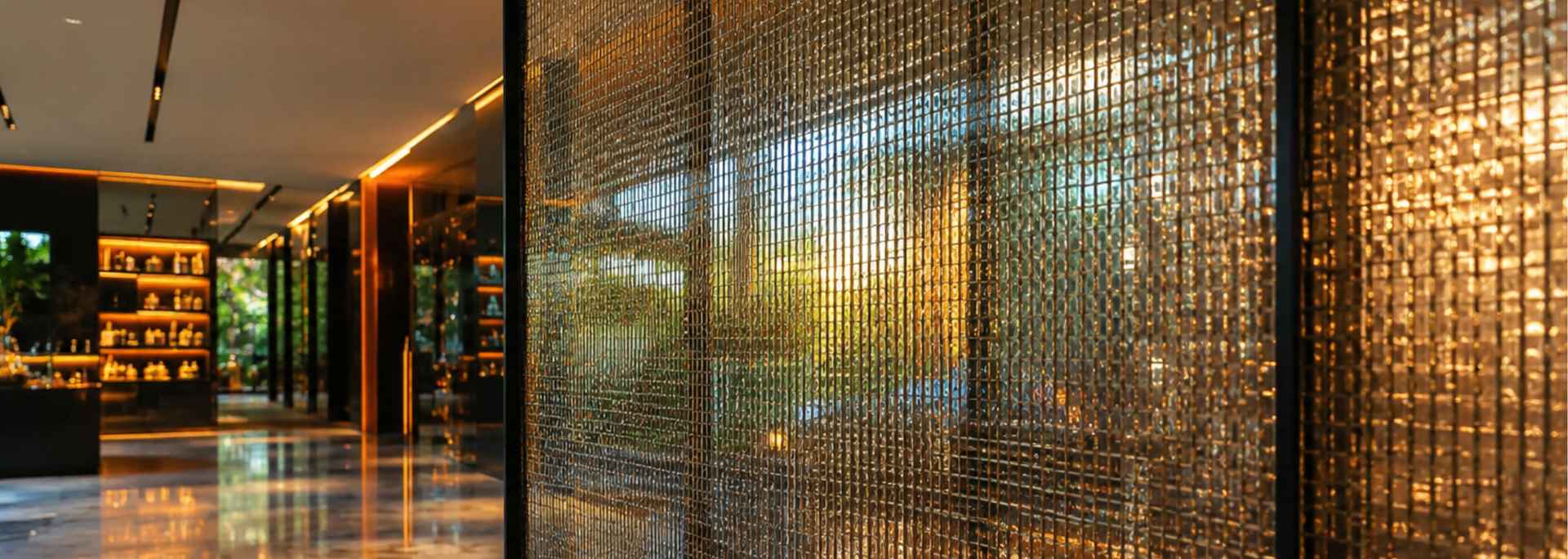
It all depends on the setting. Mesh-laminated glass can be rich, deep and heavy and fabric-laminated glass can tastefully offset bold, even brash, designs. The latter can be flamboyant in velvet or subtle in silk.
Like putting an outfit together, there are no rules to the use of mesh-laminated glass and fabric-laminated glass. They're versatile enough to realise pretty much any aesthetic vision.
Nevertheless, each has a conventional "design vibe". Mesh-laminated glass is often best suited to modern, industrial or industrial-adjacent and minimalist environments. This makes it a great choice for open-plan offices and retail spaces.
Fabric-laminated glass, meanwhile, is often chosen for spaces that bespeak comfort, artistry and sophistication. For this reason, they're often used for feature walls.
Mesh vs fabric-laminated glass: practical factors
Choosing between mesh-laminated glass and fabric-laminated glass isn't just a question of aesthetics. It's also about all the other things that glass can do – in particular, security and light diffusion.
Mesh-laminated glass is often used in high-traffic, industrial or exterior applications. This is because the mesh interlayer adds an extra layer of protection compared to a more delicate fabric interlayer.
It's this delicacy – which by no means extends to the whole laminated unit – that makes fabric-laminated glass a popular choice for soft, decorative interiors.
Both are super-tough products. But in a high-traffic environment, the extra layer of protection the mesh interlayer gives can be desirable.
After security, the most important consideration is transparency and light diffusion. Mesh-laminated glass provides a partial view with muted, diffused light. This makes it a popular choice in public spaces that offer some level of privacy, such as restaurants and hotels.
Fabric-laminated glass, meanwhile, has a wide range of transparency levels depending on the fabric used. It can be anything from sheer silk to heavy, rich velvet. This gives fabric-laminated glass a practical versatility that mesh-laminated glass doesn't quite share, despite its many other benefits.
The other key practical consideration is the type of glass used for the mesh or fabric glass. First, this has to be laminated glass. But secondly, it has to be high-quality laminated glass made by specialists. Without this guarantee of quality, your glass could discolour, break or insulate poorly.
What is laminated glass?
Laminated glass is one of two main types of safety glass – the other being toughened glass, also known as tempered glass.
It's made by bonding two or more layers of glass with a tough polymer interlayer. This is typically made from PVB.
Laminated glass is around six times stronger than standard annealed glass – so it's hard to break. When it finally does break, however, the inner plastic layer is designed to hold the broken pieces together. This means dangerous shards shouldn't fall out of the unit.
As well as being safe and secure, laminated glass is great for noise reduction and protection against UV rays. The use of mesh, fabric or coloured interlayers is the cherry on top.
How we can help
Here at ToughGlaze, we stock TG MI, our mesh-laminated glass and TG FI, our fabric-interlayer glass. Both are versatile products, cut to your requirements, which can be used in a wide range of internal and external applications.
And like all of our glass products, TG MI and TG FI carry the Kitemark seal and have been rigorously tested to all the relevant industry standards.
The big difference with ToughGlaze, however, is in the delivery. We carry out every stage of the process – from cutting to firing, from treating to fulfilment – all from our state-of-the-art facility in Bedford, UK. For you, that means a reduced risk of logistical hiccups and more accountability in the unlikely event that something does go wrong.
So, if you're looking for high-quality decorative glass products, don't hesitate to get in touch with our experts. We'll be happy to discuss your project and provide a quick, no-obligation quote.