Spandrel glass explained: applications, risks and specification tips
What should you keep in mind when specifying spandrel glass for a building facade? Find out in our 5-minute guide.
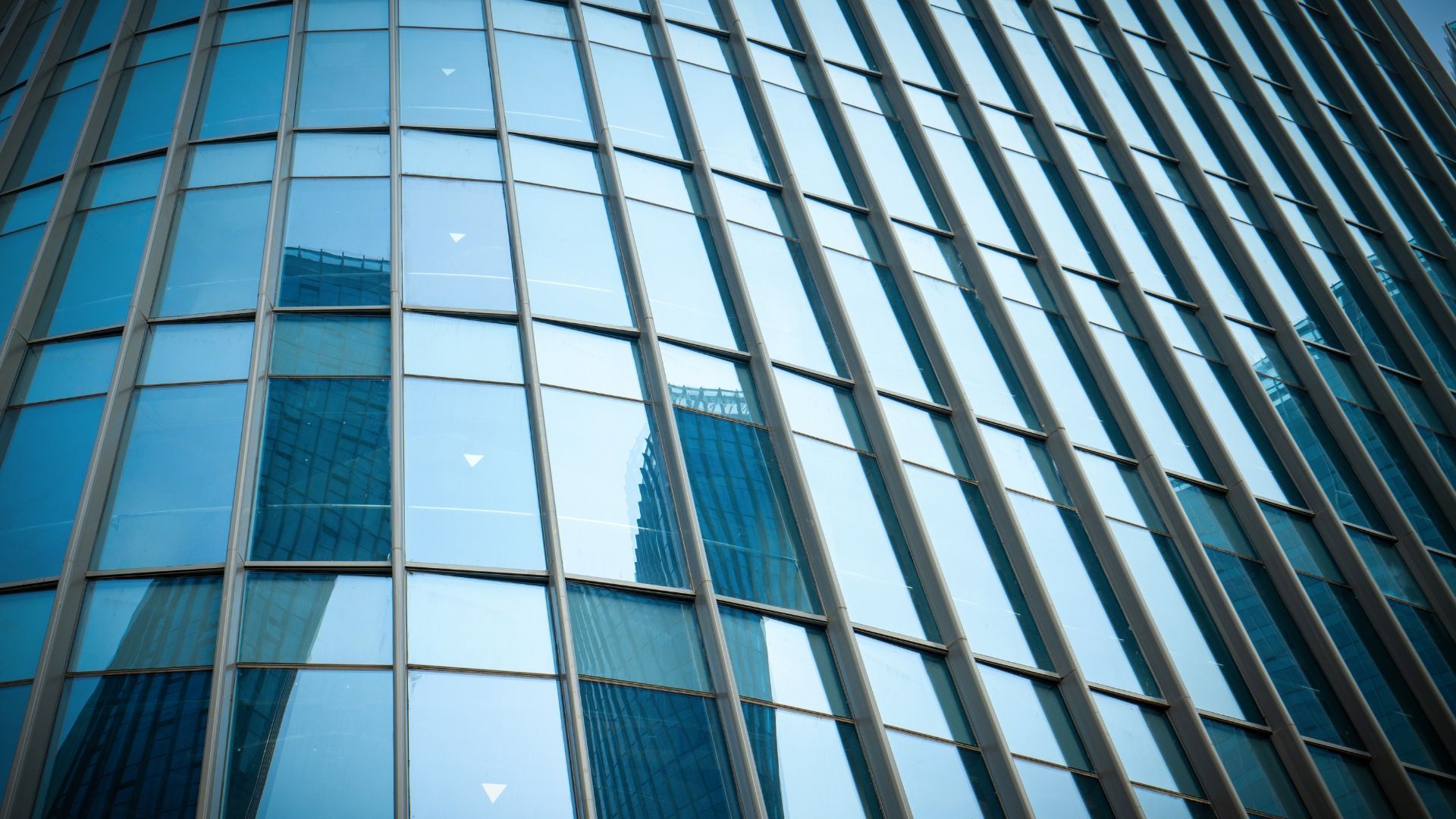
Spandrel glass is a kind of opaque glass used in building exteriors. Its function is to conceal structural components between storeys – components like floor slabs, HVA vents, wiring and plumbing.
It's also used in tandem with vision glass (transparent glass) to create the sleek, continuous, all-glass facades associated with high-end institutions.
In this article, we explore the applications and risks associated with spandrel glass and run through a checklist of specification tips. But first, how does spandrel glass work?
How does spandrel glass work?
Spandrel glass is opaque – and its opacity is used to stop the structural, internal middle of the building being visible to passersby.
The glass is made opaque with an opacifier. This is often either silicone-based paint or ceramic frit applied to the interior surface glass.
Architects and designers specifying spandrel glass often take design matching into account. This involves either matching the colour of the spandrel glass and vision glass or juxtaposing them for a design contrast.
What are the common applications of spandrel glass?
Spandrel glass is used wherever structural building components like floor slabs, columns, HVAC systems, wiring and plumbing need to be concealed. The aim is to create a continuous exterior facade with no sign of the building's innards.
Primary applications of spandrel glass include curtain wall facades, shadow box systems and interior partitioning.
Curtain wall facades
Curtain wall facades are found on high-rise office blocks, commercial properties and high-density residential buildings. With every glass curtain wall, the purpose is to create the illusion of a sleek, unbroken, all-glass exterior.
Shadow-box systems
Shadow-box systems consist of an insulated, light-blocking backing behind a transparent or minimally tinted glass panel.
This does double duty, concealing the building's structural guts while adding depth to the exterior.
Interior partitioning
Finally, spandrel glass is used for interior partitioning. You might find it as wall cladding in lobbies or as privacy barriers in medical facilities, laboratories and other places where privacy is a priority.
What are the main styles of spandrel glass?
There are six main styles of spandrel glass:
- Ceramic-fritted spandrel glass
- Back-painted spandrel glass
- Shadow-box spandrel glass
- IGUs
- Laminated spandrel glass
- Acid-etched spandrel glass
1. Ceramic-fritted spandrel glass
Ceramic fritted spandrel glass is glass with a silicone-based paint or ceramic frit baked onto the outward-facing surface of the glass. This makes it permanently opaque and creates design opportunities for architects and designers.
2. Back-painted spandrel glass
With back-painted spandrel glass, a specialised opaque silicone or paint is applied to the inward-facing glass. This creates a sleek, uniform finish and is often used to match the colour of the adjacent transparent vision glass.
3. Shadow-box spandrel glass
Shadow boxes are transparent or tinted glass placed over a dark insulation backpan. The cavity creates the illusion of depth and can be used to recreate the reflectivity of the neighbouring vision glass.
4. IGUs
When used for spandrel glass, insulated glass units (IGUs) combine an exterior pane of solar control glass with an opacified interior pane. This combines the primary function of spandrel glass with the thermal performance of an IGU.
5. Laminated spandrel glass
Laminated spandrel glass uses laminated glass. This is a super-durable safety glass made from two or more glass panes bonded together with a tinted or opaque interlayer.
Laminated glass is designed to hold together when shattered. That means more impact resistance and less risk for building users if the glass breaks.
6. Acid-etched spandrel glass
Finally, there's acid-etched spandrel glass. This has a chemically-etched finish. The effect is to softly diffuse light for a non-reflective, matte aesthetic.
What are the risks associated with spandrel glass?
The primary risk associated with spandrel glass is thermal stress, which in some instances can lead to glass breakage.
Spandrel glass often sits next to insulation or backing materials. This can create heat traps. When this happens, the extreme temperature difference can cause the glass to shatter. And when the glass is fritted, there's an increased chance of thermally induced fractures.
Toughened spandrel glass can be vulnerable to spontaneous breakage caused by nickel sulfide inclusions. These are a byproduct of the manufacturing process and can be mitigated by heat soak testing.
Spandrel panels play an important role in compartmentalising fire. This means the panels need to be correctly insulated and not combustible – otherwise, fire could spread up the facade.
In shadow-box systems, the lack of ventilation can trap moisture, leading to condensation, corrosion and permanent staining. Given the aesthetic dimension of spandrel glass – concealing unwanted structural components from sight – this is obviously undesirable.
Finally, using
heat-strengthened glass for spandrel glass can introduce:
Roller wave distortion: a kind of optical distortion
Anisotropy:
the appearance of iridescent spots in specific weather conditions
Roller wave distortion and anisotropy are unavoidable byproducts of the manufacturing process. Nevertheless, they can lead to dissatisfaction with the finished look of a curtain wall or other facade.
Specification tips
When specifying spandrel glass for a construction project, there are a few things to keep in mind.
Perhaps the most important is the fact that backing materials and mockups are just as important as colour specifications. If you only specify the colour, the finished facade is unlikely to have that sought-after uniform seamless look.
Make sure to specify the opacifier type you want and to go for heat-treated glass, whether heat-strengthened or fully toughened.
You should think about colour matching the spandrel glass and vision glass early and getting a performance mockup. This will show you how the facade will appear during the day and during the night, along with colour consistency and the overall quality and functionality of the construction.
What's the difference between spandrel glass and vision glass?
Spandrel glass and vision glass are often specified together. So, what's the difference?
The key difference is transparency. Spandrel glass is opaque, used to conceal structural elements between the storeys of a high building. Vision glass, however, is transparent and is used to let in natural light and provide views from the inside.
Together, they create the illusion of a seamless, all-glass building exterior.
ToughGlaze is a UK glass processor, founded in 1993. We supply a wide range of high-quality glass for architecture, all cut, processed and delivered from our state-of-the-art facility in Bedford. To discuss your project, don't hesitate to get in touch with our experts.