Using reflective glass in interior design
Reflective glass can add space and sophistication to any interior. Explore 7 key uses in our guide.
In 1965, the Japanese artist Yayoi Kusama made art history with her world-famous Infinity Mirror Rooms. These immersive installations created the illusion of boundless space through the use of mirrors, lights and tastefully chosen patterns.
Kusama's mirrored rooms are a wondrous example of what reflective glass can do. But the use of reflective glass to create a sense of space is at least as old as the Hall of Mirrors at France's Palace of Versailles.
Built in the late 17th century, the Hall of Mirrors, or Galerie des Glaces, was a status symbol extraordinaire.
Seventy-three metres long and fitted with 357 mirrors, the Hall of Mirrors was King Louis XIV's way of showcasing France's power. In particular, it was built to demonstrate dominance over Venice, then the glass capital of the world.
These are extreme and extravagant examples of the interior design potential of mirrors. And while your own budget may not stretch as far as Kusama or Louis, they nevertheless serve as benchmarks for what's achievable.
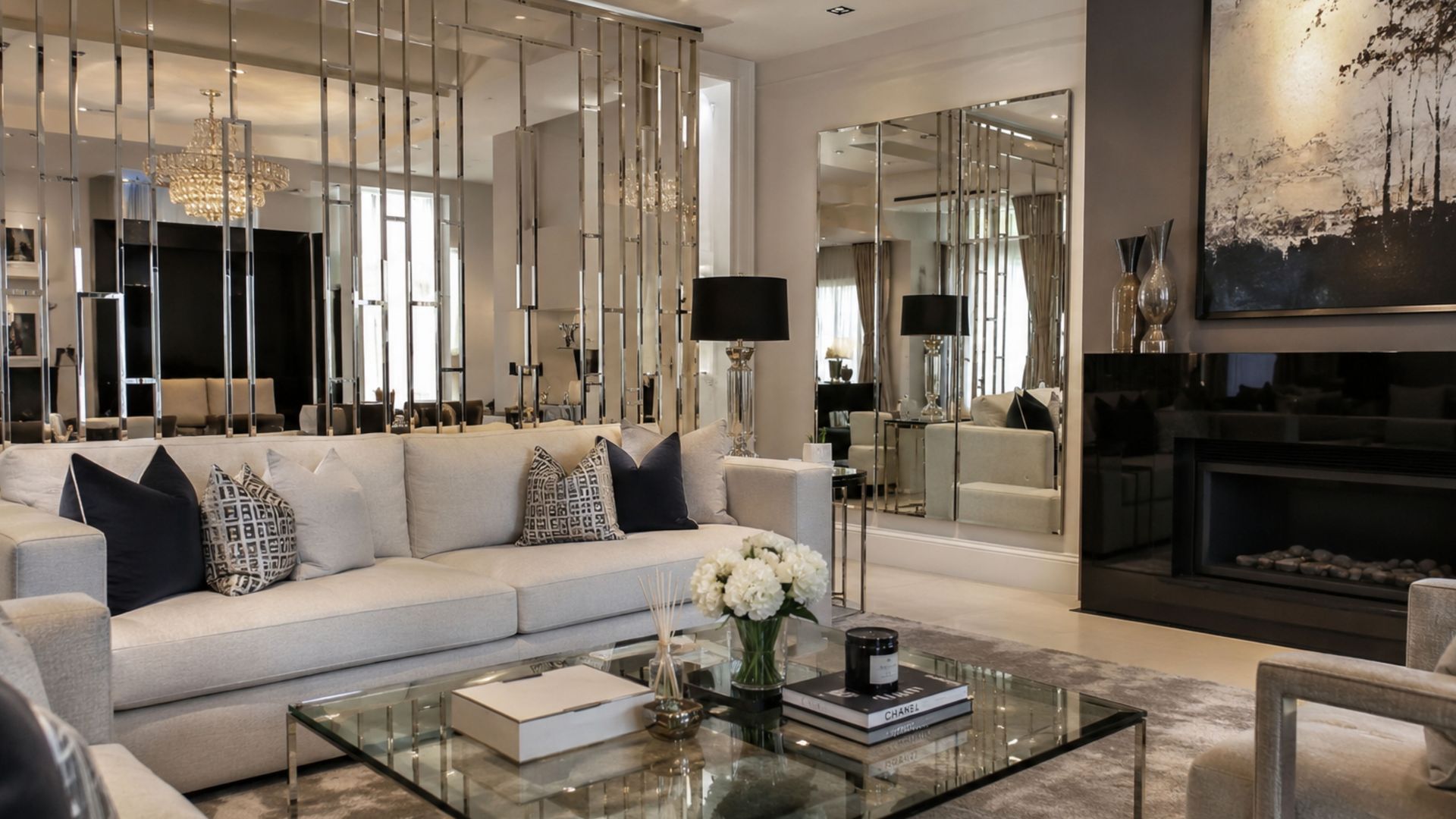
Even the most modest use of reflective glass in interior design shares core principles with these historical showstoppers. Mirrors maximise interior space and add an air of mystery, opulence and beauty – no matter how big the room or how many mirrors are used.
Reflective glass is a commonly used material in interior design for a reason. It combines high-end aesthetics with a host of practical benefits.
As well as making rooms feel bigger, brighter and bolder, mirrors can provide privacy with opaque, translucent or textured glass. They reduce glare, too.
At ToughGlaze, we provide a wide range of clients with an equally wide range of glass products.
And like all our products, our
mirror glass is of the highest quality and can be customised in myriad ways.
So, how is reflective glass used in interior design today?
Key use cases for reflective glass in interior design
1. Wall features
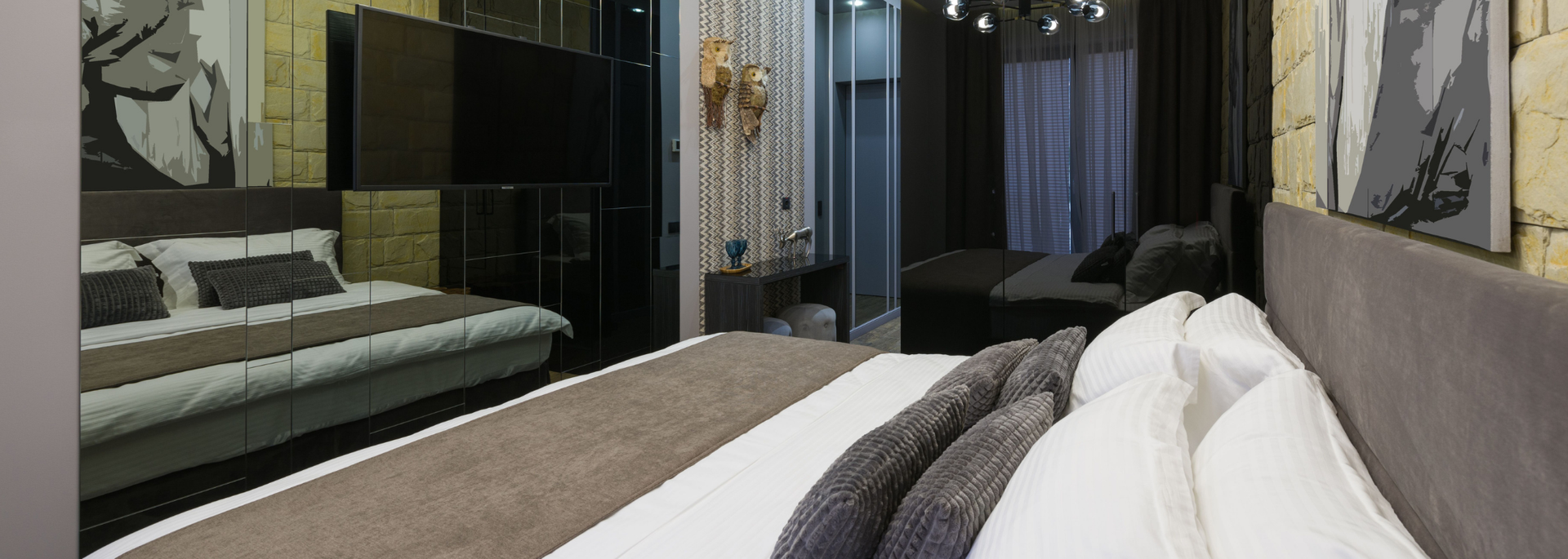
Reflective glass is often installed as full-height wall panels or smaller inset panels.
The key effect of these wall features is to make small rooms appear larger. In some cases, reflective wall features overlap and interact to create a sense of space spiralling off into infinity.
As well as making rooms feel bigger, they also reflect light – whether artificial, natural or both – to brighten up otherwise dingy interiors.
And like all these applications, reflective wall features are undeniably expansive, contemporary and sophisticated.
2. Mirrors
Whether you're a homeowner or renter, you've probably got a mirror at home. And if you have an eye for interior design, you've probably placed it in a similar way to a professional.
Designers often use mirrors to create focal points, add visual depth and highlight entryways and rooms.
Mirrors come in all sorts of effects. They can be softened with a tinted surface and framed in a plethora of ways. This helps match the mirrors to the overall aesthetic of the interior – as simple or as extravagant as required.
3. Kitchen backsplashes
Backsplashes are a great example of how reflective glass – and indeed all kinds of glass – combine aesthetic appeal with functionality.
The primary function of a backsplash is to catch kitchen mess so it's easier to clean up. But reflective kitchen backsplashes also serve to bounce light around the kitchen, modernise its aesthetic and make it feel larger.
They're also a doddle to clean, requiring nothing more than a regular wipe-down with a cloth and some cleaning solution.
4. Wardrobe doors
Reflective glass is often used on wardrobes (and cabinets) to make bedrooms feel simultaneously more spacious and more minimalistic.
This is partly because of the clean, modern aesthetic that reflective glass brings. It's also because reflective wardrobe doors remove the need for a separate mirror, economising as well as enlarging space.
5. Partitions and room dividers
It's a common conundrum in interior design: how do you separate spaces while maintaining an open, welcoming feel?
There's no one way to do this – but reflective glass is a go-to for a reason.
Whether fully reflective, tinted or semi-reflective, mirrored partitions and room dividers let light pass between rooms and add a clean, contemporary look to offices, hotels and homes alike.
And depending on the kind of glass you use, they can bring these benefits while also maintaining privacy.
6. Ceilings and architectural details
Reflective glass is high-end – and in the case of ceilings, it's high up too.
Reflective glass ceilings are dramatic and a great way to amplify lighting – whether artificial, natural or a mixture of the two.
Reflective glass can be used similarly for architectural details. That includes columns, fireplace surrounds (the decorative framework around the edge) and even lift cabins.
7. Furniture
Last but not least, interior designers often use reflective glass in furniture.
Coffee tables, cabinet fronts, shelves and console tables can all have reflective surfaces. As well as magnifying light, it can make furniture feel more lightweight and less bulky. This helps interior designers maximise the sense of space in smaller rooms.
Why use reflective glass?
In our view, there are four main benefits of reflective glass in interior design.
First, it enhances natural light by reflecting it deeper into the room. This can play a pivotal role in making rooms feel warm, bright and welcoming.
Reflective glass also creates the illusion of more space. This is equally valuable in small interiors where every square inch matters and larger interiors where a sense of scale is a priority.
It furnishes rooms with a sleek, modern, sophisticated aesthetic. This can complement designs of all kinds, from the rustic to the industrial, from the subtle to the sassy.
And finally, it's easy to clean and maintain – especially if you go for modern toughened products like TG REFLECT.
As trusted reflective glass processors, we work with interior designers to cut, treat and supply a wide range of decorative glass products. To discuss your project or request a quote, get in touch with our experts today.