What is the best glass for thermal insulation?
Different kinds of glass offer different levels of thermal insulation. Explore your options in our guide.

Glass as a material is inherently insulating. Its very atomic structure blocks heat transfer from one side to the other.
The world of glass products, however, is varied and ever-expanding. Modern glass products use all sorts of manufacturing tricks and techniques to improve thermal insulation.
These include sealed vacuums, low-emissivity coatings and gas or air fills between two or more glass panes.
All these help building users harness the core benefits of thermal insulation. It keeps indoor spaces cool in summer and warm in winter while keeping energy bills down.
In a boon for architects, designers, planners and eco-conscious homeowners, this also has a positive effect on the building's environmental impact.
Thermal insulation, of course, can't be achieved with glass alone. But the right product, correctly installed, can make a huge difference to the thermal efficiency of a space.
In this article, we explore the most common options for glass products with high levels of thermal insulation.
Double glazing
Double glazing consists of two glass panes separated by a spacer bar.
The space between the panes is filled with air or an inert gas such as argon. This conducts heat much more slowly than glass alone.
It's an effective thermal insulator and the standard for most UK homes. It reduces heat loss through windows by up to 50% when compared side-by-side with single glazing.
Modern double glazing units often have low-e (low-emissivity) coatings. These reflect heat back into the room and bounce heat off the outer panes.
Double glazing's thermal insulation properties help cut energy bills and stabilise temperatures. At the same time, double glazing reduces condensation, protecting the frames from mould and dampness – all while offering excellent optical clarity.
Triple glazing
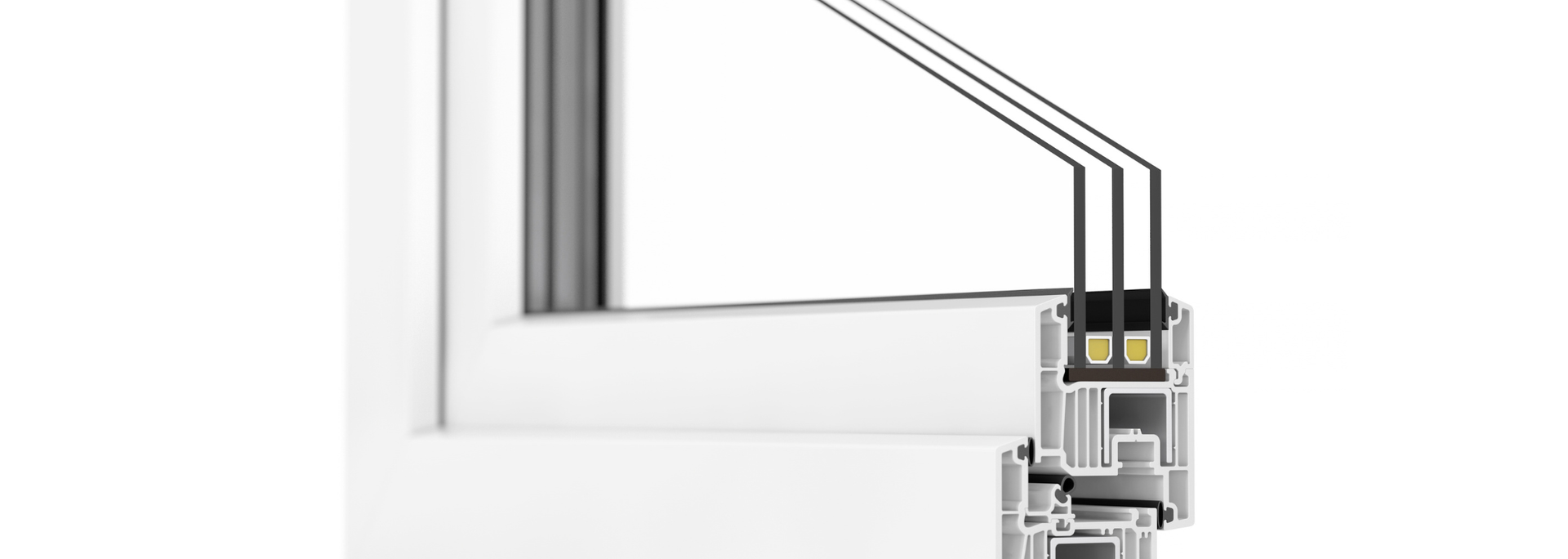
Triple glazing is double glazing with an extra pane and an extra gas-filled cavity. This significantly reduces heat loss compared to standard double glazing.
You can see this difference clearly in their U-values. These measure how fast heat travels through a wall, roof, window or other building element. The lower the U-values, the better the insulation.
Good double glazing typically has a U-value of 1.2 to 1.4 W/m²K, whereas triple glazing reduces this figure to between 0.7 and 0.8 W/m²K.
Triple glazing is excellent for thermal insulation, cutting heat loss by roughly 20% to 40% compared to double glazing. It keeps buildings warm in winter and limits excessive solar heat gain in summer
.
And because the triple-glazed unit is thicker and heavier than double glazing, it also improves noise reduction.
Double glazing vs triple glazing
For most homes, standard double glazing is an affordable and thermally efficient option that balances cost and performance while meeting building regulations.
Triple glazing adds extra comfort to the home. In terms of thermal performance, however, it's mostly used in colder regions like Scotland and the north of England. It's also sometimes used in specialised low-energy builds.
The financial incentives of double vs triple glazing are a hot topic. Triple glazing costs more upfront, and the extra cost can reduce or even wipe out savings on energy bills. Moreover, the heat in older homes often escapes through the walls and roofs – heat loss that can't be eradicated by triple glazing.
Vacuum-insulated glass
Vacuum-insulated glass (VIG) is a type of window with a sealed vacuum between the panes of glass rather than air or inert gas.
All air is removed from the tiny gap between the glass panes. This eliminates heat transfer through both conduction and convection.
Vacuum insulated glass has an ultra-thin profile – just six to eight millimetres thick. That makes it much lighter and thinner than standard double or triple glazing.
This thinness is made possible by an invisible grid of support pillars. These keep the panes imperceptibly separate and stop environmental loads from pushing them together.
The thermal performance of vacuum insulated glass can equal or even beat triple glazing. The same goes for its acoustic performance.
Vacuum insulated glass can have a low-e coating to reduce radiant heat loss.
Its slim profile makes it ideal for historic and heritage buildings where glass needs to fit into slim window frames without altering the aesthetic.
It's also used in homes, commercial buildings, glass facades and skylights.
Low-e glass

Low-e glass has a microscopic and transparent metallic coating. This reflects radiant heat back to its source. Warmth from inside is reflected back into the room and warmth from outside is reflected away from the windows. This helps stabilise temperatures all year round.
It can be used inside double or triple-glazed units – and when it is, the unit outstrips the thermal performance of uncoated glass.
The main benefit of low-e glass for thermal insulation is that it reduces reliance on heating and cooling systems.
An added benefit of low-e glass is that it blocks ultraviolet rays and infrared light. Left unchecked, these can damage furniture, carpets and fabrics.
ClimaGuard® 365
Here at ToughGlaze, we stock ClimaGuard® 365 – a low-E glass product designed for domestic use.
ClimaGuard® 365 reflects more than 60% of the sun's heat away from the glass. This helps keep homes cooler in hot weather without needing to rely on air conditioning.
And when winter comes, ClimaGuard® 365 helps keep the heat in, meaning you're far less likely to pump up the temperature.
Like all our products, it offers high performance without any aesthetic trade-off, balancing impressive clarity with thermal insulation.
ClimaGuard® 365 can be used for all sorts of applications: windows, sliding doors, bi-fold doors, skylights, conservatories and glazed extensions.
At ToughGlaze, we act as official trade suppliers for ClimaGuard® 365. We can supply this high-performance low-e glass in a wide range of sizes and as part of a double- or triple-glazed IGU.
Learn more about ClimaGuard® 365 or contact our team for expert product advice.