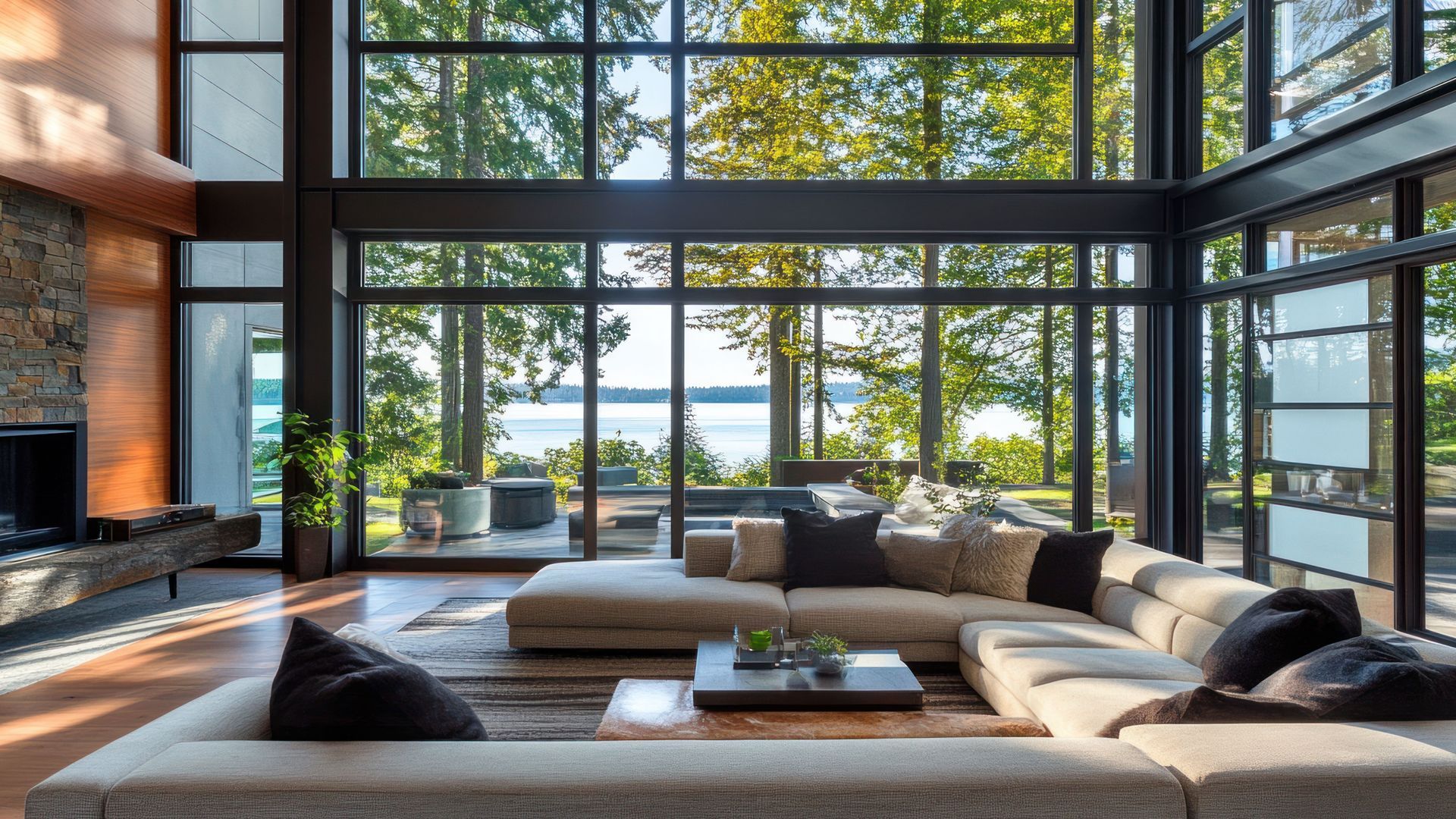
Vision glass vs spandrel glass: what's the difference?
Vision glass and spandrel glass are both used in curtain walls. But what are they for, and how are they different?
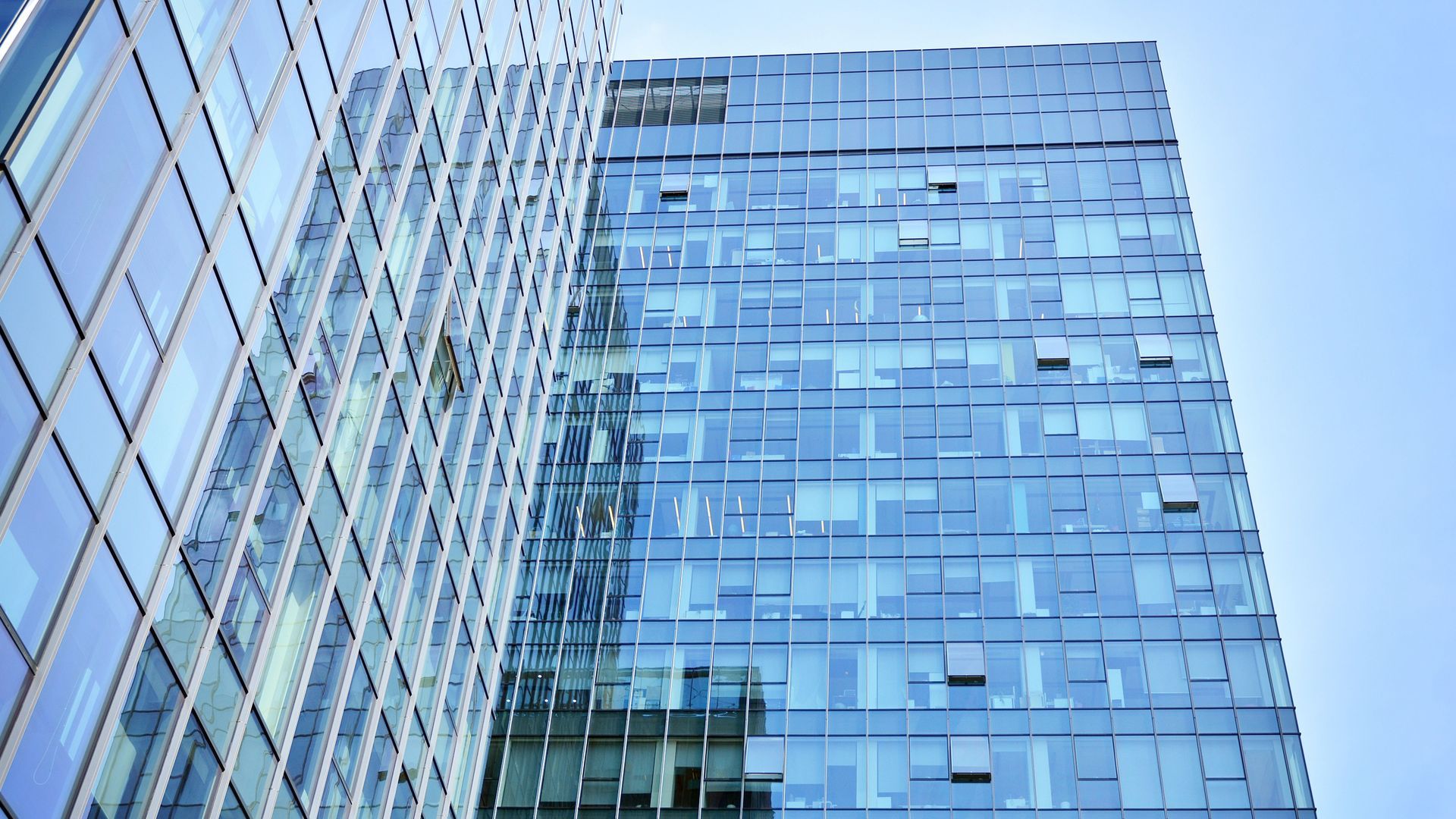
Architectural glazing is a modern marvel – and it's made up of a whole bunch of interacting components.
When you look at a glass curtain wall, facade, storefront, wall, roof or skylight, you're often looking at different types of glass.
Many examples of architectural glazing use both vision glass and spandrel glass.
From one point of view, the difference between these types of glass is simple and could be scribbled on the back of a napkin.
Vision glass is transparent. Building users look through it, and it lets daylight in. Spandrel glass is opaque. It conceals structural and mechanical elements while maintaining a consistent exterior appearance.
Spandrel glass is often placed between the top of one window and the sill of the window above. It hides unsightly elements like floor slabs, columns, HVAC systems, wiring and pipes.
Architects and designers combine the two to create the seamless look that's now such a fixture in financial districts and high-end hotels.
Typically, the facade will alternate between vision glass at eye level and spandrel glass at the level of the floor slab. This creates the impression of a continuous transparent wall, even though only part of it is transparent.
What is vision glass?
Vision glass is the transparent glass in a building facade, curtain wall or other glazing feature.
Its function is to:
- Allow building users to see outside
- Bring natural light into the building
- Contribute to the thermal and acoustic performance of the building (to varying degrees, depending on the specification of the glass)
It's mostly fully transparent but can also be tinted. It can be low-E glass, double- or triple-glazed, laminated or toughened. The precise specification will depend on the particular requirements of the building project.
Specifying vision glass
When specifying vision glass, there are a range of design considerations to keep in mind.
These include visible light transmission (VLT), solar heat gain coefficients (SHGC), U-values, glare control and whether safety glazing (toughened or laminated glass) is required.
What is spandrel glass?
Spandrel glass is an opaque glass used where visibility isn't required. It's typically installed in front of floor slabs and HVAC equipment, around service risers and over structural beams.
The glass is made opaque in different ways. It can have a ceramic frit fired onto the back of the glass or be covered with silicone or enamel paint. It can also have an opaque backing or insulation behind the glass.
It's designed to closely match the appearance of the adjacent vision glass. This helps architects create smooth, seamless facades that aren't interrupted by structural elements visible through the vision glass.
Specifying spandrel glass
As with vision glass, there are several considerations when specifying spandrel glass. Above all, you need to ensure the colour of the spandrel glass matches that of the vision glass.
You also need to consider heat build-up. This is because opaque coatings absorb more heat than transparent glass.
You'll need to specify proper insulation behind the glass, cavity ventilation and the compatibility of the spandrel glass with the framing system.
When should you use laminated glass for vision glass and spandrel glass?
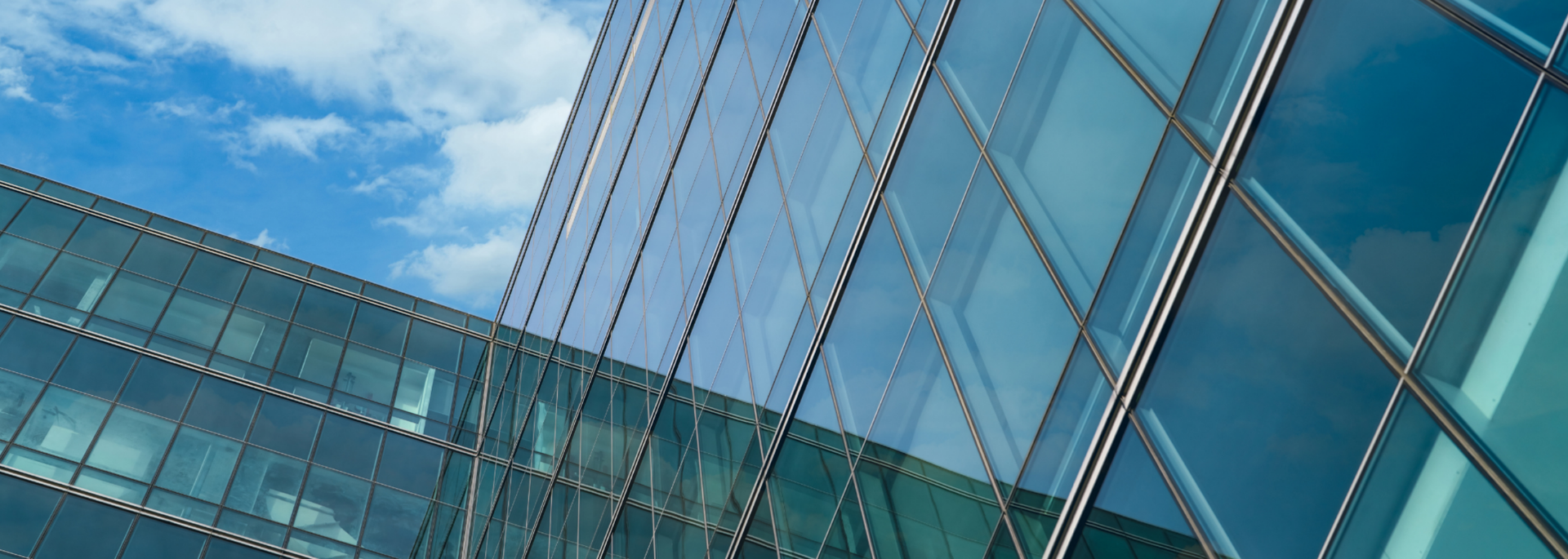
Here at ToughGlaze, we specialise in toughened and laminated glass – two kinds of safety glass often used for vision glass and spandrel glass.
When to use laminated glass for vision glass
Generally speaking, laminated glass is used for vision glass when durability is required, whether to protect against human impacts or extreme weather.
Laminated glass is often used for vision areas when protection from falls is required. Common examples include full-height glazing, balustrades and windows near floor level.
It's also used for overhead glazing such as canopies, skylights and sloped glazing. This is because the interlayer in the laminated glass is designed to hold the glass together if it fractures.
There are also uses of laminated glass in high-rise buildings mandated by UK building regulations.
Finally, laminated glass is used when soundproofing is a priority. Laminated glass itself is a good sound insulator, and it can also be customised as specialised acoustic laminated glass.
In this context, it's often found near airports, railways and busy roads to improve the building user experience.
When to use laminated glass for spandrel glass
Laminated glass is less commonly used for spandrel panels. Most standard spandrel panels use heat-strengthened or toughened glass with a ceramic frit or opaque coating.
However, laminated glass can be used when the spandrel is installed in situations where
- the glass needs to stay in the unit when it breaks, or
- there's a risk of the glass pieces falling onto public areas
It's also used for spandrel glass when the facade has specialist security requirements, such as blast resistance, or when it forms part of an acoustically treated facade.
What is laminated glass?
Laminated glass is a type of safety glass that's up to six times as strong as standard annealed glass.
It consists of two or more sheets of glass bonded with a plastic interlayer. This interlayer is often made of polyvinyl butyral (PVB) or, in the case of fire-rated glass, intumescent seals.
Laminated glass is used in architectural glazing for several reasons. Aside from its strength, it's a thermally efficient sound insulator that can be extensively customised.
What is toughened glass?
Toughened glass (also known as "tempered glass") is a heat-treated form of safety glass. It's up to five times stronger than standard annealed glass. If it breaks, it breaks into small, relatively harmless pebble-like chunks rather than sharp shards.
Both the strength and breakage pattern are consequences of the manufacturing process. A sheet of standard glass is put in the furnace, heated at around 650°C (1,200°F) and then rapidly cooled with blasts of air. This creates stresses within the glass that compress the outer surfaces while pulling the interior into tension.
ToughGlaze is a UK-based glass processor and supplier of architectural glazing solutions. If you need vision or spandrel glass for your project, don't hesitate to contact our experts for a quick quote or detailed product advice.