How glass contributes to BREEAM and LEED credits
BREEAM and LEED promote sustainability in architecture. Find out how glass can play a pivotal role.
Sustainability is not a new concept. In fact, it's at least as old as 18th-century forest management. But the shadow it casts over today's business landscape is new – and it brings with it a whole heap of regulations, frameworks and concepts to grapple with.
Take the building certifications BREEAM and LEED. Both provide sustainability standards for building projects.
In the UK and Europe, BREEAM is the leading green building standard. It stands for "building research establishment environmental assessment method", and it closely aligns with UK building regulations. For this reason, it's favoured by local authorities and public sector clients.
LEED originates in the USA but is used in the UK, mainly by multinational corporations or developers with international investment in mind.
In London, for instance, some high-profile commercial office projects pursue BREEAM and LEED certifications simultaneously. This allows them to meet local planning requirements while achieving global credibility.
Both are points-based systems. Architects score points in different categories, adding up to an overall sustainability rating. So, what role can glass play in boosting these credits?
How glass contributes to BREEAM credits
Glass contributes to BREEAM credits in three main ways.
First, it enhances natural daylighting (the amount of natural light entering a building). Secondly, it improves thermal efficiency. And thirdly, it minimises the overall carbon footprint of a building.
High-performance glass maximises daylighting. This reduces the need for artificial lighting while ensuring building users have a view of the outside world. Meanwhile, solar-control glazing and shading (whether from blinds, curtains or smart glass) improve user well-being by reducing glare and overheating.
And because glass is inert (non-reactive and stable), it releases hardly any volatile organic compounds (VOCs), maintaining the quality of the indoor air.
Certain types of glass can also improve the U-value of the building envelope – in particular, low-emissivity (low-E) glass and insulated glass units (IGUs), often incorporating laminated glass.
Reducing U-values regulates building temperatures and slashes costs for winter heating (gas and electricity) and summer cooling (air conditioning).
Finally, glass products that are mostly or entirely recycled improve the project's Green Guide rating. This is a rating system for the environmental impact of construction materials that's folded into BREEAM.
How glass contributes to LEED credits
As with BREEAM, glass contributes to LEED credits by maximising natural daylighting, reducing energy consumption and minimising a building's carbon footprint.
Energy-efficient glazing options such as low-E coatings and IGUs minimise heat transfer and solar heat gain. This reduces the load on HVAC and heating systems, thereby improving the building's overall energy usage.
Glazing with high visible light transmittance (VLT) allows natural light to penetrate deep into a space. This cuts a building's emissions by reducing reliance on electric lighting.
At the same time, it helps soundproof buildings and promotes user well-being by connecting the inside of the building to the outside world.
The materials used for windows and other glass features can also contribute to LEED points. This is especially true for glass with a verified environmental product declaration (EPD) or health product declaration (HPD), or which has high pre-consumer and post-consumer cullet content.
Finally, glass can contribute to LEED points if you specify bird-friendly glass. This is glass that's fritted, acid-etched or printed with a pattern to stop birds from fatally colliding with it.
BREEAM in action: 22 Bishopsgate
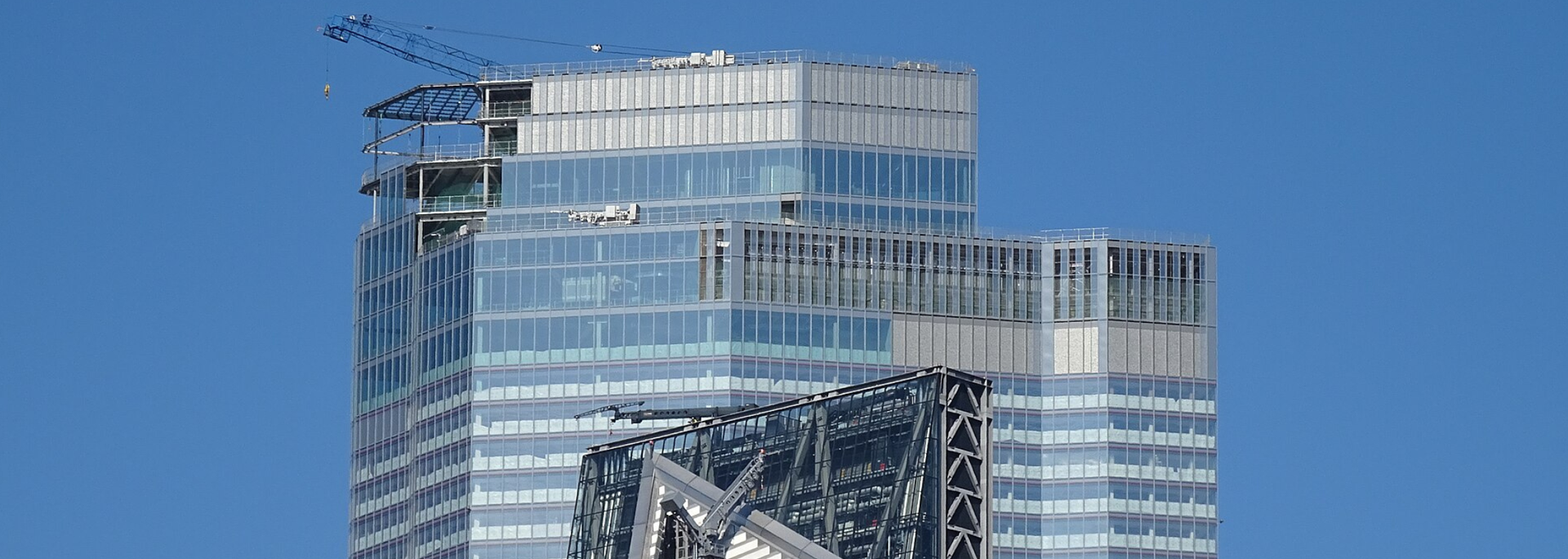
In the heart of London's financial district is 22 Bishopsgate. This 195,000-square-metre, 62-storey skyscraper was described by The Guardian as being "as large as a container ship perched on its end".
The second tallest building in the UK, 22 Bishopsgate holds a BREEAM Excellent rating for sustainability and new construction.
This rating is down to a number of things, including a creative use of off-site consolidation to minimise deliveries to the construction site.
But the story of 22 Bishopsgate's sustainability can't be told without reference to its highly efficient, triple-glazed close-cavity facades.
The building also features a glass climbing wall on the 25th floor – the perfect place to climb with the City of London at your feet.
LEED in action: Manitoba Hydro Place

Manitoba Hydro Place in downtown Winnipeg, Canada received LEED Platinum in 2012. At the time, this made it the most energy-efficient office tower in North America and Canada's only platinum-rated tower.
Glass is pivotal to Manitoba Hydro Place's platinum rating, particularly in the form of extensive glazing that maximises daylighting.
The building boasts three all-glass curtain walls, a double-glazed south facade, south-facing low-iron glass and windows fitted with motorised blinds.
These motorised blinds – found all over the building – are there to control glare and reduce overheating. This improves user well-being and contributes to the building's overall sustainability profile.
The east and west facades are double envelopes, consisting of two layers of glazing joined by a narrow, elevated walkway. The outer curtain wall is double-glazed whilst the inner curtain wall is single-glazed.
Writing in Green Building and Design magazine, Ben Van Loon remarked:
"It maximises low-grade solar-thermal energy, natural wind and year-round fresh-air exchange, and it has not only met but also exceeded energy-savings targets set by KPMB [the architectural team]."
Manitoba Hydro Place is a great example of the important role that glass can play in earning sustainability points. At a time when compliance standards are increasingly rigorous, this is fast becoming a non-negotiable aspect of the construction process – not least because it can help safeguard future generations.
How we can help
Founded in 1993, ToughGlaze is a specialist glass supplier based in Bedford, UK.
We provide high-quality toughened and laminated glass for structural glazing. It's durable, secure and thermally efficient, making us the ideal choice for your building project.
And by cutting, processing and shipping our glass from one state-of-the-art facility, we minimise transport carbon emissions while minimising potential procurement headaches for you.
So, if you're looking for high-quality glass products for a sustainable building project, get in touch today to request a quick, competitive quote.