
When should architects engage a glass processor?
As an architect, which situations call for a glass processor? And when should you pick up the phone? Let's explore key considerations.

Glass is famously clear. But the worlds of glass fabrication, processing and installation? They can be a little on the opaque side.
As an architect, you likely have a good grasp of glazing and its use cases. It's fair to say, however, that you might be less of an expert on the intricacies of the glass supply chain.
What, you might ask, does a glass processor actually do? In what situations do you need one? And when is the right time to engage a processor for your project?
These are the questions we'll focus on today. We'll look at:
- The role of a glass processor in the glazing supply chain
- When it makes sense to use one
- When's the right time to pick up the phone
Sneak peek: the answer isn't always "when you know exactly what you want".
What does a glass processor do?
The glass supply chain can be complex. But if you break it down to its bare essentials, it looks something like this:
- Fabrication:
glass fabricators take raw materials, melt them down and turn them into fresh sheets of annealed (untreated) glass.
- Processing:
glass processors buy annealed glass and process it to meet client specifications. At its most basic, that means cutting or shaping the glass. Often, it also means
toughening,
laminating, applying
decorative treatments, ensuring
fire resistance, and so on.
- Final assembly:
if needed, the processed glass may go on to another specialist for assembly within an insulated glass unit (IGU) or glazing system.
- Distribution and end use:
the glass or glass product makes its way to the construction site for installation.
The key point? Glass processors don't manufacture glass. However, they play a vital role in the glass supply chain by applying a wide variety of treatments and supplying these processed glass products.
When does it make sense to engage a glass processor?
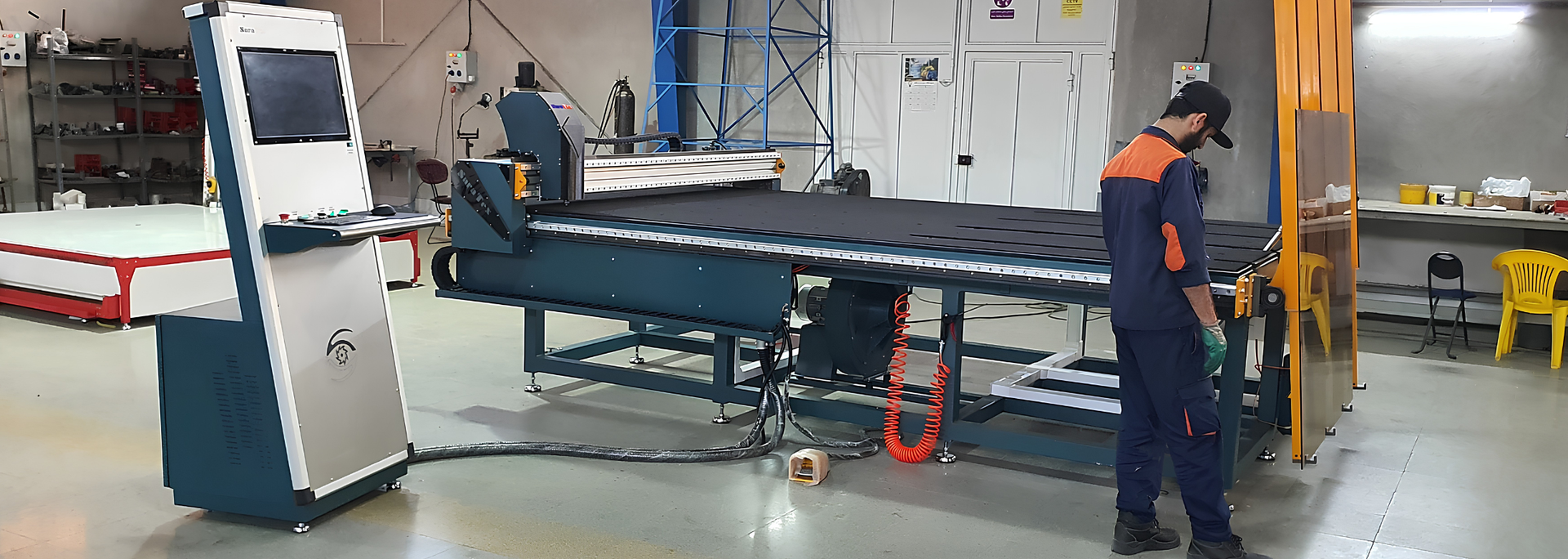
There's the timeline. Now, where do you come in?
That depends on what you need your glass to do.
Let's look at four situations where it makes sense for an architect to engage a glass processor directly.
1. When the design calls for something unusual
Honestly, if you're looking for a double-glazed window unit in a standard configuration, you may have little need to engage a glass processor. You can likely get the glazing you need by dealing directly with an IGU manufacturer or glazing contractor.
But what if you need a particular piece of glass cut, treated, finished or decorated in a particular way? In that case, engaging a glass processor makes a lot more sense.
This is where glass processors like us add the most value. An IGU manufacturer is unlikely to accommodate unusual or demanding specifications. But a glass processor? That's bread-and-butter stuff.
Capabilities vary from one processor to the next. However, a good processor will offer all of the following options and more:
- Glass toughening
- Glass lamination
- Cutting and shaping, including complex cut-outs
- Oversized panes
- Printed glass
- Glass with coloured, mesh or fabric interlayers
- Other specialist interlayers
- Complex edgework
Need an oversized piece of toughened and laminated glass with a printed logo? Give your friendly neighbourhood glass processor a call.
2. When dimensions, weight or thickness matter
As you're well aware, architecture is part art and part homework.
Numbers matter. With glass alone, architects must consider maximum pane dimensions, thickness, weight, structural support and dozens more data points.
Shaping these data into elegant designs is one thing. But whether a design is actually feasible? That's a different question entirely.
A visually elegant three-metre by six-metre pane might be technically manufacturable but create significant logistical or structural challenges.
That's where a glass processor can help – by identifying manufacturing and handling constraints that might threaten the project if left unchecked.
An important point: while a processor can tell you what's possible, they can't tell you what's right. Structural calculations and final specification remain the responsibility of the appropriate design professionals.
3. When glass needs to perform a specific function
Glass is functional, as well as beautiful.
Today, its functionality extends further than you might think. Glass can be engineered to provide fire resistance, structural performance, acoustic performance, protection against manual attack, and more.
These all fall under the remit of a good glass processor. So, if you need your glass to do more than look pretty and keep the rain out, it's worth calling them directly.
They can help identify the right glass build-up. In other words, the particular mix of panes and interlayers that will get the job done to your specifications.
The sooner performance requirements are understood, the easier it is to identify an appropriate glass build-up for your specific use case.
4. When appearance is critical
Decorative glass and architecture have a long history. Their association goes back at least to the colourful glass tiles of ancient Mesopotamia, circa 1500 BCE.
Fast-forward 3,500 years, and decorative glass is everywhere: in facades, in feature walls, in partitions and balustrades and retail interiors.
And, again, unique decorative glass specifications are a job for a glass processor, not a supplier of assembled IGUs or glazing systems.
There are a couple of reasons for that. For one, any request more specific than "frosted glass" must be carried out at the processing stage.
But it also means that you can request samples. For visually sensitive projects (and aren't they all), this can be a big boon. It means you can get the glass looking just right before finalising the specification.
When is the right time to call?
Earlier than you might think.
As we've seen, it makes sense to engage a glass processor when projects call for non-standard specifications. For precisely the same reason, it's better to make contact sooner rather than later.
This isn't off-the-shelf stuff. You need the glass to be right. And the earlier you get in touch, the more likely a processor can meet your demands.
A quick thought experiment. Let's say you leave your glass to the last minute.
In the worst-case scenario, you hit the brick wall of manufacturability. Your processor tells you that the glass simply can't be manufactured as drawn. If the glass is mission-critical – as it often is – this could have catastrophic consequences for your project.
What's more likely is that you may have to make a few concessions or compromises. But addressing these quibbles early is much easier than dealing with them as a deadline looms.
Experiment over. Now, it's worth mentioning that not all glass processors are created equal. But a good processor will act as a valuable partner through tender, design and beyond.
Here's how:
During tender
Engaging a glass processor can help you establish:
- Feasibility
- Dimensions
- Build-up
- Appearance
- Likely lead time
- Likely cost implications
During detailed design
Come back to the processor when:
- Dimensions are finalised
- Interfaces are resolved
- Drawings are developed
- Samples need approval
- Final processing requirements are established
Before manufacture
Confirm:
- Final drawings
- Dimensions
- Tolerances
- Processing
- Glass make-up
- Compliance requirements
- Delivery requirements
How ToughGlaze can add value
ToughGlaze is an established UK glass processor, founded in 1993. Over the years, we've worked closely with some of the world's leading architecture firms and their partners.
There are a few reasons why our customers keep coming back. For one, we offer a huge range of
glass processing options, from mainstays like
toughening and
lamination to specialist products such as
smart glass and
illuminated glass.
And more importantly, we do all this from under one roof: cutting, processing and delivery.
For you, that means less risk of logistical hiccups, fewer project-management headaches and a clear line of accountability if something does go wrong.
Ready to engage a glass processor? Give us a call. Remember: the earlier, the better.