Illuminated glass: a space-efficient interior design miracle
Learn how illuminated glass can help you save space and transform spaces with innovative lighting effects.
If you're an interior designer, you'll know that lighting is just as important as décor, furniture and any other design decision.
Lighting is the glue that holds everything together. It can draw the eye to impressive details. It can make a room appear larger or create cosy, atmospheric nooks. And it can contribute to an overall sense of space, making it feel alive and lived-in.
But interior design is a constant battle between ideal and reality. All too often, creativity has to play second fiddle to real-life limitations of cost, space and achievability.
Lighting is not immune to the prepotency of practicality. A large chandelier might make for an impressive centrepiece – but you'd better be prepared to plan your budget and layout around it. And while space-saving lighting options like flush wall lights exist, options for customisation are limited. No matter how you dress them up, they still look like, well… lights.
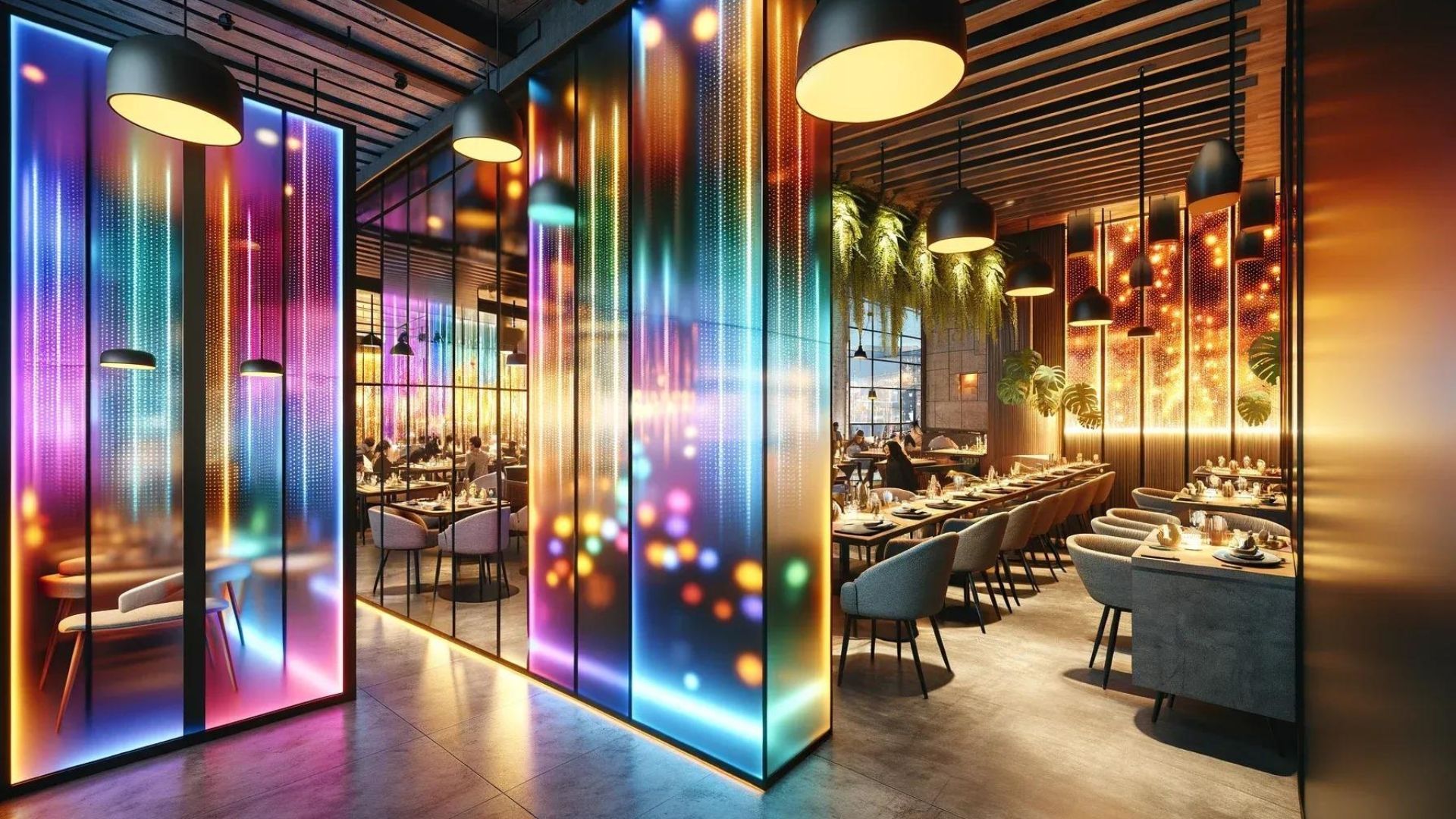
That's why illuminated glass is such a boon for ambitious interior designers. It's space-efficient, affordable and can be fashioned into all sorts of eye-catching or understated designs.
In this article, we explore several ways that illuminated glass can be used to realise interior design ideas.
But first, let's make sure we're all on the same page. What, exactly, is illuminated glass?
What is illuminated glass?
The term "illuminated glass" might conjure up images of centuries-old stained glass windows.
And, indeed, illuminated glass can be used to achieve similar effects.
But this is where the similarities end. Modern illuminated glass is far more aesthetically versatile than stained glass and can be installed almost anywhere with no need for an external light source.
Think of it like a piece of light-emitting wall art or wallpaper. A well-chosen photograph or painting can light up a room, figuratively speaking. But an illuminated glass design can literally light up the room with honest-to-goodness photons.
The lighting units themselves are remarkably thin – almost as thin as the glass itself.
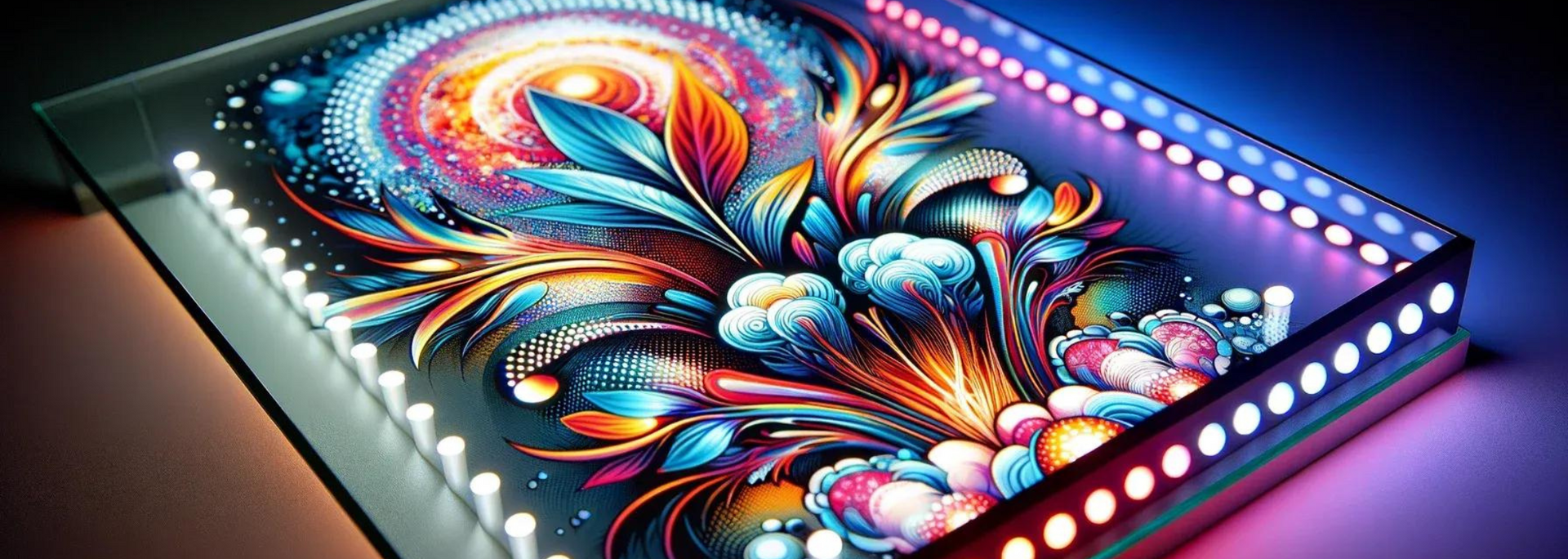
This is thanks to Spanlite's innovative edge lighting system. The technology uses an engineered glazing channel to hold the glass in place and light it from the edge using LED bulbs. That's why our illuminated glass is sometimes called "LED glass" or "edge-lit glass".
One LED lighting strip can illuminate a glass panel up to 2.7 metres tall. If two strips are used, they can illuminate a panel up to 3.5 metres tall.
The result is a light source with unparalleled aesthetic and spatial versatility.
Our LED panels can be installed in pretty much any location – against a wall, on the ceiling or as an attractive illuminated partition. And they can be decorated in all manner of ways to achieve impressive lighting effects.
Oh, and did we mention that they're energy-efficient too? LED lights are up to 80% more efficient than traditional fluorescent bulbs, so they could help you meet sustainability targets as well as your design goals.
Decorative options for illuminated glass
1. Digital printing
Digital printing on glass has come a long, long way from its infancy
in the 1990s.
The process now allows for precise colour reproduction and an almost endless array of effects – from abstract designs to photo-realistic prints at up to 720 dots per inch.
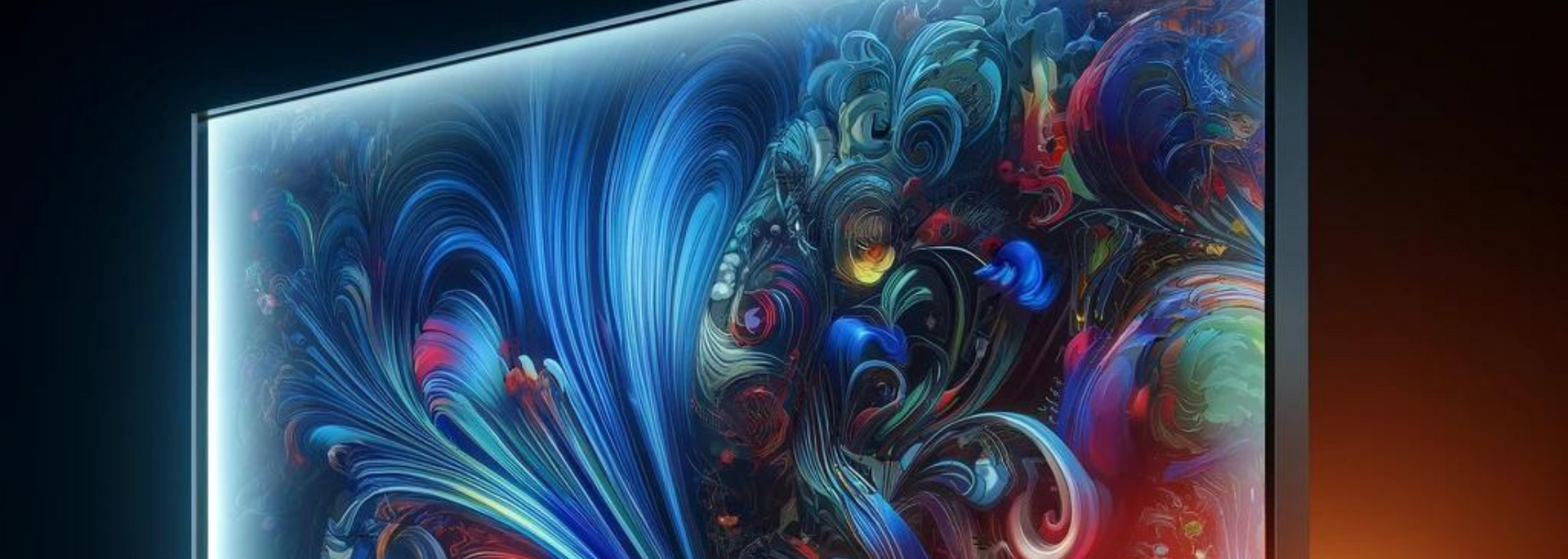
In a commercial environment, this could mean something as simple as an illuminated company logo on a glass partition. Or you could create awe-inspiring lighting effects with rich, printed patterns or trompe l'œil-style landscapes.
Our digital printing process uses ceramic inks that are effectively baked into the glass. This makes them extremely durable against scratches, wear and UV degradation.
2. Sandblasting
Glass sandblasting allows for precise textural detailing.
You can sandblast an entire sheet of glass to create a cloudy, translucent look. When used in an illuminated glass panel, this results in a soft, diffused lighting effect.
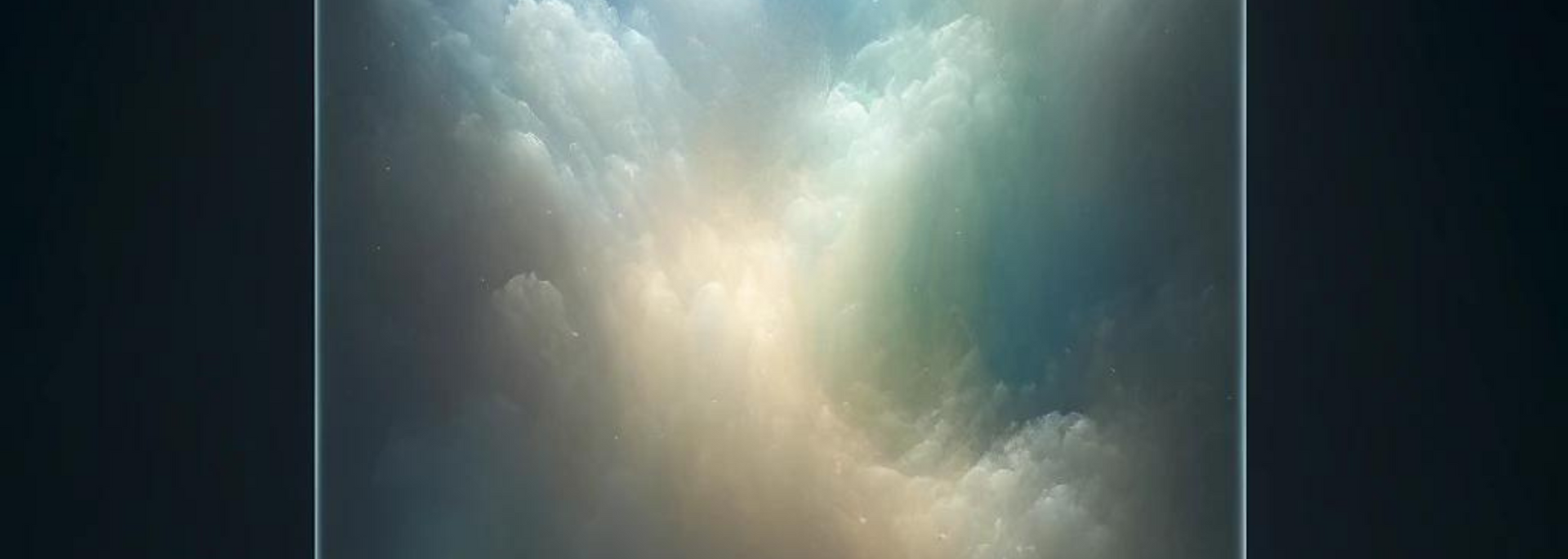
Alternatively, stencils can be used to carve out patches of positive or negative texturing. You could use this, for example, to illuminate a company logo or experiment with dots, lines and other patterns.
3. Decorative interlayers
Want to turn a whole wall into a soft, intricate lighting fixture? Or install an illuminated panel that explodes with eye-catching colour?
Decorative interlayers might be just what you need. These are pieces of metal mesh, fabric or coloured film that are laminated between two pieces of glass.
Fabric interlayers are ideal for soft lighting effects on feature walls. Effectively, the fabric design becomes a piece of abstract, illuminated wall art that can be placed almost anywhere.
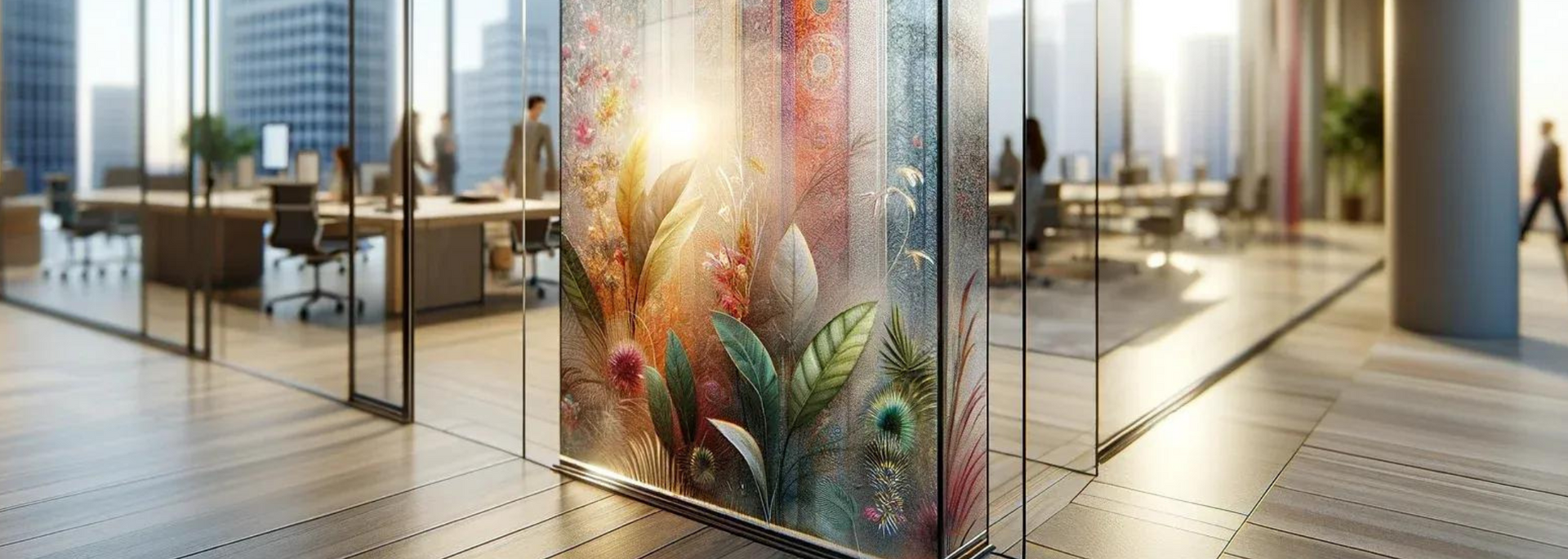
Mesh interlayers , meanwhile, unlock new ways to experiment with light, shade and sparkle. You can choose from our extensive catalogue of meshes – including brass, aluminium and stainless steel options – or request a bespoke design of your choice.
Finally,
coloured interlayers are the simplest option but may be the most versatile. These create blocks of colour that cascade tinted light into the room. We offer a palette of around 3,000 colours, along with several levels of translucency.
Uses for illuminated glass in interior design
Illuminated LED glass can be installed in almost any location where decorative glass could also be used. This includes:
- Wall lights and wall art – with the benefit of almost-invisible fixings and a very slim profile
- Kitchen splashbacks, where lighting and decorative effects can come together to form a practical and statement-making design feature
- Ceiling lights – our heat-strengthened laminated glass can be combined with LED lighting to create a safe and space-efficient ceiling light fixture
- Illuminated logos – this is ideal for passive marketing at night
- Display cases, where security glass can do double duty as an intrusion-resistant cover and a light fixture
- Around skylights and other decorative features
Are you interested in using
illuminated glass in a project? World of Light from ToughGlaze is one of the most advanced LED edge-lit glass systems in the world. Please don't hesitate to
contact us to discuss your requirements and get a quick, fair quote.