
Layering materials with glass: metal, fabric, stone and timber
Glass is a versatile building material and can be layered with stone, timber, metal and fabric. Explore aesthetic and practical applications.
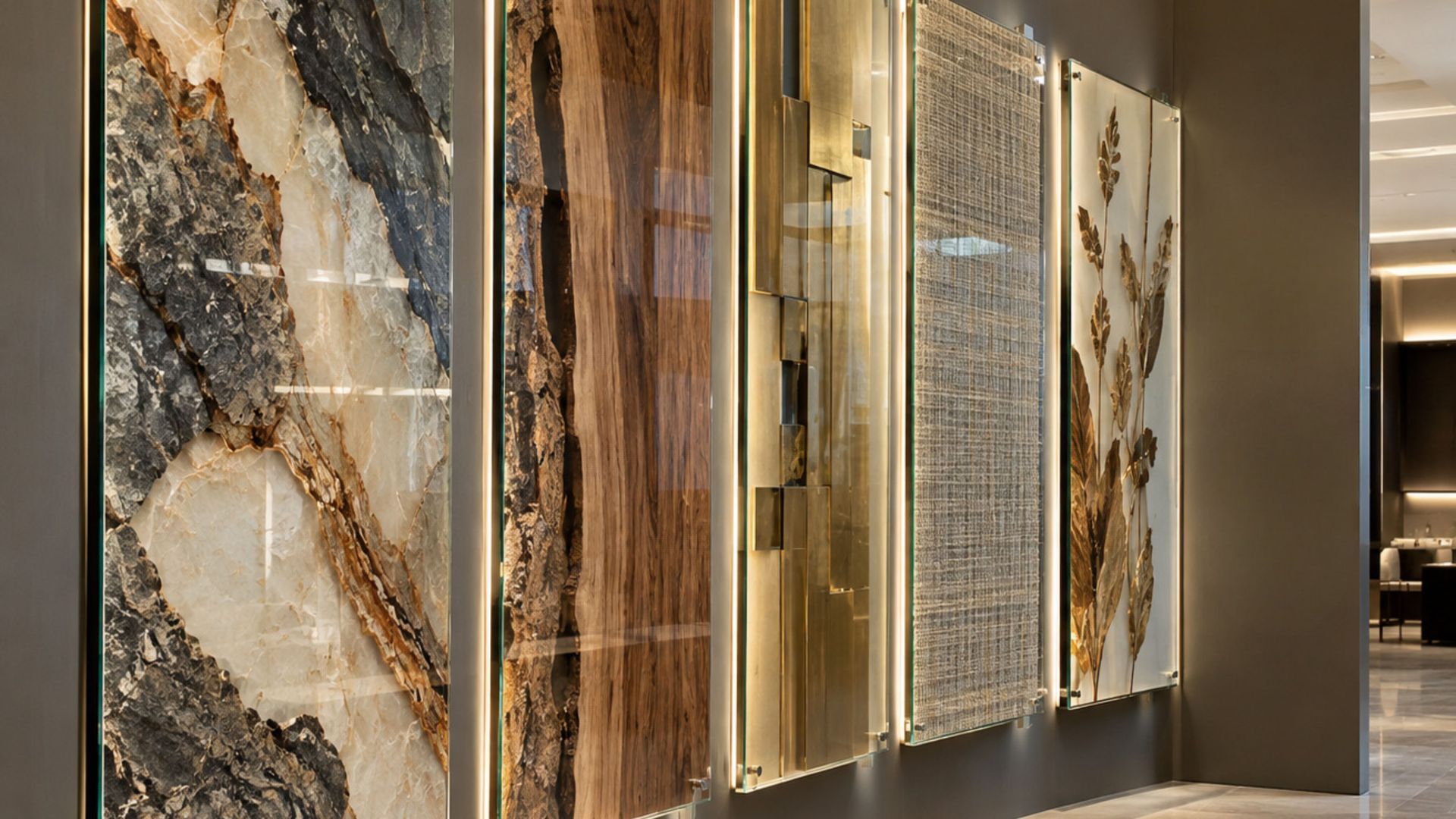
Glass is a ubiquitous building material for a reason. Not only is it durable, thermally efficient and acoustically insulating, it also allows for diverse aesthetic effects.
These days, perhaps the most widely seen use of architectural glazing is in skyscrapers and other large-scale, high-end developments. But in hotels, restaurants and shops it's also used for more delicate but no less striking ends.
Coloured glass, switch glass, printed glass, sandblasted glass, illuminated glass– all point to its high-performance aesthetic possibilities.
Glass can also be layered with other materials. You can see this with fabric-interlayer glass and mesh-laminated glass, where a fabric or metallic interlayer is bonded between two glass sheets.
Natural and manmade materials can be used alongside glass in all sorts of aesthetic configurations – whether metal, fabric, stone or timber.
In this glass guide, we explore some of these applications in detail. We hope it inspires you in your current or future design project.
Layering glass with metal

Glass and metal go together beautifully, as any steel-and-glass building will testify.
A common use is glass-metal lamination, where a sheet of metal is sandwiched between glass layers alongside a polymer interlayer.
Glass-metal lamination is often used for decorative panels, security glazing and other architectural applications.
Take metal-mesh glass facades. This can provide solar shading, privacy and safety – all with a distinctively textured metallic aesthetic.
Here at ToughGlaze, we layer glass and metal in our TG MI product range. Each panel is made from laminated glass with a metal mesh interlayer, combining the aesthetic value of woven metallics with the high functionality of glass.
TG MI gives you transparency and texture. It comes in an extensive range of meshes and materials, such as bronze, copper, stainless steel and brass.
Layering glass with fabric
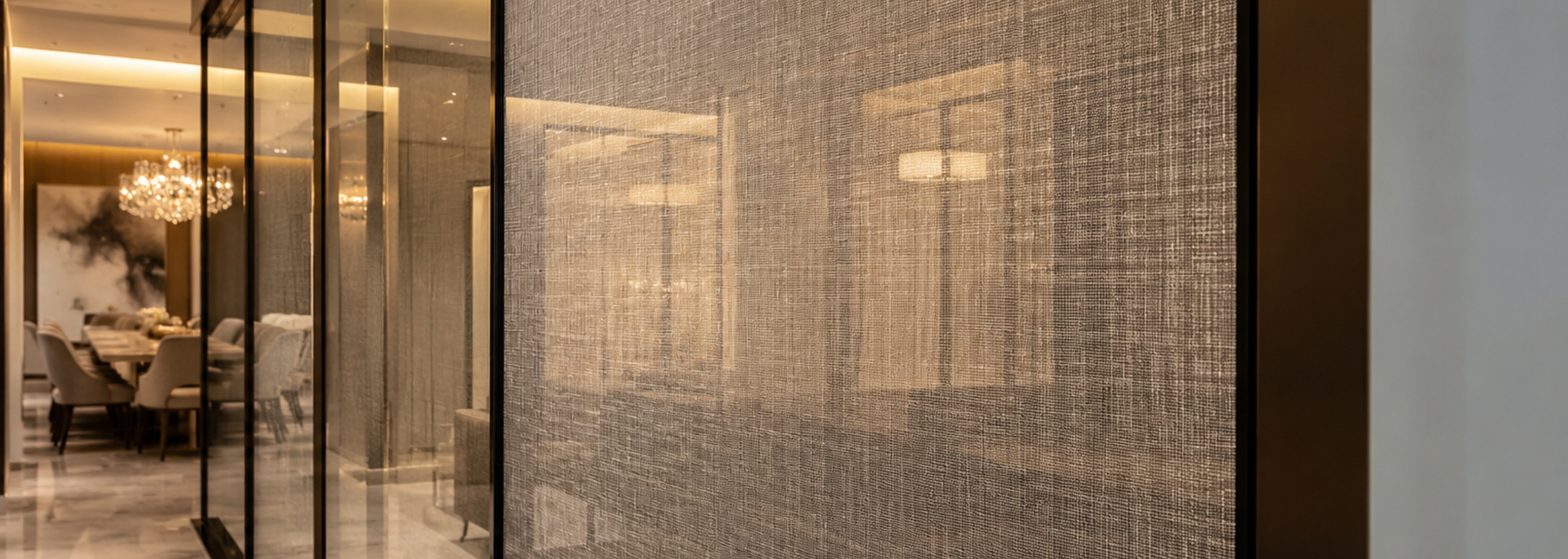
Glass can also be layered with fabric, as in the case of fabric-laminated glass. The fabric used can be woven cloth, printed silk, patterned textile, lace or pretty much anything else.
The glass acts as a barrier against dust, moisture and other contaminants. Meanwhile, the fabric interlayer unlocks textural and visual possibilities.
Also known as "fabric-interlayer glass", "textile-laminated glass" or "glass with fabric inside", it's used in a wide range of architectural glazing applications.
You might see fabric-laminated glass in an interior partition, door, screen, facade, feature wall or balustrade. In all cases, privacy is achieved without blocking daylight – and the aesthetic effects are diverse and striking. It can also help soften otherwise hard-looking surfaces.
One notable use is to bond a coarse woven fabric between the glass panes. Seen from afar, you might think you're looking at a translucent wall. But come closer, and you can marvel at the fine threads on subtle display.
Fabric-laminated glass is used all over the place. However, you're perhaps most likely to spot it in a gallery, hotel, office or residential space.
Layering glass with stone
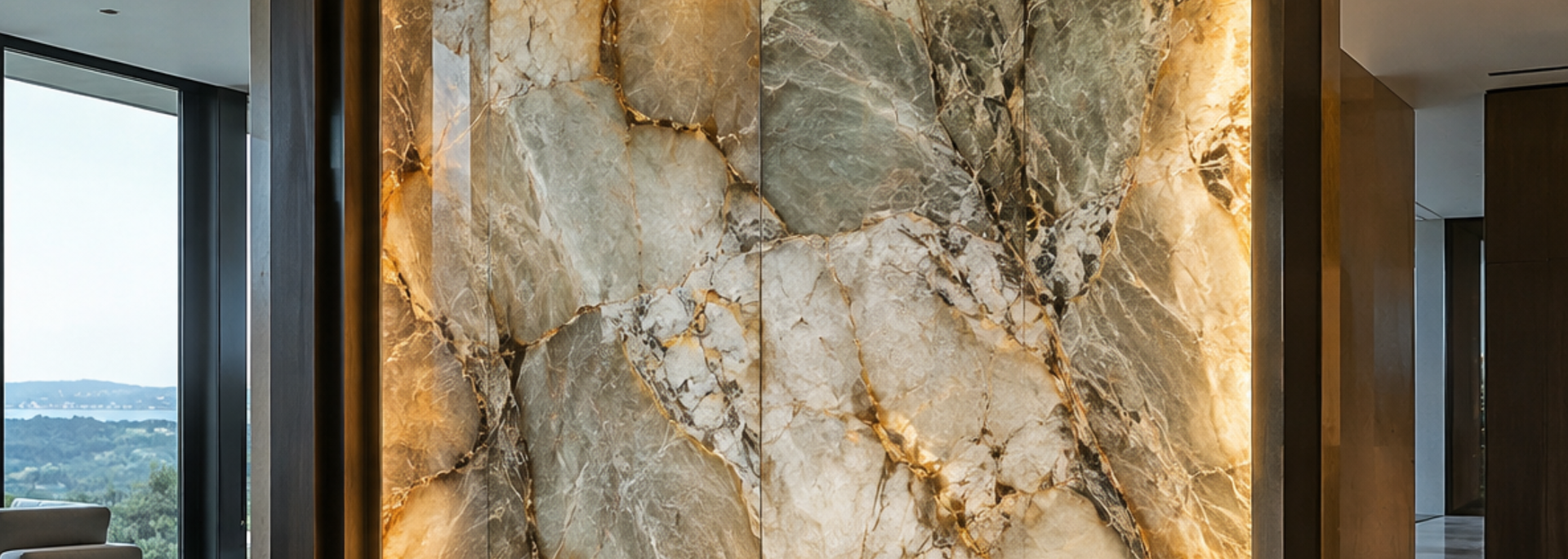
Like metal and fabric, stone can be laminated between glass sheets.
A classic application is to bond thin slices of stone between the glass alongside a plastic interlayer. This can make it look as if the stone is translucent and floating – especially with thin, ethereal types of stone like marble or onyx.
Another application is to alternate glass and stone layers. This combination of opacity and transparency can be used to great effect in facades, walls, partitions, entrances and staircases.
Thin stone veneers – decorative layers of stone – can be manufactured behind transparent glass panels. The glass protects the stone, acting as a kind of vitrine to show off its delicate colours and textures. These veneers are often marble, slate, travertine or onyx.
Finally, translucent stones like onyx can be placed behind – or between – two sheets of glass and illuminated. This effect, commonly seen in feature walls, reception desks, hotel interiors, screens and facades, gives the impression of a warm, glowing surface.
Layering glass with timber

Last but not least, glass can be layered with timber for striking architectural effects.
Thin timber veneers or engineered wood layers can be sandwiched between sheets of glass, creating a kind of composite decorative panel.
Timber can also frame the glass, with glass infill fitted between the timber bars. This is used for windows, of course, but can also be found in facades, doors, partitions and even conservatories.
Where privacy and solar shading are desired, timber slats can be placed in front of a glass facade. This lets daylight through while creating a sense of privacy, harnessing the twin textures of glass and timber.
Finally, thin timber veneers can be placed behind a glass panel. This acts as a kind of display case for the timber, showcasing its grain, colour and texture without exposing it to the elements.
This last instance is often seen in interior walls, doors, reception areas and feature panels.
What kinds of glass can be layered with metal, fabric, stone and timber?
Almost any kind of glass can be layered with other materials, including annealed, toughened and heat-strengthened glass.
When layered with another substrate, these components become another type of glass: laminated glass. The decorative layer of timber, stone, metal or fabric is sandwiched between two or more layers of glass along with a strong plastic adhesive layer. Commonly, polyvinyl butyral (PVB) or SentryGlas (SGP) is used.
Laminated glass is made by bonding these components together at high heat. Not only does this allow for decorative layers, but it also creates a highly durable surface that's hard to break.
And if a laminated glass unit does break, the interlayer is designed to keep the fractured glass in place. This adds security to a building installation, protects building users and incidentally contributes to the building's thermal efficiency and soundproofing.
ToughGlaze is a UK glass processor, founded in 1993. We cut, process and ship a wide range of glass products from our state-of-the-art Bedford facility, including many decorative glass products. To discuss your project or request a quote, please don't hesitate to contact our team.