Which types of glass are needed for laboratories and cleanrooms?
Labs, like many workplaces, depend on glass for smooth operation. Explore which types of glass might suit your specific application.
Glass is a multifunctional building material. It's used in pretty much every sector – and in different sectors, it's used to accomplish different things.
In labs and cleanrooms (controlled spaces that keep contaminants at an extremely low level), glass is used in two main ways:
- For lab equipment: things like receptacles and pipettes
- For building components, such as doors, windows and partitions
In the latter case, glass does double duty. It increases visibility for lab and cleanroom staff, and its easy-clean, non-porous nature makes it ideal in environments where hygiene is a priority.
The types of glass used vary. But toughened and laminated glass are commonly used for glazing in labs and cleanrooms, depending on the specific application and performance requirements.
Toughened and laminated glass are both kinds of safety glass designed for extra impact resistance and safer breakage. They work in different ways and solve different problems, but both improve safety and help avoid disruptive breakages.
In this guide, we take a closer look at the uses of glass in laboratories and cleanrooms.
How is glass used in laboratories?
Glass is extensively used in laboratories for a number of reasons. It's transparent, increasing visibility for both chemicals and processes. It's chemically resistant. It's easy to clean. And in some cases, it can withstand heat.
It's often used for lab equipment. The applications are diverse: from beakers to test tubes, and from optical equipment to microscope slides.
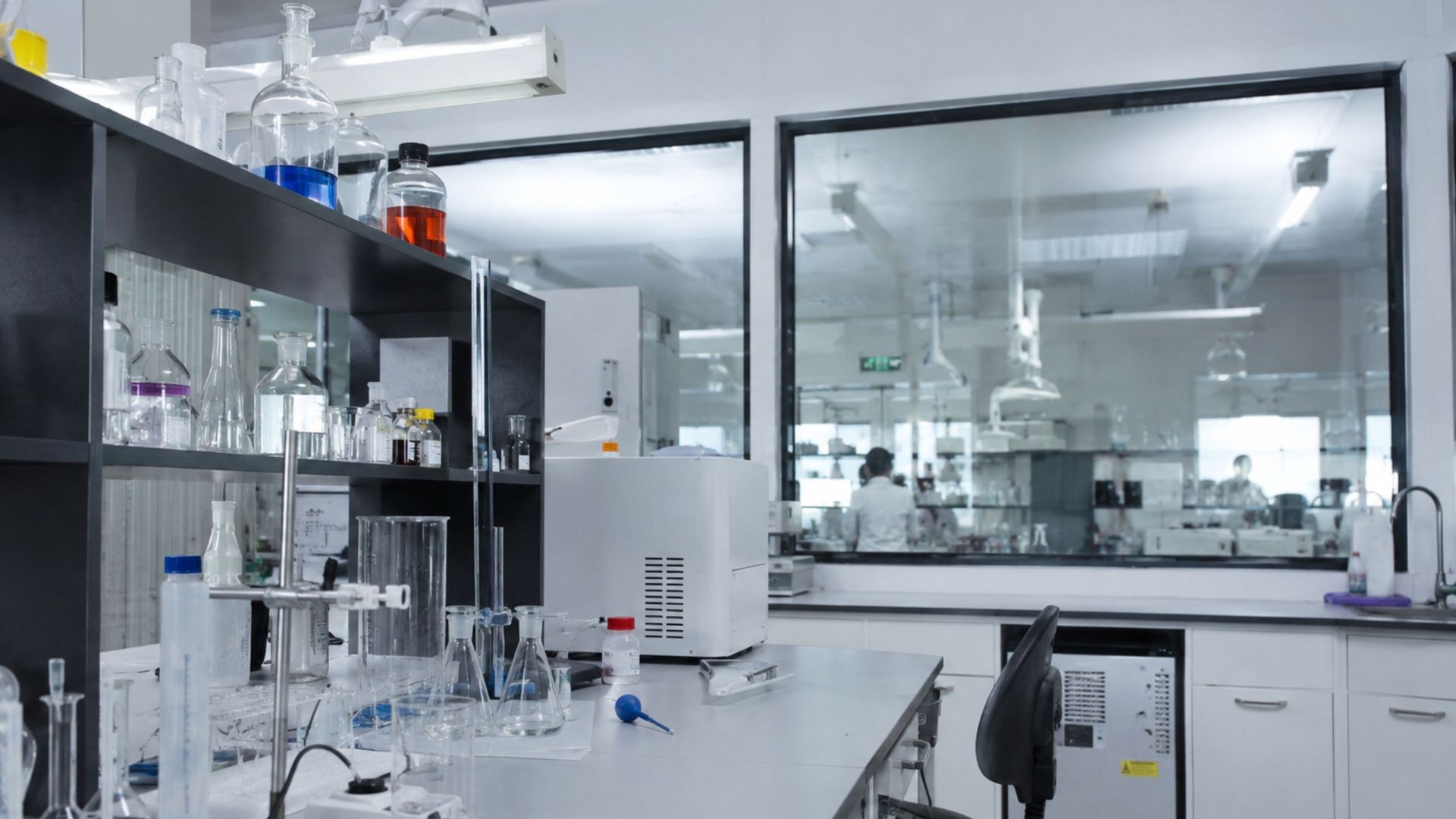
It's also used for building components. These include observation windows, viewing panels, external windows and doors, protective screens and partitions. Where necessary, it can be fire-rated to protect against the spread of fire and smoke.
How is glass used in cleanrooms?
In cleanrooms, decontamination is a priority. These environments are used to manufacture, assemble and test sensitive products like microchips or medical devices without interference from dust, bacteria or other microscopic contaminants.
Glass is used where there's a need for visibility and hygiene. Common applications include:
- Viewing windows for staff to observe cleanroom activities
- Internal partitions to visually separate internal areas
- Doors
- Vision panels
- Equipment viewing panels for contained process or equipment inspection
- External windows to let natural light in
- Fire-rated glazing when fire is a risk or where mandated by building regulations
Cleanroom glazing is typically designed to sit flush against the wall. To ensure containment, it's sealed, smooth, non-porous and easy to clean.
Uses vary, but a common example is a double-glazed toughened glass unit set into a sealed, flush-mounted frame.
What kind of glass is used in laboratories?
For lab equipment
For equipment, laboratories mostly rely on borosilicate glass, also known as "Pyrex-type glass". This durable glass is made with silica and boron trioxide. It withstands heating and cooling better than ordinary glass, and also resists breakage from thermal shock.
Another reason for using borosilicate glass is that it reacts with only a few chemicals commonly used in laboratories. It's transparent, too, increasing visibility.
Borosilicate glass is often used for common lab equipment, such as test tubes, beakers, flasks and pipettes.
For labs dealing with high temperatures or UV light transmission, quartz glass is often specified. This is a specialised kind of glass that possesses excellent heat resistance and specialised optical qualities.
For glazing
In the case of laboratory windows and partitions, the glass is usually safety glass rather than borosilicate.
Common choices include laminated safety glass, toughened glass and fire-rated glass. These panes may be set into double-glazed units.
Laminated safety glass consists of two or more panes bonded with a plastic interlayer. It's around six times stronger than standard annealed glass – and it's designed to stay structurally intact when it breaks.
Toughened glass – also known as tempered glass – is around five times stronger than ordinary glass. It's heat-strengthened in such a way that when it breaks, it breaks into lots of small, relatively harmless pieces. This is commonly specified for laboratory partitions and doors.
Fire-rated glass is sometimes used in laboratories that require fire resistance, whether because of the nature of the lab or building regulations. Fire-rated glass must be installed as part of a suitable fire-rated glazing system.
Double-glazed units are often used for external laboratory windows. This helps keep the lab thermally efficient and acoustically insulated.
In labs that deal with aggressive chemicals, specialised chemically resistant glass can be used. This is less common for partitions, however.
What kind of glass is used in cleanrooms?
In cleanrooms, windows and viewing panels are typically made from toughened safety glass or laminated safety glass, depending on the specific requirements.
Whichever safety glass is used, the glass must be flush-mounted and sealed. This stops particles from collecting in ledges and gaps.
Toughened glass is used for impact resistance and laminated glass for an extra layer (literally) of safety and containment.
Fire-rated glass can be used in labs that pose a fire risk. And as in labs, double-glazed units are commonly used for external windows.
The most typical application is a sealed, double-glazed toughened glass viewing window, its frame sitting flush with the cleanroom wall. This provides safety and durability and is easy to clean.
For cleanroom equipment, borosilicate glass is used rather than safety glass.
How we can help
At ToughGlaze, we provide clients in a range of sectors with high-quality commercial glass solutions.
Our products are Kitemark-certified and tested to all relevant European standards. Plus, we cut, process and ship all our glass from one state-of-the-art facility.
For you, that means extra reassurance that things will go right – and a direct line of accountability if things don't.
So, if you're looking for glass for a laboratory or cleanroom, get in touch today. We'll be happy to provide a fair quote or answer any of your questions.