What are the different types of glass used in architecture?
These days, a wide range of glass products is used in architecture. Discover 8 of them in our glass guide.

If you're not in the construction business, you could be forgiven for thinking there's basically one type of glass on the market. But look around any urban environment and you're bound to see multiple types of glass. The stained glass of a church window. The laminated glass of a car windscreen. The frosted glass on a doctor's door. The toughened glass in a shop facade.
Yes, the world of glass is varied – and can become a little overwhelming. That's why we've put together this accessible guide to the various types of glass used in architecture today. We hope it helps you choose the right materials for the job.
1. Annealed glass
Annealed glass, also known as "float glass" or even "standard glass", is a frequently used type of glass in architecture. It's produced by floating molten glass on a bed of molten tin.
When annealed glass breaks, it breaks into large, jagged shards. On top of this, it's much less robust than its toughened and laminated counterparts. For these two reasons, it's used in architectural applications where the risk of a person sustaining an injury is low.
This includes small windows, cabinet doors, office partitions and some decorative elements. It's not suitable for exterior glazing, structural glazing or areas with lots of passing traffic.
2. Toughened (tempered) glass
Toughened glass – also known as tempered glass – is built for safety. Here at ToughGlaze, it's our bread and butter. Toughened glass is around four to five times stronger than annealed glass – and when it breaks, it breaks into lots of tiny, harmless pieces.
These characteristics mean it can be classed as safety glass and used in critical locations where extra safety is required. In architecture, this includes doors, low-level windows, balustrades and overhead glazing.
Toughened glass is highly versatile and can be
sandblasted ,
coloured ,
digitally printed or
screen printed. It can also be laminated to create an even more robust product.
3. Heat-strengthened glass
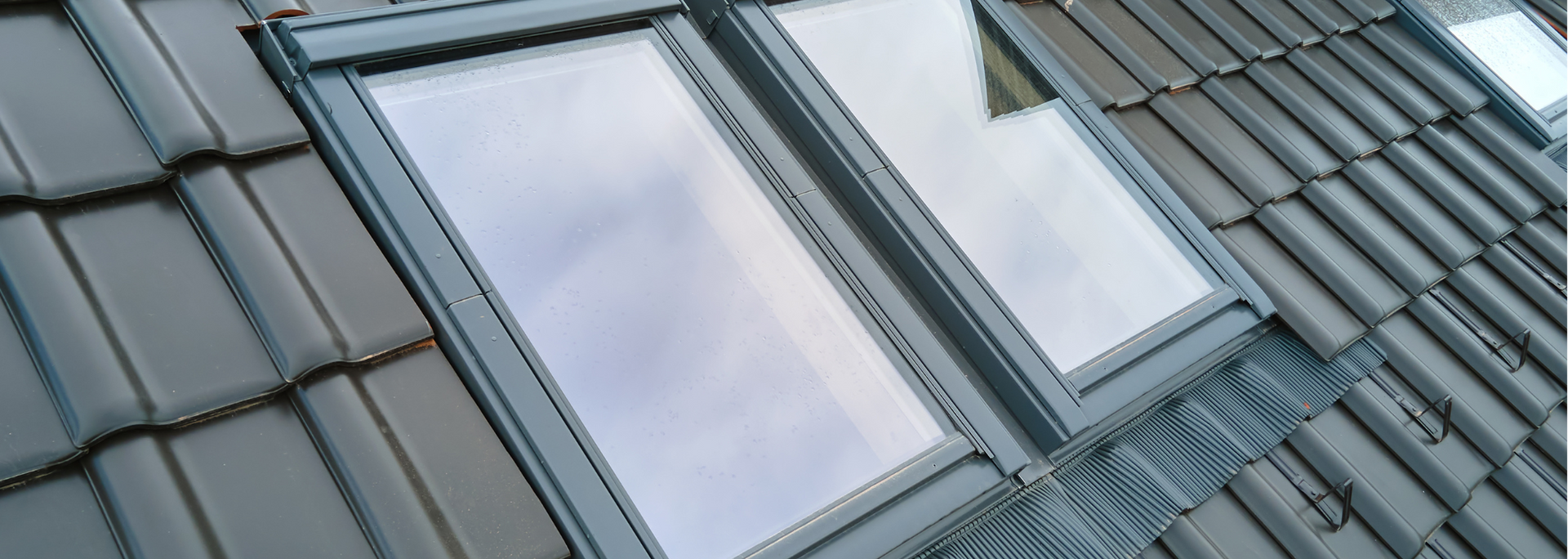
Heat-strengthened glass is similar to toughened glass. However, it's heated and cooled more slowly and less intensely. This means it's about twice as strong as annealed glass but less strong than toughened glass.
In architecture, it's used for high-rise facades, skylights and balustrades. In these applications, it can provide durability against wind loads, snow and heat.
Heat-strengthened glass is also used for spandrel panels, a non-structural element used to create a continuous facade. Finally, it can be used as one or more of the components in a laminated glass unit.
4. Switchable smart glass
Switchable smart glass – sometimes called "switchable glass", "switch glass" or "smart glass" – is a remarkable innovation in glass fabrication.
Essentially, switchable smart glass uses electric currents to change from transparent to translucent to opaque. This means a window or partition can have its transparency level adjusted.
Key applications for switchable smart glass are privacy and heat control. They can be used for any architectural component.
There are different kinds of switchable smart glass. The ToughGlaze
TG SWITCH range has a water-resistant interlayer and can be integrated into smart home and office systems.
5. Laminated glass
Laminated glass is glass multiplied. It consists of two or more panes of glass (annealed, toughened or heat-strengthened) bonded with a plastic interlayer.
This fabrication method has a few key advantages. It takes a lot of force and a lot of time to break a laminated glass unit. And, when it finally does break, no shards fall from the unit. Instead, the outer surface cracks and the interlayer maintains its structural integrity.
It's easy to see why such a product is essential in architecture. Installations such as skylights, balustrades and canopies need to be super-robust and break without breaking into falling pieces of glass. Laminated glass is so strong that it's used for doors and windows in hurricane zones, as well as load-bearing elements made of glass.
Like toughened glass, laminated glass can be cut to size and customised in all manner of ways. However decorative it becomes, it always keeps its structural advantages, as well as its acoustic and thermal insulating properties.
6. Fire-rated glass
Most types of glass on the market offer some level of fire resistance. But architectural applications often require glass that's specifically manufactured to prevent the spread of smoke and flames.
This is known as
fire-rated glass, and it takes different forms. In our case, it contains a gel-like interlayer that expands when it encounters a certain temperature. This helps stop the spread of fire, giving people longer to evacuate and firefighters longer to arrive.
Fire-rated glass can be used in any architectural setting. It's often used for windows, doors and partitions in stairwells, hallways and exits.
7. Security glass
The category of safety glass, which includes toughened glass and laminated glass, is designed to withstand accidental impacts. Security glass , by contrast, is built to withstand deliberate impacts, whether by burglars or bombs.
To qualify as security glass, it has to pass specific impact tests. Like safety glass, it can be digitally printed,
mesh-laminated or otherwise coloured and decorated.
8. Sandblasted glass
Finally, we come to sandblasted glass. This is a type of glass with a gritty, raised texture. This is created by applying a stencil and then blasting sand at the surface.
It's often used as a privacy screen for office partitions, shower doors and bathroom doors. But it's sometimes also used for branding purposes. Businesses can have their logo or slogan sandblasted onto glass. It's also used to create anti-slip surfaces for walk-on glass.
Like all our glass products, sandblasted glass can be cut to a size and thickness of your choosing. Are you looking for high-quality
glass for architecture? At ToughGlaze, we've supplied leading architecture firms for more than 30 years.
Get in touch today for a quick, competitive quote or to discuss your requirements with our experts.